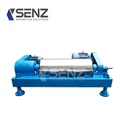

The performance of industrial equipment is often subject to a multitude of factors, with temperature being one of the most critical variables. In the case of a soymilk decanter centrifuge, temperature can significantly impact its efficiency, separation quality, and overall longevity. As a dedicated soymilk decanter centrifuge supplier, I am poised to explore how different temperature settings affect this essential piece of machinery.
Temperature and Separation Efficiency
Separation efficiency is the cornerstone of a soymilk decanter centrifuge's performance. At its core, the centrifuge works by spinning the soymilk mixture at high speeds, using centrifugal force to separate the solid豆渣 from the liquid soymilk. Temperature plays a vital role in this process, primarily through its influence on the viscosity of the soymilk.
When the temperature is low, soymilk tends to have higher viscosity. Higher viscosity means the liquid is thicker and more resistant to flow. In the context of a decanter centrifuge, this increased resistance can make it more difficult for the centrifuge to separate the solid and liquid components effectively. The solid particles may have a harder time migrating towards the walls of the centrifuge bowl, and the liquid may not flow out as freely through the appropriate channels. This leads to a decreased separation efficiency, with more solid particles remaining in the soymilk and vice versa.
Conversely, at elevated temperatures, the viscosity of soymilk decreases. A lower - viscosity soymilk allows for easier movement of solid and liquid particles within the centrifuge. The solid particles can more readily move towards the outer wall of the centrifuge bowl under the action of centrifugal force, while the liquid can flow out more smoothly. This generally results in a higher separation efficiency, with a clearer soymilk and a drier豆渣.
However, it's important to note that extremely high temperatures can also introduce problems. High temperatures can cause the proteins in soymilk to denature. Denatured proteins may form aggregates that can interfere with the separation process. For example, these aggregates can clog the separation channels in the centrifuge, reducing its ability to function properly and potentially leading to downtime for maintenance.
Impact on Centrifugal Force and Power Consumption
The relationship between temperature and centrifugal force is not always direct, but it is significant. Because temperature affects the density and viscosity of soymilk, it can indirectly influence the effective centrifugal force acting on the particles. As mentioned earlier, lower viscosity at higher temperatures allows the particles to move more freely under centrifugal force. This means that the same centrifugal force may be more effective at separating the components of soymilk at higher temperatures compared to lower ones.
In terms of power consumption, running a soymilk decanter centrifuge at lower temperatures may require more power. As the soymilk is more viscous at low temperatures, the centrifuge has to work harder to spin the mixture and achieve the desired separation. The motor has to overcome the increased resistance, leading to higher power consumption. On the other hand, operating the centrifuge at an optimal high temperature (where the denaturation of proteins does not occur) can potentially reduce power consumption, as the centrifuge can separate the components more easily.
Temperature and Equipment Longevity
Temperature can also have a profound impact on the longevity of a soymilk decanter centrifuge. At high temperatures, the materials used in the construction of the centrifuge, such as seals, bearings, and other moving parts, are subject to increased stress. Heat can cause these materials to expand, which may lead to misalignments and increased wear and tear. For example, the seals may lose their elasticity more quickly at high temperatures, leading to leaks that can damage the centrifuge and contaminate the soymilk.
Low temperatures can also cause problems. The cold can make some materials more brittle. The metal components of the centrifuge, for instance, may become more prone to cracking under the stress of high - speed rotation. Additionally, cold temperatures can cause condensation inside the centrifuge, which can lead to corrosion of the metal parts over time.
To ensure the long - term durability of the centrifuge, it is crucial to operate it within an appropriate temperature range. Regular maintenance and monitoring of the operating temperature can help identify and address potential issues before they lead to significant damage.
Temperature Control Strategies
As a soymilk decanter centrifuge supplier, I understand the importance of temperature control in optimizing the performance and longevity of the equipment. There are several strategies that can be employed to manage the temperature of the soymilk during the centrifugation process.
One approach is to pre - heat or pre - cool the soymilk before it enters the centrifuge. This can be done using heat exchangers or cooling systems. By adjusting the temperature of the soymilk to an optimal level, the separation efficiency can be enhanced while minimizing the negative impacts on the centrifuge itself.
Another strategy is to use temperature sensors and control systems within the centrifuge. These sensors can continuously monitor the temperature of the soymilk and the centrifuge components. If the temperature exceeds or falls below the desired range, the control system can automatically adjust the operating parameters, such as the speed of the centrifuge or the flow rate of the soymilk, to maintain a stable temperature.
Relationship with Other Related Centrifuge Technologies
The soymilk decanter centrifuge is part of a broader family of centrifuge technologies. Other applications, such as Waste Oil Centrifuge Biodiesel Equipment, Coal Tar Decanter Centrifuge, and Sludge Dewatering Technologies, also rely on centrifugal separation processes where temperature plays a crucial role.
In the case of waste oil centrifuge biodiesel equipment, temperature affects the viscosity of the waste oil and the reaction rates in the biodiesel production process. Similar to soymilk, high temperatures can reduce the viscosity of the waste oil, making it easier to separate the impurities. However, excessive heat can also cause issues such as thermal degradation of the oil.
Coal tar decanter centrifuges deal with a thick and complex substance. Temperature control is essential to ensure the efficient separation of different components in coal tar. Proper temperature management can improve the quality of the separated products and prevent the centrifuge from becoming clogged.
Sludge dewatering technologies also benefit from temperature optimization. Higher temperatures can reduce the moisture content of the sludge more effectively by lowering its viscosity and increasing the evaporation rate. However, as with all centrifuge applications, extreme temperatures need to be avoided to prevent damage to the equipment.
Conclusion
In summary, temperature has a far - reaching impact on the performance of a soymilk decanter centrifuge. It affects the separation efficiency, power consumption, and equipment longevity. By understanding these relationships, operators can make informed decisions about temperature control to optimize the operation of the centrifuge.
As a soymilk decanter centrifuge supplier, we are committed to providing high - quality equipment that can withstand a range of temperature conditions. We also offer support and guidance on temperature management strategies to our customers. If you are in the market for a soymilk decanter centrifuge, or if you have any questions about how temperature might affect your specific application, we encourage you to reach out to us for a detailed discussion. Our team of experts is ready to help you select the right equipment and develop the best operating protocols.


References
- Raskin, I., & Luzzatto, K. (2001). Handbook of industrial and hazardous waste treatment. McGraw - Hill.
- Shaw, D. J. (1992). Introduction to colloid and surface chemistry. Butterworth - Heinemann.
- Solid - Liquid Separation Equipment Scale - up. (1997). William Andrew Publishing.