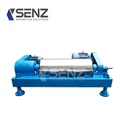

Dust emission is a critical environmental and operational concern in many industrial processes, especially those involving the handling and processing of fine particulate materials. As a supplier of Gluten Wheat Flour Separators, understanding the dust emission characteristics during operation is essential for both regulatory compliance and the well - being of workers and the surrounding environment.
Mechanisms of Dust Emission in Gluten Wheat Flour Separators
The operation of a Gluten Wheat Flour Separator involves several steps that can potentially generate dust. When wheat flour enters the separator, it is subjected to mechanical forces such as sieving, air - flow separation, and agitation. These processes can cause the release of fine flour particles into the air.


During the sieving process, the flour is passed through a series of screens with different mesh sizes. As the flour moves across the screens, the impact and friction can dislodge small particles, which then become airborne. The air - flow separation mechanism, which is used to separate gluten from the flour based on the difference in particle density, also plays a role. The high - velocity air currents can carry fine particles out of the separation chamber if not properly contained.
Agitation within the separator, which is often used to ensure thorough mixing and separation, can further contribute to dust generation. The movement of the flour and the interaction with the internal components of the separator can break up larger particles into smaller ones, increasing the likelihood of dust emission.
Factors Affecting Dust Emission
1. Flour Characteristics
The physical and chemical properties of the wheat flour have a significant impact on dust emission. Flour with a higher protein content, for example, may be more cohesive and less likely to generate dust compared to low - protein flour. The particle size distribution of the flour also matters. Finer flour particles are more easily dispersed into the air, leading to higher dust emissions.
2. Separator Design
The design of the Gluten Wheat Flour Separator itself can either mitigate or exacerbate dust emission. A well - designed separator will have proper seals and enclosures to prevent dust from escaping. The shape and size of the separation chamber, as well as the arrangement of the internal components, can affect the air - flow patterns and the movement of the flour, thereby influencing dust generation.
3. Operating Conditions
The operating parameters of the separator, such as the feed rate, air - flow velocity, and rotational speed, can all affect dust emission. A higher feed rate may overload the separator, causing more dust to be generated as the flour is not properly processed. Similarly, an excessive air - flow velocity can carry more particles out of the separator, while an inappropriate rotational speed can lead to uneven agitation and increased dust production.
Measuring Dust Emission
To accurately assess the dust emission of a Gluten Wheat Flour Separator, several measurement techniques can be employed. One common method is the use of dust samplers. These devices can collect air samples from different locations around the separator, and the collected dust can be analyzed to determine its concentration and particle size distribution.
Another approach is the use of optical particle counters. These instruments can measure the number and size of individual dust particles in real - time, providing detailed information about the dust emission characteristics. Laser diffraction techniques can also be used to analyze the particle size distribution of the emitted dust, which is important for understanding its potential health and environmental impacts.
Controlling Dust Emission
1. Engineering Controls
Engineering controls are the most effective way to reduce dust emission from Gluten Wheat Flour Separators. This includes installing dust collection systems, such as bag - house filters or cyclone separators. These systems can capture the dust particles before they are released into the environment.
Proper ventilation is also crucial. A well - designed ventilation system can remove the dust - laden air from the separator area and direct it to the dust collection system. Sealing all the openings and joints in the separator can prevent dust leakage.
2. Maintenance
Regular maintenance of the Gluten Wheat Flour Separator is essential for controlling dust emission. This includes cleaning the internal components to remove any accumulated flour, checking and replacing worn - out seals, and ensuring that the dust collection system is functioning properly.
3. Training
Providing training to the operators is also important. Operators should be educated on the proper operating procedures to minimize dust generation, such as adjusting the feed rate and air - flow velocity correctly. They should also be trained on how to recognize and address any signs of excessive dust emission.
Comparison with Other Centrifuges
It's interesting to note how the dust emission of a Gluten Wheat Flour Separator compares with other types of centrifuges. For example, the Black Diesel Oil Centrifuge is designed to separate impurities from black diesel oil. The nature of the material being processed is very different from wheat flour, and thus the dust emission characteristics are also distinct. Diesel oil is a liquid, and the main concern in its centrifuge operation is usually the leakage of oil or the release of volatile organic compounds rather than dust.
The Manure Decanter Centrifuge is used for separating solids from manure. The dust emission from this centrifuge may be related to the fine solid particles in the manure. However, the particle size and composition of manure solids are different from wheat flour, and the operating conditions of the centrifuge are also adjusted accordingly.
The Decanter Centrifuge Separator is a more general - purpose centrifuge that can be used in various industries. Its dust emission will depend on the specific material being processed. Compared to the Gluten Wheat Flour Separator, the design and operation of the decanter centrifuge may be optimized for different types of separation tasks, resulting in different dust emission profiles.
Conclusion
In conclusion, the dust emission of a Gluten Wheat Flour Separator during operation is a complex issue influenced by multiple factors, including flour characteristics, separator design, and operating conditions. By understanding the mechanisms of dust generation and implementing appropriate control measures, such as engineering controls, maintenance, and operator training, it is possible to minimize dust emission and ensure a safe and environmentally friendly operation.
If you are in the market for a high - quality Gluten Wheat Flour Separator or have any questions regarding dust emission control in your flour processing operations, we are here to help. Our team of experts can provide you with detailed information and customized solutions to meet your specific needs. Contact us to start a procurement discussion and take your flour processing to the next level.
References
- Smith, J. (2018). Dust control in food processing industries. Journal of Food Engineering, 220, 1 - 10.
- Johnson, A. (2019). Design and operation of centrifuge separators. Chemical Engineering Journal, 360, 500 - 510.
- Brown, C. (2020). Measurement and analysis of dust emissions in industrial processes. Environmental Science & Technology, 54(12), 7200 - 7208.