
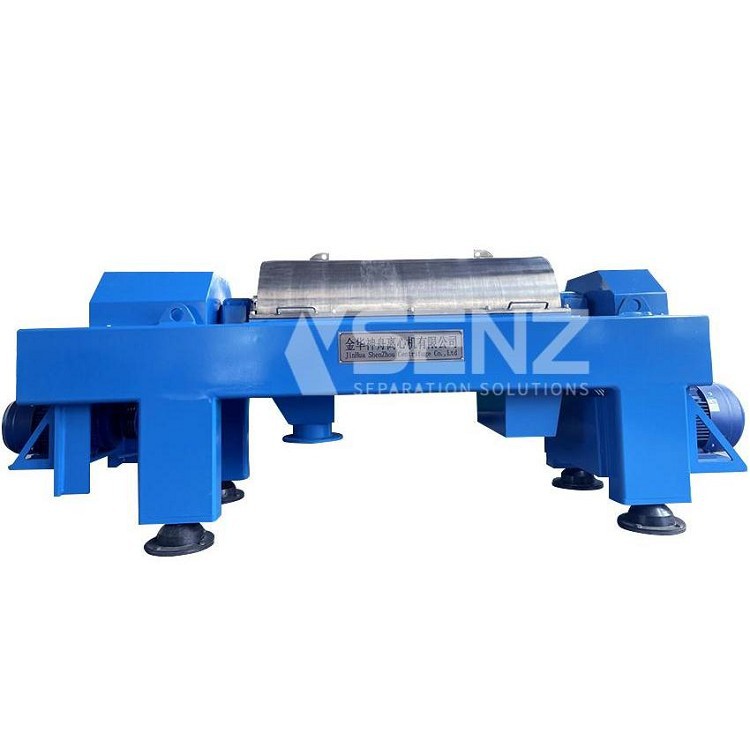
Hey there! As a supplier of mining decanter centrifuges, I often get asked about the differences between mining decanter centrifuges and regular decanter centrifuges. So, I thought I'd take a few minutes to break it down for you.
Let's start with the basics. A decanter centrifuge is a machine that separates solids from liquids using centrifugal force. It's a pretty common piece of equipment in a lot of industries, from wastewater treatment to food processing. But when it comes to mining, the requirements are a bit different.
Construction and Durability
One of the most obvious differences between a mining decanter centrifuge and a regular one is the construction. Mining environments are tough. There's a lot of dust, vibrations, and heavy loads. That's why mining decanter centrifuges are built like tanks. They're made from high - strength materials that can withstand the harsh conditions.
For example, the housing of a mining decanter centrifuge is usually made of thick - walled steel. This not only protects the internal components but also helps to reduce noise and vibration. In contrast, regular decanter centrifuges might use thinner materials, which are sufficient for less demanding applications.
Capacity and Throughput
Mining operations deal with large volumes of materials. Whether it's separating ore from waste or dewatering tailings, a mining decanter centrifuge needs to have a high capacity and throughput. These machines are designed to handle tons of material per hour.
Regular decanter centrifuges, on the other hand, are often used in smaller - scale operations. For instance, in a laboratory setting or a small - scale food processing plant, the throughput requirements are much lower. So, they can be built with a smaller capacity.
Separation Efficiency
The separation efficiency is another key difference. In mining, the goal is to extract as much valuable material as possible from the ore. A mining decanter centrifuge is optimized to achieve high - precision separation. It can separate fine particles from the liquid phase with great accuracy.
Regular decanter centrifuges may not need to be as precise. For example, in a wastewater treatment plant, the main goal might just be to remove large solids and some suspended matter. So, the separation requirements are not as stringent.
Specialized Features
Mining decanter centrifuges often come with specialized features. For example, they may have a special design for handling abrasive materials. The internal components, like the scroll and the bowl, are coated with wear - resistant materials to extend their lifespan.
In addition, many mining decanter centrifuges are equipped with advanced control systems. These systems can adjust the speed, the feed rate, and other parameters in real - time to optimize the separation process. Regular decanter centrifuges may not have such sophisticated control systems.
Applications
The applications of mining decanter centrifuges and regular decanter centrifuges also differ significantly.
Mining Decanter Centrifuge
- Ore Processing: It's used to separate valuable minerals from the gangue. For example, in gold mining, the centrifuge can separate gold particles from the surrounding rock and soil.
- Tailings Dewatering: After the ore has been processed, the remaining tailings need to be dewatered. A mining decanter centrifuge can efficiently remove water from the tailings, reducing the volume and making it easier to store or dispose of.
Regular Decanter Centrifuge
-
Wastewater Treatment: It helps to separate solids from wastewater, making it cleaner and safer to discharge.
-
Food Processing: In the food industry, decanter centrifuges are used for various purposes, such as separating cream from milk or clarifying fruit juices. You can check out Waste Oil Processing Centrifuge for more information on other types of centrifuges used in different industries.
-
Biotechnology: They are used to separate cells, proteins, and other biological materials. For example, a Yeast Separator is a type of decanter centrifuge used in the brewing and baking industries to separate yeast from the liquid medium.
-
Sugar Production: A Sugar Cane Juice Machine is another example of a regular decanter centrifuge. It's used to separate the juice from the sugar cane pulp.
Cost
Cost is also a factor. Mining decanter centrifuges are generally more expensive than regular ones. This is due to their heavy - duty construction, high - capacity design, and specialized features. However, the investment is often worth it in a mining operation, as it can improve efficiency and increase the recovery of valuable materials.
Maintenance
Maintenance requirements are different too. Mining decanter centrifuges need more frequent maintenance because of the harsh operating conditions. The wear - resistant coatings need to be inspected and replaced regularly, and the internal components may need more frequent cleaning.
Regular decanter centrifuges, being used in less demanding environments, usually have lower maintenance requirements.
If you're in the mining industry and are looking for a reliable decanter centrifuge, we're here to help. Our mining decanter centrifuges are designed to meet the toughest challenges in the mining sector. Whether you need to process large volumes of ore or dewater tailings, we've got the right solution for you. Feel free to reach out to us to discuss your specific needs and start a procurement discussion.

References
- "Centrifuge Technology Handbook"
- "Mining Equipment and Processes"
- Industry research reports on decanter centrifuges