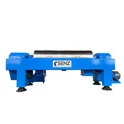

Hey there! As a supplier of 3 Phase Centrifuges, I often get asked about the maximum speed of these machines. It's a crucial question, especially for those looking to invest in this equipment for various industrial applications. So, let's dive right into it and explore what the maximum speed of a typical 3 Phase Centrifuge really is.
First off, it's important to understand what a 3 Phase Centrifuge is and how it works. A 3 Phase Centrifuge is a powerful piece of equipment used for separating different components of a mixture based on their density. It uses centrifugal force to spin the mixture at high speeds, causing the heavier components to move towards the outer edge while the lighter ones stay closer to the center. This separation process is widely used in industries such as oil and gas, food and beverage, wastewater treatment, and many others.
Now, when it comes to the maximum speed of a 3 Phase Centrifuge, there isn't a one - size - fits - all answer. The maximum speed can vary significantly depending on several factors.
One of the main factors is the design and construction of the centrifuge. Different manufacturers use different materials and engineering techniques, which can affect the maximum rotational speed. For example, centrifuges made with high - strength alloys and advanced balancing mechanisms can generally handle higher speeds compared to those with more basic designs.
The intended application also plays a huge role. If you're using the centrifuge for separating fine particles in a lab setting, you might not need extremely high speeds. However, in industrial applications like Horizontal Separation Equipment Olive Avocado Oil Extraction Machine, where you're dealing with large volumes of viscous substances, a higher maximum speed can be beneficial to achieve better separation efficiency.
Another factor is the size of the centrifuge. Generally, smaller centrifuges can reach higher speeds more easily than larger ones. This is because the centrifugal force is proportional to the radius of the rotation and the square of the angular velocity. For larger centrifuges, spinning at extremely high speeds can put excessive stress on the components, leading to mechanical failures.
In terms of typical values, most commercial 3 Phase Centrifuges have a maximum speed ranging from 3000 to 10000 revolutions per minute (RPM). However, some high - performance models can go even higher, up to 15000 RPM or more. But again, these are just general ranges, and the actual maximum speed will depend on the specific centrifuge.
Let's take a look at some of the benefits of running a 3 Phase Centrifuge at higher speeds. Higher speeds mean greater centrifugal force, which results in more efficient separation. This can lead to higher product quality, especially in industries like the Industrial Waste Oil Centrifuge, where you're trying to remove contaminants from oil. By spinning the oil at high speeds, you can separate out dirt, water, and other impurities more effectively.
But running a centrifuge at high speeds also has its drawbacks. It can increase wear and tear on the machine, which means more frequent maintenance and potentially higher costs in the long run. There's also a higher risk of vibration and noise, which can be a nuisance in the workplace and may require additional measures to mitigate.
When choosing a 3 Phase Centrifuge, it's essential to balance the need for high - speed operation with other factors such as cost, maintenance requirements, and the specific needs of your application. If your process requires a high - level of separation efficiency and you can afford the associated maintenance costs, then a centrifuge with a higher maximum speed might be the right choice for you.
On the other hand, if you're on a tight budget and your separation requirements aren't extremely demanding, a centrifuge with a more moderate maximum speed could be sufficient.
In the Sludge Dewatering Unit application, the maximum speed of the centrifuge can have a significant impact on the dewatering efficiency. A higher speed can help to squeeze out more water from the sludge, reducing its volume and making it easier to handle and dispose of. However, you need to make sure that the centrifuge can handle the sludge without clogging or experiencing excessive wear.
As a supplier, I've seen firsthand how different customers have different needs when it comes to 3 Phase Centrifuges. Some are more concerned about the initial purchase price, while others prioritize long - term reliability and performance. That's why we offer a range of centrifuges with different maximum speeds and features to meet the diverse needs of our customers.
If you're in the market for a 3 Phase Centrifuge, I encourage you to reach out to us. Our team of experts can help you determine the right maximum speed and other specifications for your specific application. We can provide you with detailed information about our products, including their performance, maintenance requirements, and pricing. Whether you're in the oil and gas industry, food processing, or wastewater treatment, we have a solution that can fit your needs. So, don't hesitate to contact us for more information and to start a discussion about your centrifuge requirements. We're here to help you make the best decision for your business.


References
- "Centrifuge Technology Handbook", various industry experts
- Manufacturer's specifications of different 3 Phase Centrifuges