





Jinhua Shenzhou Centrifuge Co., Ltd. is one of the leading manufacturers and suppliers of industrial waste oil centrifuge in China. Please feel free to wholesale customized industrial waste oil centrifuge at competitive price from our factory. For more cheap products, contact us now.
Oil-Water-Solids Separation for Industrial Waste Streams
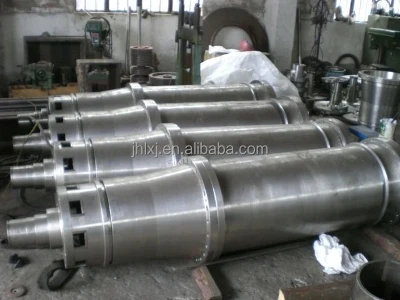
The SENZ industrial waste oil centrifuge uses a horizontal three-phase decanter to separate suitable oil-bearing mixtures. The existing product introduction identifies the LWS500 range, while the reference table covers several LWS sizes. Define the waste source and recovery objective before selecting a model.
A separation project should account for all three outlets: recovered oil, separated water and solids containing residual liquid. Centrifugation is a physical separation step, not a complete oil re-refining process.

How the Three-Phase Decanter Works
For a feed with solids denser than both liquid phases, solids settle toward the rotating bowl wall. The heavier liquid occupies the intermediate layer and the lighter liquid lies nearer the rotational axis. The scroll conveys settled solids to discharge, while the liquids leave separately.
The existing design description includes heavy-liquid discharge through a centripetal pump and light-liquid discharge by gravity. Confirm the outlet arrangement and liquid-interface adjustment for the quoted machine. Suitable settings depend on the relative proportions and properties of the phases.
Characterize the Feed Before Sizing
- Identify the industrial process and all known oil, water, solids and chemical components.
- Provide normal and peak flow, oil-water proportions and solids concentration.
- Report viscosity and density at the intended feed temperature.
- Describe emulsions, abrasive particles and corrosive constituents.
- Define oil recovery and acceptable contamination at each outlet.
Stable emulsions, fine particles and high viscosity can limit separation. Representative testing helps establish whether conditioning or other upstream treatment is necessary. The original temperature notation is ambiguous, so request the confirmed operating-temperature rating for the supplied configuration.
Reference LWS Model Range
|
Model |
Diameter |
Length |
Max speed (r/min) |
L/D ratio |
G-force (g) |
Capacity |
Main motor power |
Weight |
Dimension (L*W*H) |
|
(mm) |
(mm) |
(m3/h) |
(kw) |
(kg) |
(mm) |
||||
|
LWS355*1160 |
355 |
1160 |
3600 |
3.3 |
2576 |
2-8 |
15 |
1400 |
2470*1350*830 |
|
LWS355*1460 |
355 |
1460 |
3600 |
4 |
2576 |
2-10 |
15 |
1800 |
2750*1350*830 |
|
LWS450*1800 |
450 |
1800 |
2800 |
4 |
1976 |
4-25 |
37 |
2500 |
3320*1700*1130 |
|
LWS500*2000 |
500 |
2000 |
2500 |
4 |
1750 |
5-35 |
45 |
4000 |
3520*1800*1170 |
|
LWS520*2080 |
520 |
2080 |
3200 |
4 |
3154 |
3-35 |
55 |
5000 |
4510*1410*1170 |
|
LWS550*2000 |
550 |
2000 |
2800 |
4 |
2414 |
6-40 |
55 |
5700 |
4570*1380*1600 |
|
LWS650*1950 |
650 |
1950 |
2200 |
3 |
1761 |
6-45 |
75 |
5000 |
4840*1510*1720 |
|
LWS650*2600 |
650 |
2600 |
2000 |
4 |
1456 |
6-65 |
90 |
6000 |
5490-1510*1720 |
The table retains the existing catalog data. Throughput values are preliminary references, not guaranteed performance on every waste oil. Confirm the selected model, nominal ratios, dimensions, installed power and operating limits in the final technical offer.
Equipment and Process Integration
Review contact materials, abrasion protection, drive arrangement and control functions against the feed. The existing product describes stainless components, replaceable wear protection and variable-frequency controls. Confirm the actual supplied specification and any site-specific electrical requirements.
Plan feed storage and transfer, oil collection, water treatment and solids handling together. Recovered oil may require further processing and testing; the aqueous outlet should follow its specified treatment route. Separation alone does not establish suitability for reuse or discharge.



Frequently Asked Questions
Can every oil-water emulsion be separated?
No. Phase stability and feed properties matter. Provide representative samples and describe any additives before agreeing to recovery or purity targets.
Does the centrifuge remove dissolved contaminants?
It primarily separates phases and suspended solids. Dissolved contaminants may remain in the recovered liquids and require another treatment step.
How should oil recovery be measured?
Use a consistent sampling and mass-balance approach covering feed, recovered oil, water and solids. Report the feed conditions and operating settings alongside the result.
Is a complete treatment package included?
Confirm the scope in the quotation, including pumps, tanks, conditioning, controls, downstream treatment and installation support.
Request a Waste Oil Separation Assessment
See the three-phase decanter overview for the basic equipment principle. Send SENZ your waste-stream analysis to discuss configuration and testing.
Hot Tags: industrial waste oil centrifuge, waste oil water solids separation, oil sludge decanter centrifuge, oil cleaning centrifuge, screw press sludge dewatering machine, 3 phase decanter centrifuge, fish oil centrifuge, biodiesel centrifuge, Industrial Waste Oil Centrifuge


