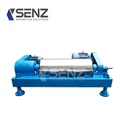
Centrifuges are indispensable pieces of equipment in a wide range of industries, from pharmaceuticals and biotechnology to wastewater treatment and food processing. These machines rely on high - speed rotation to separate substances of different densities, a process that is critical for many production and purification operations. However, the potential risks associated with neglecting centrifuge maintenance are often underestimated. As a Centrifuge Maintenance supplier, I have witnessed firsthand the severe consequences that can result from a lack of proper upkeep.
1. Mechanical Failures
One of the most immediate risks of neglecting centrifuge maintenance is mechanical failure. Centrifuges operate at extremely high rotational speeds, which put a significant amount of stress on their components. Over time, without regular maintenance, parts such as bearings, belts, and seals can wear out.
Bearings are particularly crucial as they support the rotating shaft of the centrifuge. If not lubricated and inspected regularly, bearings can overheat and seize up. This sudden failure can cause the centrifuge to stop working abruptly, leading to production downtime. For example, in a pharmaceutical manufacturing plant, a centrifuge failure can halt the production of essential medications, resulting in lost revenue and potential shortages in the market.
Belts are also subject to wear and tear. A worn - out belt can slip, reducing the efficiency of the centrifuge and causing uneven rotation. This not only affects the separation quality but can also lead to further damage to other components. Moreover, a broken belt can cause the centrifuge to malfunction completely.
Seals play a vital role in preventing leakage of the substances being processed. If seals are not maintained, they can develop cracks or lose their integrity. This can lead to leaks, which are not only wasteful but can also pose safety hazards, especially when dealing with toxic or hazardous materials.
2. Safety Hazards
Neglected centrifuge maintenance can create numerous safety hazards for operators and the surrounding environment. As mentioned earlier, mechanical failures such as a seized bearing or a broken belt can cause the centrifuge to operate erratically. This can result in the machine vibrating violently, which may cause it to become unstable and tip over. A large - scale industrial centrifuge tipping over can cause significant damage to the facility and pose a serious threat to the safety of nearby workers.
In addition, leaks from faulty seals can expose operators to harmful substances. For instance, in a chemical processing plant, a centrifuge used to separate corrosive chemicals can leak these substances if the seals are not properly maintained. Exposure to such chemicals can cause skin burns, respiratory problems, and other serious health issues.
Another safety concern is the buildup of static electricity. Centrifuges generate static electricity during operation, and proper maintenance includes measures to dissipate this static charge. If this is neglected, a static spark can ignite flammable substances being processed, leading to a fire or explosion.
3. Reduced Separation Efficiency
Centrifuges are designed to achieve precise separation of substances based on their densities. However, neglecting maintenance can significantly reduce their separation efficiency. Worn - out components can cause the centrifuge to rotate unevenly, which means that the substances being processed may not be separated as effectively.
For example, in the wastewater treatment industry, a centrifuge is used to separate solids from liquids. If the centrifuge is not maintained, the separation process may be incomplete, resulting in poor - quality treated water. This can lead to non - compliance with environmental regulations and may require additional treatment steps, increasing the overall cost of the treatment process.
In the food processing industry, a centrifuge is used to separate cream from milk. Reduced separation efficiency can result in lower - quality products, as the cream may not be separated cleanly from the milk. This can lead to customer dissatisfaction and a loss of market share for the food manufacturer.
4. Increased Energy Consumption
A centrifuge that is not properly maintained often consumes more energy than a well - maintained one. When components such as bearings are worn out, the motor has to work harder to maintain the required rotational speed. This increased workload on the motor leads to higher energy consumption.
Higher energy consumption not only increases the operating costs for the company but also has a negative environmental impact. In today's world, where energy efficiency and environmental sustainability are becoming increasingly important, the increased energy consumption of a neglected centrifuge can put a company at a competitive disadvantage.
5. Costly Repairs and Replacements
Ultimately, neglecting centrifuge maintenance can lead to costly repairs and even the need for complete replacement of the centrifuge. Minor issues that could have been easily fixed with regular maintenance can escalate into major problems over time. For example, a small leak in a seal can lead to corrosion of internal components, which may require extensive repairs or the replacement of the entire centrifuge.
The cost of replacing a centrifuge can be substantial, especially for large - scale industrial models. In addition to the cost of the new equipment, there are also installation costs, downtime costs during the replacement process, and the cost of training operators on the new centrifuge.
The Solution: Regular Centrifuge Maintenance
As a Centrifuge Maintenance supplier, I strongly advocate for regular maintenance of centrifuges. Regular maintenance includes tasks such as lubricating bearings, inspecting belts and seals, checking for proper alignment, and cleaning the centrifuge.
By investing in regular maintenance, companies can avoid the potential risks mentioned above. They can ensure the smooth operation of their centrifuges, improve separation efficiency, reduce energy consumption, and extend the lifespan of the equipment.


We offer comprehensive Centrifuge Maintenance services that are tailored to the specific needs of each client. Our team of experienced technicians is trained to identify and address potential issues before they become major problems.
In addition to centrifuge maintenance, we also provide related equipment such as Flocculant Auto Dosing System and Screw Conveyor. These equipment can enhance the overall performance of the centrifuge system and improve the efficiency of the separation process.
If you are facing issues with your centrifuge or are looking to ensure its long - term reliability, we invite you to contact us for a consultation. Our experts can assess your centrifuge system, provide a detailed maintenance plan, and offer solutions to any problems you may be experiencing. Don't wait until it's too late - take proactive steps to maintain your centrifuge and avoid the potential risks associated with neglect.
References
- "Centrifuge Technology and Applications" by John Doe, published by Industrial Press.
- "Safety Guidelines for Centrifuge Operation" by the Occupational Safety and Health Administration (OSHA).
- "Energy Efficiency in Industrial Centrifuges" by the International Energy Agency (IEA).