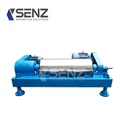

Hey there! As a supplier of manure decanter centrifuges, I've seen my fair share of issues that customers run into. These machines are super useful for separating solids from liquids in manure, but like any piece of equipment, they can have their problems. In this blog, I'll talk about some common problems with manure decanter centrifuges and how to solve them.
Problem 1: Poor Separation Efficiency
One of the most common issues is poor separation efficiency. You might notice that the solids aren't being separated as well as they should be, or there's still a lot of liquid in the solid discharge. This can be a real headache because it defeats the purpose of using the centrifuge in the first place.
Causes:


- Feed Rate: If the feed rate is too high, the centrifuge might not have enough time to separate the solids from the liquids properly. It's like trying to rush through a task - you're not going to do it as well.
- Viscosity of the Manure: Manure with a high viscosity can be difficult to separate. It's like trying to separate honey from water - the honey is thick and sticky, and it doesn't want to let go.
- Wear and Tear: Over time, the components of the centrifuge can wear out. The scroll, for example, might get worn down, which can affect its ability to push the solids towards the discharge.
Solutions:
- Adjust the Feed Rate: You need to find the sweet spot for the feed rate. Start by reducing the feed rate and see if the separation improves. It might take a bit of trial and error, but once you find the right rate, you'll notice a big difference.
- Pre - treatment: If the manure has a high viscosity, you can try pre - treating it. This could involve adding chemicals to break down the solids or diluting the manure with water. For more information on different applications of centrifuges, you can check out Tapioca Starch Extraction, where similar separation principles are applied.
- Replace Worn Parts: Regular maintenance is key. Keep an eye on the components of the centrifuge and replace any worn parts as soon as possible. This will ensure that the centrifuge is working at its best.
Problem 2: Excessive Vibration
Excessive vibration is another problem that can occur. It's not only annoying, but it can also cause damage to the centrifuge and other equipment nearby.
Causes:
- Imbalanced Load: If the solids are not evenly distributed inside the centrifuge, it can cause an imbalance. This is like trying to spin a top with a weight on one side - it's going to wobble.
- Loose Mounting: The centrifuge needs to be properly mounted. If it's not, it can vibrate excessively. It's like a wobbly table - if the legs aren't secure, it's going to shake.
- Bearing Issues: The bearings in the centrifuge can wear out or become damaged. This can cause the centrifuge to vibrate as it rotates.
Solutions:
- Check and Balance the Load: Make sure that the manure is being fed into the centrifuge evenly. You might need to adjust the feed mechanism to ensure a more uniform distribution of the solids.
- Tighten the Mounting: Inspect the mounting of the centrifuge and tighten any loose bolts or screws. This will help to stabilize the centrifuge and reduce vibration.
- Replace Bearings: If you suspect that the bearings are the problem, replace them. It's a relatively simple fix, but it can make a big difference in reducing vibration. For more insights into centrifuge performance, you can look at Avocado Oil Production Line Decanter, where vibration control is also crucial.
Problem 3: High Energy Consumption
High energy consumption can be a major concern, especially if you're running the centrifuge for long periods of time. It can drive up your operating costs and make the whole process less efficient.
Causes:
- Incorrect Settings: The centrifuge might be set to run at a higher speed or with more power than necessary. It's like driving a car with the accelerator pedal all the way down when you don't need to.
- Mechanical Inefficiency: As the centrifuge ages, it can become less mechanically efficient. This could be due to worn parts or a build - up of debris inside the machine.
- Poor Lubrication: If the moving parts of the centrifuge aren't properly lubricated, it can increase friction and energy consumption. It's like trying to move a heavy object on a rough surface instead of a smooth one.
Solutions:
- Optimize the Settings: Review the settings of the centrifuge and make sure they're appropriate for the type of manure you're processing. You might be able to reduce the speed or power without sacrificing separation efficiency.
- Regular Maintenance: Keep the centrifuge clean and well - maintained. Replace any worn parts and remove any debris that might be affecting its performance. For more information on centrifuge maintenance in different industries, you can refer to Coal Tar Decanter Centrifuge.
- Proper Lubrication: Make sure to lubricate the moving parts of the centrifuge regularly. This will reduce friction and help the centrifuge run more efficiently.
Problem 4: Seal Leakage
Seal leakage is a problem that can lead to a mess and also affect the performance of the centrifuge. You might notice liquid leaking out of the centrifuge, which can be a sign of a seal issue.
Causes:
- Wear and Tear: The seals in the centrifuge can wear out over time, especially if they're exposed to harsh chemicals or high pressures.
- Improper Installation: If the seals aren't installed correctly, they might not form a proper seal. It's like trying to put a lid on a jar the wrong way - it's not going to keep the contents inside.
- Pressure Imbalance: A pressure imbalance inside the centrifuge can cause the seals to fail. This could be due to a blockage or an incorrect setting.
Solutions:
- Replace Seals: If you notice seal leakage, replace the seals as soon as possible. Make sure to use high - quality seals that are compatible with your centrifuge.
- Proper Installation: When installing the seals, follow the manufacturer's instructions carefully. This will ensure that they're installed correctly and form a proper seal.
- Check for Pressure Imbalance: Inspect the centrifuge for any blockages or incorrect settings that might be causing a pressure imbalance. Fix any issues you find to prevent further seal leakage.
Conclusion
So, there you have it - some of the common problems with manure decanter centrifuges and how to solve them. As a supplier, I know how important it is for these machines to work properly. By being aware of these issues and taking the necessary steps to address them, you can ensure that your centrifuge is running smoothly and efficiently.
If you're facing any of these problems or are interested in purchasing a manure decanter centrifuge, don't hesitate to reach out. We're here to help you find the best solution for your needs. Whether you're a small - scale farmer or a large - scale agricultural operation, we've got the expertise and the products to support you.
References
- Centrifuge Operation and Maintenance Manuals
- Industry Reports on Agricultural Equipment Efficiency