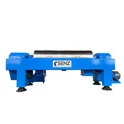

Picking the right rotor for your laboratory centrifuge isn't just a technical detail; it's a game - changer for your lab work. As a supplier of laboratory centrifuges, I've seen firsthand how the wrong rotor can throw a wrench in your experiments. So, let's dive into how you can select the appropriate rotor for your needs.
Understanding the Basics of Rotors
First off, what exactly is a rotor? In simple terms, it's the part of the centrifuge that holds your samples and spins them at high speeds. There are different types of rotors, each with its own set of features and uses.
The most common types are fixed - angle rotors and swinging - bucket rotors. Fixed - angle rotors have tubes held at a fixed angle, usually between 25 - 45 degrees. This design is great for sedimenting particles quickly because the path the particles have to travel to reach the bottom of the tube is relatively short. Swinging - bucket rotors, on the other hand, have buckets that swing out horizontally when the centrifuge is in motion. This is ideal for applications where you need a more gentle separation or when you're working with larger volumes.


Factors to Consider When Selecting a Rotor
1. Sample Volume
The volume of your samples is a major factor. If you're working with small samples, say a few milliliters, a fixed - angle rotor might be your best bet. They can handle a large number of small tubes efficiently. For larger volumes, like 50 ml or more, a swinging - bucket rotor is often a better choice. It can accommodate bigger tubes without compromising on separation quality.
2. Separation Requirements
What are you trying to separate? If you're separating cells from a liquid medium, for example, you'll need a rotor that can provide the right amount of centrifugal force. Different rotors can generate different levels of g - force, which is crucial for effective separation. You'll also need to consider the speed at which the separation needs to occur. Some applications require high - speed centrifugation, while others can be done at lower speeds.
3. Compatibility with the Centrifuge
Not all rotors are compatible with every centrifuge. You need to make sure that the rotor you choose fits your centrifuge model. This includes the physical dimensions of the rotor as well as the connection mechanism. Some centrifuges have specific interfaces that only work with certain rotors.
4. Material and Construction
The material of the rotor matters. Rotors are typically made from materials like aluminum or titanium. Aluminum rotors are lightweight and relatively inexpensive, but they may not be as durable as titanium rotors. Titanium rotors can withstand higher speeds and are more resistant to corrosion, but they come at a higher cost. Consider your budget and the frequency of use when choosing the material.
Specialized Applications and Rotor Selection
There are some specialized applications where specific rotors are required. For example, if you're involved in Olive Oil Separator, you'll need a rotor that can handle the unique properties of olive oil and separate it from other components effectively.
Similarly, Slaughterhouse Wastewater Treatment demands a rotor that can handle the complex mixture of solids and liquids in the wastewater. The rotor should be able to separate the different components efficiently to ensure proper treatment.
Another important application is Centrifuge For Oil Water Separation. In this case, the rotor needs to be designed to separate oil from water, taking into account the different densities and properties of the two substances.
Maintenance and Care of Rotors
Once you've selected the right rotor, it's important to take good care of it. Regular cleaning is essential to prevent the buildup of contaminants. You should also check for any signs of wear and tear, such as cracks or dents. If you notice any damage, it's important to replace the rotor immediately to avoid any safety risks.
Cost - Benefit Analysis
When selecting a rotor, it's important to consider the cost - benefit ratio. While a more expensive rotor may offer better performance and durability, it may not be necessary for all applications. You need to weigh the cost of the rotor against the benefits it provides in terms of separation efficiency, sample throughput, and long - term reliability.
Conclusion
Selecting the appropriate rotor for your laboratory centrifuge is a crucial decision that can have a significant impact on your research and experiments. By considering factors such as sample volume, separation requirements, compatibility, material, and cost, you can make an informed choice. And if you're looking for high - quality rotors and centrifuges for your laboratory, we're here to help. Whether you're working on olive oil separation, slaughterhouse wastewater treatment, or oil - water separation, we have the right solutions for you.
If you're interested in learning more about our products or need help in selecting the right rotor for your centrifuge, don't hesitate to reach out. We're always happy to assist you in making the best choice for your laboratory needs.
References
- "Centrifugation in the Laboratory: Principles and Techniques" by John Doe
- "Laboratory Centrifuges: A Practical Guide" by Jane Smith