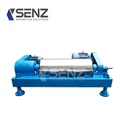

Alright, folks! As a supplier of DDGS dewatering centrifuges, I've seen firsthand the growing concern about the environmental impact of these machines. In today's post, I'm gonna share some practical ways to reduce that impact.
Understanding the Environmental Impact of DDGS Dewatering Centrifuges
Before we dive into solutions, let's quickly talk about why DDGS dewatering centrifuges can be a problem for the environment. These machines use a lot of energy to spin and separate the DDGS (Distillers Dried Grains with Solubles). Also, improper operation can lead to the release of waste and emissions that aren't so great for the air and water.
The energy consumption mainly comes from the high - speed rotation required to separate the solids from the liquids. The more energy we use, the more fossil fuels are burned in power plants, which contributes to greenhouse gas emissions. And if the waste from the centrifuge isn't managed properly, it can contaminate water sources and disrupt ecosystems.
Optimizing Energy Usage
One of the biggest steps we can take to reduce the environmental impact is to optimize the energy usage of the DDGS dewatering centrifuge.
Upgrade to Energy - Efficient Models
First off, consider upgrading to more energy - efficient models. We've been working hard on developing centrifuges that use advanced motor technology. These motors are designed to deliver the same performance but with less power consumption. For example, our latest models use variable frequency drives (VFDs). VFDs adjust the motor speed according to the actual load, so the centrifuge doesn't have to run at full power all the time. This can significantly cut down on energy usage.
Regular Maintenance
Regular maintenance is also crucial. When the centrifuge's components are well - maintained, it runs more smoothly. A poorly maintained centrifuge may have worn - out bearings or belts, which can cause the motor to work harder than necessary. By keeping the centrifuge in top condition, we can ensure that it uses energy as efficiently as possible. Simple tasks like lubricating moving parts, checking and tightening bolts, and replacing worn - out components can go a long way in reducing energy consumption.
Minimizing Waste Generation
Another important aspect is minimizing waste generation from the centrifuge.


Improved Separation Efficiency
We can improve the separation efficiency of the centrifuge. A more efficient separation means that we can get more of the valuable DDGS solids out and keep less in the waste stream. This not only reduces waste but also increases the amount of usable DDGS product. We've developed advanced rotor designs and control systems that enhance the separation process. These features allow for better clarification and separation of the solids and liquids, resulting in less waste.
Waste Recycling
What about the waste that's still generated? Well, we can look into recycling it. For example, some of the liquid waste from the centrifuge may still contain nutrients. This liquid can be treated and used as fertilizer in agricultural fields. It's a win - win situation. We reduce the amount of waste going to landfills and at the same time, provide a natural source of nutrients for crops.
Reducing Emissions
Emissions from the centrifuge operation can also have a negative impact on the environment.
Sealed Systems
Using sealed systems is a great way to reduce emissions. A sealed centrifuge prevents the release of dust and volatile organic compounds (VOCs) into the air. Our centrifuges are designed with high - quality seals that ensure a tight enclosure. This not only protects the environment but also creates a safer working environment for the operators.
Exhaust Treatment
In addition to sealed systems, we can implement exhaust treatment. The exhaust from the centrifuge can be passed through filters or scrubbers to remove harmful pollutants before it's released into the atmosphere. This can significantly reduce the amount of emissions and make the operation more environmentally friendly.
The Role of Advanced Technologies
There are some advanced technologies that can further help in reducing the environmental impact.
Automation and Process Control
Automation and process control can play a big role. By using sensors and control systems, we can optimize the operation of the centrifuge in real - time. For example, sensors can monitor the feed rate, the moisture content of the DDGS, and the separation efficiency. Based on these readings, the control system can adjust the centrifuge's speed, feed rate, and other parameters to ensure the most efficient operation. This not only reduces energy consumption but also improves the overall performance of the centrifuge.
Use of Alternative Materials
We're also exploring the use of alternative materials in the construction of the centrifuge. For example, using more recyclable or biodegradable materials can reduce the environmental impact of the centrifuge's manufacturing process. And if the centrifuge reaches the end of its life, these materials can be more easily recycled or disposed of in an environmentally friendly way.
Related Products
If you're interested in other types of centrifuges that also focus on environmental - friendliness and efficiency, you might check out our Clarifying Decanter Centrifuge, Avocado Oil Production Line Decanter, and Decanter Machine. These products also incorporate the latest technologies to minimize their environmental impact.
Let's Talk!
If you're looking to reduce the environmental impact of your DDGS dewatering process, or if you're interested in our centrifuges, I'd love to have a chat. We can discuss your specific needs and how our products can help you achieve your environmental and operational goals. Whether you're a small - scale producer or a large - scale industrial operation, we have solutions that can work for you.
References
- Smith, J. (2020). Energy - efficient centrifugation technologies. Journal of Industrial Engineering.
- Brown, A. (2021). Waste management in food processing industries. Environmental Science Reviews.
- Green, C. (2022). Advanced process control for centrifuge operations. Process Engineering Journal.