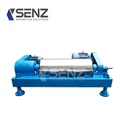

Determining the suitable bowl length for a fish oil decanter centrifuge is a critical aspect that directly impacts the efficiency and performance of the separation process. As a leading supplier of fish oil decanter centrifuges, we understand the complexities involved in this decision - making process and are here to share valuable insights to help you make an informed choice.


Understanding the Role of Bowl Length in a Fish Oil Decanter Centrifuge
The bowl of a decanter centrifuge is the core component where the separation of different phases in fish oil takes place. The length of the bowl influences several key factors such as the retention time of the material, the separation efficiency, and the capacity of the centrifuge.
A longer bowl provides a greater retention time for the fish oil and its associated impurities within the centrifuge. This extended retention time allows for more thorough separation of the solid and liquid phases. As the fish oil mixture rotates within the bowl, the centrifugal force acts on the components based on their density differences. Solids, being denser, are forced towards the outer wall of the bowl, while the lighter fish oil forms an inner layer. With a longer bowl, there is more space for these phases to separate fully, leading to a higher - quality fish oil product with reduced impurity levels.
On the other hand, the bowl length also affects the throughput capacity of the centrifuge. A longer bowl may limit the flow rate of the fish oil through the centrifuge, as the material needs more time to pass through the extended separation zone. Therefore, finding the right balance between separation efficiency and throughput is essential.
Factors to Consider When Determining Bowl Length
1. Fish Oil Characteristics
The physical and chemical properties of the fish oil being processed play a significant role in determining the suitable bowl length. For instance, if the fish oil has a high viscosity, it will flow more slowly through the centrifuge. In this case, a longer bowl may be beneficial as it allows the viscous oil more time to separate from the solids. Conversely, if the fish oil has a low viscosity, a shorter bowl may be sufficient to achieve the desired separation, and it can also support a higher throughput rate.
The initial impurity content of the fish oil is another crucial factor. If the fish oil contains a large amount of solids or other contaminants, a longer bowl can enhance the separation process by providing more opportunity for the impurities to be removed. However, if the fish oil is relatively clean to begin with, a shorter bowl may be adequate, reducing the processing time and energy consumption.
2. Desired Separation Efficiency
The level of purity required for the final fish oil product is a major consideration. In applications where a high - purity fish oil is needed, such as in the pharmaceutical or nutraceutical industries, a longer bowl is often preferred. This is because it can achieve a more complete separation of the oil from the solids and other unwanted substances, resulting in a product that meets the strict quality standards.
For less demanding applications, such as in the production of animal feed or industrial lubricants, a lower separation efficiency may be acceptable. In these cases, a shorter bowl can be used, which can increase the processing speed and reduce the cost of operation.
3. Throughput Requirements
The volume of fish oil that needs to be processed per unit of time is an important factor. If your production facility has a high - volume production requirement, a shorter bowl may be more suitable as it allows for a higher flow rate of the fish oil through the centrifuge. However, it is important to ensure that the shorter bowl can still achieve an acceptable level of separation efficiency for your specific application.
Conversely, if your production volume is relatively low, you may have more flexibility in choosing a longer bowl to achieve a higher - quality separation.
Comparing Different Bowl Lengths in Practice
Let's consider two scenarios to illustrate the impact of bowl length on the performance of a fish oil decanter centrifuge.
Scenario 1: High - Purity Fish Oil Production
A pharmaceutical company requires a very high - purity fish oil for its omega - 3 supplements. The fish oil has a relatively high viscosity and contains a moderate amount of impurities. In this case, a longer bowl centrifuge would be the ideal choice. The extended bowl length allows the viscous oil to remain in the centrifuge for a longer time, enabling a more complete separation of the solids and other contaminants. Although the throughput may be lower compared to a shorter bowl centrifuge, the high - quality fish oil produced meets the strict pharmaceutical standards.
Scenario 2: Animal Feed Production
A feed manufacturer processes a large volume of fish oil for animal feed. The fish oil has a low viscosity and a relatively low impurity content. Here, a shorter bowl centrifuge would be more appropriate. The shorter bowl allows for a higher flow rate of the fish oil, increasing the throughput of the centrifuge. Even though the separation efficiency may be slightly lower, it is sufficient for the requirements of animal feed production, and the higher throughput can significantly improve the overall productivity of the manufacturing process.
Our Product Range and Expertise
As a supplier of fish oil decanter centrifuges, we offer a wide range of models with different bowl lengths to meet the diverse needs of our customers. Our centrifuges are designed with the latest technology and high - quality materials to ensure reliable and efficient operation.
In addition to fish oil decanter centrifuges, we also provide other types of decanter centrifuges, such as Soymilk Decanter Centrifuge, Solids Control Centrifuge, and Separation Decanter Centrifuge. Our team of experts is always ready to assist you in selecting the most suitable centrifuge for your specific application, taking into account factors such as fish oil characteristics, desired separation efficiency, and throughput requirements.
Conclusion
Determining the suitable bowl length for a fish oil decanter centrifuge is a complex but crucial decision. It requires a careful consideration of factors such as fish oil characteristics, desired separation efficiency, and throughput requirements. By understanding these factors and working with an experienced supplier like us, you can ensure that you choose the right centrifuge for your fish oil processing needs, achieving optimal separation efficiency and productivity.
If you are interested in learning more about our fish oil decanter centrifuges or other related products, or if you have any questions regarding the selection of the appropriate bowl length, please feel free to contact us. We are eager to engage in a detailed discussion with you and help you make the best purchasing decision for your business.
References
- "Centrifugal Separation Technology" by Perry's Chemical Engineers' Handbook
- "Fish Oil Processing and Quality Control" by industry research reports.