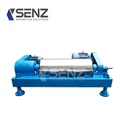

Choosing the right manure decanter centrifuge for a farm is a crucial decision that can significantly impact the efficiency and profitability of agricultural operations. As a manure decanter centrifuge supplier, I understand the importance of making an informed choice. In this blog post, I will guide you through the key factors to consider when selecting a manure decanter centrifuge for your farm.
Understanding the Basics of Manure Decanter Centrifuges
A manure decanter centrifuge is a specialized piece of equipment used to separate solids from liquids in manure. This process is essential for several reasons. Firstly, it helps in reducing the volume of manure, making it easier to handle and transport. Secondly, it separates the nutrient-rich solids from the liquid fraction, which can be used as high-quality fertilizer. Thirdly, it can improve the overall environmental impact of manure management by reducing odor and the risk of nutrient runoff.
The basic principle behind a manure decanter centrifuge involves spinning the manure at high speeds. The centrifugal force generated causes the heavier solids to settle at the outer edge of the centrifuge bowl, while the lighter liquid phase remains closer to the center. The separated solids and liquids are then discharged through different outlets.
Key Factors to Consider When Choosing a Manure Decanter Centrifuge
1. Capacity
The capacity of a manure decanter centrifuge refers to the amount of manure it can process per unit of time. This is typically measured in gallons per minute (GPM) or cubic meters per hour (m³/h). When choosing a centrifuge, you need to consider the daily volume of manure produced on your farm. If you have a large-scale farm with a high manure output, you will need a centrifuge with a higher capacity. On the other hand, a smaller farm may require a lower-capacity centrifuge.
It's important to note that the capacity of a centrifuge can also be affected by the characteristics of the manure, such as its solid content and viscosity. Manure with a high solid content or high viscosity may require a centrifuge with a larger capacity or a more powerful motor to ensure efficient separation.
2. Separation Efficiency
Separation efficiency is another critical factor to consider. It refers to the ability of the centrifuge to effectively separate the solids from the liquids in the manure. A high separation efficiency means that more solids are removed from the liquid fraction, resulting in a drier solid cake and a cleaner liquid effluent.
Several factors can affect the separation efficiency of a centrifuge, including the design of the centrifuge bowl, the speed of rotation, and the type of conveyor used. Centrifuges with a larger bowl diameter and a higher rotational speed generally offer better separation efficiency. Additionally, a well-designed conveyor can help to ensure that the separated solids are efficiently discharged from the centrifuge.
3. Power Consumption
Power consumption is an important consideration, especially for farms looking to reduce their operating costs. The power consumption of a manure decanter centrifuge depends on several factors, including its capacity, speed of rotation, and the type of motor used.
Centrifuges with a higher capacity and a higher rotational speed typically consume more power. However, advances in centrifuge technology have led to the development of more energy-efficient models. When choosing a centrifuge, look for models that are designed to minimize power consumption without sacrificing performance.
4. Maintenance Requirements
Regular maintenance is essential to ensure the long-term performance and reliability of a manure decanter centrifuge. When choosing a centrifuge, consider the maintenance requirements of the model. Some centrifuges may require more frequent maintenance, such as lubrication, belt replacement, and bearing inspection.
Look for a centrifuge that is easy to access and clean. A centrifuge with a simple design and fewer moving parts will generally be easier to maintain. Additionally, consider the availability of spare parts and the level of technical support provided by the manufacturer.
5. Cost
The cost of a manure decanter centrifuge is an important consideration for most farms. The cost of a centrifuge can vary depending on its capacity, features, and brand. When comparing different models, it's important to consider the total cost of ownership, which includes the purchase price, installation costs, operating costs, and maintenance costs.
While it may be tempting to choose the cheapest option, it's important to remember that a high-quality centrifuge may offer better performance, reliability, and energy efficiency in the long run. Consider the return on investment (ROI) when making your decision.
Different Types of Manure Decanter Centrifuges
There are several types of manure decanter centrifuges available on the market, each with its own advantages and disadvantages.
1. High Speed Decanter Centrifuge
High-speed decanter centrifuges are designed to operate at a higher rotational speed, which allows for more efficient separation of solids from liquids. These centrifuges are typically more expensive than standard-speed centrifuges but offer better separation efficiency and a higher throughput.
2. Oilfield Drilling Equipment
While primarily used in the oilfield industry, some oilfield drilling equipment can also be adapted for manure separation. These centrifuges are designed to handle high-viscosity fluids and can be effective in separating solids from manure with a high solid content.


3. Mining Decanter Centrifuge
Mining decanter centrifuges are similar to high-speed decanter centrifuges but are designed to handle larger volumes of solids. These centrifuges are typically used in the mining industry but can also be used for manure separation on large-scale farms.
Conclusion
Choosing the right manure decanter centrifuge for your farm is a complex decision that requires careful consideration of several factors. By taking into account the capacity, separation efficiency, power consumption, maintenance requirements, and cost of the centrifuge, you can make an informed choice that will meet the specific needs of your farm.
If you are interested in learning more about our manure decanter centrifuges or would like to discuss your specific requirements, please feel free to contact us. Our team of experts is ready to assist you in selecting the right centrifuge for your farm and to provide you with the support and guidance you need to ensure its successful operation.
References
- "Manure Management Handbook" - Agricultural Extension Service
- "Centrifuge Technology and Applications" - Industrial Press
- "Advances in Manure Separation Technologies" - Journal of Agricultural Engineering Research