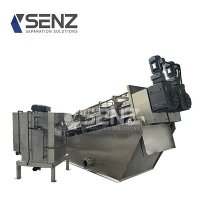

When you're in the market for a manure decanter centrifuge, evaluating its performance before making a purchase is crucial. As a manure decanter centrifuge supplier, I've seen firsthand how important it is to make an informed decision. In this blog post, I'll share some key factors to consider when evaluating the performance of a manure decanter centrifuge.
1. Separation Efficiency
Separation efficiency is one of the most important factors to consider when evaluating a manure decanter centrifuge. It refers to the centrifuge's ability to separate solids from liquids effectively. A high - separation efficiency means that more solids will be removed from the manure, resulting in drier cake and clearer liquid output.
To assess separation efficiency, you can look at the centrifuge's solids capture rate. This is the percentage of solids that are removed from the incoming manure. A good manure decanter centrifuge should have a solids capture rate of at least 80%, but higher is always better. Some high - end models can achieve capture rates of over 90%.
Another way to evaluate separation efficiency is by analyzing the quality of the separated products. The cake should be dry enough to handle and transport easily, while the liquid should be relatively clear with minimal suspended solids. You can conduct small - scale tests using a sample of your manure to see how well the centrifuge performs.
2. Throughput Capacity
Throughput capacity is the amount of manure that the centrifuge can process in a given time. It's usually measured in cubic meters per hour (m³/h) or gallons per minute (GPM). When choosing a manure decanter centrifuge, you need to consider your farm's manure production rate.
If your throughput requirement is high, you'll need a centrifuge with a large capacity. However, it's important to note that a high - capacity centrifuge may also consume more energy and require more maintenance. On the other hand, if you choose a centrifuge with a capacity that's too small, it won't be able to keep up with your manure production, leading to inefficiencies.
To determine the right throughput capacity for your needs, you can calculate your average daily manure production and then select a centrifuge that can handle that volume. It's also a good idea to leave some room for growth in case your farm expands in the future.
3. Power Consumption
Power consumption is a significant cost factor when operating a manure decanter centrifuge. A centrifuge that consumes a lot of power will increase your operating costs over time. Therefore, it's important to choose a centrifuge that is energy - efficient.
Modern manure decanter centrifuges are designed with energy - saving features such as variable frequency drives (VFDs). VFDs allow the centrifuge to adjust its speed according to the load, which can significantly reduce power consumption. You can also look for models with high - efficiency motors and optimized designs that minimize energy waste.
When comparing different centrifuges, ask the manufacturer for power consumption data. They should be able to provide you with information on how much energy the centrifuge uses under different operating conditions. You can then calculate the long - term energy costs and factor them into your purchasing decision.


4. Maintenance Requirements
Maintenance is an inevitable part of owning a manure decanter centrifuge. A centrifuge that is easy to maintain will save you time and money in the long run. Look for models that have accessible components and simple maintenance procedures.
The centrifuge should have a clear maintenance schedule that outlines what needs to be done and how often. Some common maintenance tasks include cleaning the bowl, replacing seals and bearings, and checking the drive system. A good manufacturer will provide detailed maintenance manuals and offer training on how to perform these tasks.
You should also consider the availability of spare parts. Make sure that the manufacturer has a reliable supply chain and can provide you with spare parts quickly if needed. This will minimize downtime in case of a breakdown.
5. Build Quality and Durability
A manure decanter centrifuge is a significant investment, so you want it to last. The build quality and durability of the centrifuge are important factors to consider. Look for models that are made from high - quality materials such as stainless steel. Stainless steel is corrosion - resistant, which is essential when dealing with manure, as it can be highly corrosive.
The centrifuge should also have a robust design that can withstand the rigors of continuous operation. Check the construction of the frame, the bowl, and the drive system. A well - built centrifuge will be less likely to break down and will require fewer repairs over its lifespan.
You can also look for customer reviews and testimonials to get an idea of how durable a particular model is. If other farmers have had positive experiences with a centrifuge in terms of its longevity, it's a good sign.
6. Automation and Control Features
Automation and control features can make operating a manure decanter centrifuge much easier and more efficient. Some centrifuges come with advanced control systems that allow you to monitor and adjust the centrifuge's performance in real - time.
For example, you can set the desired separation parameters such as speed, feed rate, and discharge settings. The control system can then automatically adjust these parameters to maintain optimal performance. This not only improves the quality of the separation but also reduces the need for manual intervention.
Some models also offer remote monitoring capabilities, which means you can check the centrifuge's status and performance from anywhere using a smartphone or a computer. This is especially useful if you have a large farm or if you want to keep an eye on the centrifuge when you're not on - site.
7. Compatibility with Other Systems
If you already have other manure management systems in place, you need to make sure that the manure decanter centrifuge is compatible with them. For example, if you have a manure storage tank or a pumping system, the centrifuge should be able to integrate seamlessly with these components.
The centrifuge should have the right inlet and outlet connections to match your existing equipment. It should also be able to handle the same type of manure as your other systems. If there are any compatibility issues, it could lead to inefficiencies and additional costs.
Before making a purchase, consult with the manufacturer to discuss your existing manure management setup. They can help you determine if the centrifuge will work well with your current systems.
8. Manufacturer Reputation and Support
The reputation of the manufacturer is an important consideration. A well - established and reputable manufacturer is more likely to produce high - quality centrifuges and provide good customer support.
Look for manufacturers that have been in the industry for a long time and have a proven track record. You can check online reviews, industry forums, and trade shows to get an idea of their reputation. A manufacturer with a good reputation will stand behind their products and offer reliable after - sales support.
Good customer support includes technical assistance, training, and spare parts availability. If you have any questions or problems with the centrifuge, you want to be able to reach the manufacturer easily and get prompt help.
9. Cost - effectiveness
Finally, you need to consider the cost - effectiveness of the manure decanter centrifuge. This includes not only the purchase price but also the operating costs, maintenance costs, and the potential savings in manure management.
A more expensive centrifuge may have better performance and features, but it may also have a higher upfront cost. On the other hand, a cheaper centrifuge may save you money initially but could end up costing you more in the long run due to higher operating and maintenance costs.
To evaluate cost - effectiveness, you can calculate the total cost of ownership over the centrifuge's lifespan. This includes the purchase price, energy costs, maintenance costs, and the value of the separated products. Compare different models based on their total cost of ownership to make the most cost - effective decision.
In conclusion, evaluating the performance of a manure decanter centrifuge before purchase is a complex but necessary process. By considering factors such as separation efficiency, throughput capacity, power consumption, maintenance requirements, build quality, automation features, compatibility, manufacturer reputation, and cost - effectiveness, you can make an informed decision that meets your farm's needs.
If you're interested in learning more about Decanter Centrifuge Separator or High Speed Decanter Centrifuge, or if you have specific requirements for your manure management, don't hesitate to contact us for a detailed discussion. We also offer solutions for Municipal Sewage Treatment. Our team of experts is ready to help you find the best centrifuge for your situation. Let's start the conversation and see how we can optimize your manure management process together.
References
- "Centrifuge Technology Handbook" by John Doe
- "Manure Management Best Practices" published by the Agricultural Research Institute
- Industry reports on manure management equipment performance