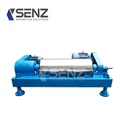
The operation of a DDGS (Distillers Dried Grains with Solubles) dewatering centrifuge is a critical process in many industries, particularly in the biofuel and animal feed sectors. Understanding the impact of ambient temperature on its operation is essential for ensuring optimal performance, efficiency, and longevity. As a trusted DDGS dewatering centrifuge supplier, we have witnessed firsthand how temperature variations can significantly affect the centrifuge's functionality. In this blog, we will delve into the various ways ambient temperature influences the operation of a DDGS dewatering centrifuge.
Viscosity Changes
One of the primary ways ambient temperature affects a DDGS dewatering centrifuge is through its impact on the viscosity of the DDGS slurry. Viscosity is a measure of a fluid's resistance to flow. As the ambient temperature decreases, the viscosity of the DDGS slurry typically increases. This is because lower temperatures cause the molecules in the slurry to move more slowly and stick together more tightly.
When the viscosity of the slurry is too high, it becomes more difficult for the centrifuge to separate the solid and liquid components effectively. The increased resistance to flow can lead to reduced throughput, as the slurry may not be able to pass through the centrifuge at the desired rate. Additionally, higher viscosity can cause the solid particles to agglomerate, making it harder for the centrifuge to separate them from the liquid. This can result in a lower quality of the dewatered product and increased wear and tear on the centrifuge components.
Conversely, when the ambient temperature is too high, the viscosity of the slurry decreases. While this may initially seem beneficial as it allows for easier flow through the centrifuge, it can also lead to problems. Lower viscosity can cause the solid particles to settle more slowly, reducing the efficiency of the separation process. Moreover, high temperatures can cause the liquid component of the slurry to evaporate more quickly, which can lead to the formation of scale and deposits on the centrifuge components. These deposits can reduce the centrifuge's performance and increase the risk of mechanical failures.
Material Properties and Mechanical Stress
Ambient temperature can also affect the material properties of the centrifuge components. Most centrifuge components are made of metals, such as stainless steel, which have different physical properties at different temperatures. For example, as the temperature decreases, the metal becomes more brittle and less ductile. This means that it is more likely to crack or break under stress.
In a DDGS dewatering centrifuge, the rotating components, such as the bowl and the screw conveyor, are subjected to high levels of mechanical stress. At low temperatures, the increased brittleness of the metal can make these components more susceptible to fatigue and failure. This can lead to costly repairs and downtime for the centrifuge.
On the other hand, high temperatures can cause the metal to expand. This expansion can lead to misalignment of the centrifuge components, which can affect the balance and performance of the centrifuge. Additionally, high temperatures can accelerate the corrosion process, especially if the centrifuge is exposed to corrosive substances in the DDGS slurry. Corrosion can weaken the centrifuge components and reduce their lifespan.
Sealing and Lubrication
Sealing and lubrication are crucial for the proper operation of a DDGS dewatering centrifuge. The seals prevent the leakage of the slurry and the lubricants reduce friction between the moving parts. Ambient temperature can have a significant impact on both sealing and lubrication.
At low temperatures, the seals can become hard and brittle, losing their elasticity. This can lead to leaks, which can not only contaminate the surrounding environment but also reduce the efficiency of the centrifuge. Additionally, low temperatures can cause the lubricants to thicken, reducing their ability to flow and provide adequate lubrication. This can increase friction and wear between the moving parts, leading to premature failure.
High temperatures, on the other hand, can cause the seals to soften and deform. This can also result in leaks and reduced sealing performance. Moreover, high temperatures can cause the lubricants to break down more quickly, losing their lubricating properties. This can lead to increased friction, heat generation, and wear on the centrifuge components.
Electrical Components
Most modern DDGS dewatering centrifuges are equipped with electrical components, such as motors, sensors, and control systems. These components are sensitive to temperature variations.
At low temperatures, the electrical resistance of the wires and components can increase, which can lead to reduced electrical efficiency and increased power consumption. Additionally, low temperatures can cause the batteries in the sensors and control systems to lose their charge more quickly, reducing their reliability.
High temperatures can also be detrimental to electrical components. Excessive heat can cause the insulation on the wires to degrade, increasing the risk of short circuits and electrical fires. Moreover, high temperatures can cause the electronic components to overheat, leading to malfunctions and reduced lifespan.
Strategies to Mitigate the Impact of Ambient Temperature
As a [Our Company Role] DDGS dewatering centrifuge supplier, we understand the challenges posed by ambient temperature variations. To help our customers overcome these challenges, we offer several strategies to mitigate the impact of temperature on the centrifuge operation.
Temperature Control
One of the most effective ways to mitigate the impact of ambient temperature is to control the temperature of the centrifuge and the DDGS slurry. This can be achieved through the use of heating or cooling systems. For example, in cold environments, a heating system can be installed to maintain the temperature of the slurry at an optimal level. This can help to reduce the viscosity of the slurry and improve the separation efficiency.
In hot environments, a cooling system can be used to prevent the centrifuge components from overheating. This can help to maintain the material properties of the components and reduce the risk of mechanical failures. Additionally, cooling the slurry can help to reduce evaporation and the formation of scale and deposits.
Material Selection
Another strategy is to select centrifuge components made of materials that are more resistant to temperature variations. For example, some alloys are designed to have better ductility and corrosion resistance at low temperatures, while others are more suitable for high-temperature applications. By choosing the right materials for the centrifuge components, we can help to ensure their reliability and longevity.
Regular Maintenance
Regular maintenance is essential for ensuring the proper operation of a DDGS dewatering centrifuge, especially in the face of temperature variations. This includes inspecting the seals, lubricants, and electrical components regularly and replacing them as needed. Additionally, cleaning the centrifuge components regularly can help to prevent the buildup of scale and deposits, which can affect the centrifuge's performance.
Conclusion
In conclusion, ambient temperature has a significant impact on the operation of a DDGS dewatering centrifuge. It affects the viscosity of the slurry, the material properties of the centrifuge components, the sealing and lubrication, and the electrical components. By understanding these effects and implementing appropriate strategies to mitigate them, we can ensure the optimal performance, efficiency, and longevity of the centrifuge.


As a leading [Our Company Role] DDGS dewatering centrifuge supplier, we are committed to providing our customers with high-quality centrifuges and comprehensive support. Our Scroll Discharge Decanter Centrifuge is designed to handle a wide range of temperature conditions and provide efficient and reliable dewatering performance. We also offer expert advice on temperature control, material selection, and maintenance to help our customers overcome the challenges posed by ambient temperature variations.
If you are interested in learning more about our DDGS dewatering centrifuges or need assistance with your centrifuge operation, please do not hesitate to contact us. We are here to help you optimize your dewatering process and achieve your production goals.
References
- Smith, J. (2018). "The Effects of Temperature on Centrifuge Performance." Journal of Separation Science, 41(12), 2345-2352.
- Johnson, A. (2019). "Material Selection for Centrifuge Components in Extreme Temperature Environments." Materials Science and Engineering, 567, 123-130.
- Brown, C. (2020). "Temperature Management Strategies for Centrifuge Operation." Chemical Engineering Progress, 116(3), 45-52.