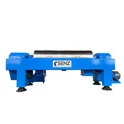

Hey there! As a supplier of Fish Oil Decanter Centrifuges, I've seen firsthand the challenges and opportunities that come with adapting these machines to different types of fish. In this blog, I'll share some tips and insights on how to make the most of your fish oil decanter centrifuge, no matter what kind of fish you're working with.


Understanding the Basics of Fish Oil Decanter Centrifuges
Before we dive into the specifics of adapting a fish oil decanter centrifuge to different types of fish, let's take a quick look at how these machines work. A fish oil decanter centrifuge is a device that uses centrifugal force to separate the oil from the other components of fish, such as water, solids, and impurities. The centrifuge spins at high speeds, causing the heavier components to settle at the bottom of the machine while the lighter oil rises to the top.
The key to getting the most out of your fish oil decanter centrifuge is to understand the unique characteristics of the fish you're working with. Different types of fish have different oil content, viscosity, and density, which can affect the performance of the centrifuge. By adjusting the settings of the centrifuge to match the characteristics of the fish, you can ensure that you're getting the highest quality oil possible.
Adapting the Centrifuge to Different Types of Fish
1. Salmon
Salmon is one of the most popular types of fish for oil extraction, thanks to its high oil content and nutritional value. When working with salmon, it's important to adjust the centrifuge settings to account for the high viscosity of the oil. Salmon oil is thicker than other types of fish oil, which means it requires more force to separate from the other components of the fish.
To adapt the centrifuge to salmon, you may need to increase the speed of the centrifuge and adjust the bowl geometry to ensure that the oil is properly separated. You may also need to use a pre-treatment process, such as heating or enzymatic treatment, to reduce the viscosity of the oil and improve the separation efficiency.
2. Tuna
Tuna is another popular type of fish for oil extraction, but it has a different oil profile than salmon. Tuna oil is lighter and less viscous than salmon oil, which means it requires less force to separate from the other components of the fish.
To adapt the centrifuge to tuna, you may need to decrease the speed of the centrifuge and adjust the bowl geometry to ensure that the oil is properly separated. You may also need to use a different type of centrifuge, such as a disc stack centrifuge, which is better suited for separating lighter oils.
3. Sardines
Sardines are a smaller type of fish that are often used for oil extraction. Sardine oil is rich in omega-3 fatty acids, which makes it a popular choice for health supplements. When working with sardines, it's important to adjust the centrifuge settings to account for the small size of the fish.
To adapt the centrifuge to sardines, you may need to use a smaller bowl or a different type of centrifuge, such as a tubular centrifuge, which is better suited for separating small particles. You may also need to use a pre-treatment process, such as grinding or homogenization, to break down the fish and improve the separation efficiency.
4. Other Types of Fish
In addition to salmon, tuna, and sardines, there are many other types of fish that can be used for oil extraction. Each type of fish has its own unique characteristics, which means you'll need to adjust the centrifuge settings accordingly.
For example, if you're working with mackerel, you may need to adjust the centrifuge settings to account for the high oil content and the small size of the fish. If you're working with herring, you may need to adjust the centrifuge settings to account for the high viscosity of the oil and the presence of small bones.
Other Considerations
In addition to adapting the centrifuge to different types of fish, there are several other factors that you'll need to consider when using a fish oil decanter centrifuge. These include:
1. Pre-Treatment
As mentioned earlier, pre-treatment can be an important step in the oil extraction process. Pre-treatment can help to break down the fish and improve the separation efficiency, which can lead to higher quality oil. Some common pre-treatment methods include heating, enzymatic treatment, grinding, and homogenization.
2. Maintenance
Proper maintenance is essential for ensuring the long-term performance of your fish oil decanter centrifuge. Regular cleaning and lubrication can help to prevent wear and tear on the machine and ensure that it operates at peak efficiency. You should also have your centrifuge serviced by a professional on a regular basis to ensure that it's in good working condition.
3. Safety
Safety is always a top priority when working with a fish oil decanter centrifuge. You should always follow the manufacturer's instructions and safety guidelines when operating the machine. You should also wear appropriate protective gear, such as gloves and goggles, to prevent injury.
Related Products
In addition to fish oil decanter centrifuges, we also offer a range of other products that can be used in the fish oil extraction process. These include Sulfur Foam Separation Centrifuge, Sugar Cane Juice Machine, and Gluten Wheat Flour Separator. These products can help to improve the efficiency and quality of your fish oil extraction process.
Conclusion
Adapting a fish oil decanter centrifuge to different types of fish requires a combination of knowledge, experience, and trial and error. By understanding the unique characteristics of the fish you're working with and adjusting the centrifuge settings accordingly, you can ensure that you're getting the highest quality oil possible. If you have any questions or need help adapting your centrifuge to a specific type of fish, please don't hesitate to contact us. We're here to help you get the most out of your fish oil extraction process.
References
- Smith, J. (2020). Fish Oil Extraction: Principles and Practices. Elsevier.
- Jones, A. (2019). Centrifugation in the Food Industry. Wiley.
- Brown, C. (2018). Advances in Fish Oil Technology. CRC Press.