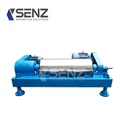

The flow rate is a crucial parameter that significantly impacts the performance of an oil water separator. As a reputable supplier of oil water separators, we have witnessed firsthand how variations in flow rate can lead to different outcomes in separation efficiency, maintenance requirements, and overall operational costs. In this blog, we will delve into the science behind the relationship between flow rate and the performance of oil water separators, and how understanding this can help you make informed decisions for your separation needs.
Basic Principles of Oil Water Separation
Before discussing the impact of flow rate, it's essential to understand the basic principles of oil water separation. Oil and water are immiscible liquids, meaning they do not mix. The separation process relies on the difference in density between oil and water. In most cases, oil is less dense than water, so it tends to float on the surface of water. However, achieving a complete separation is not always straightforward, especially when dealing with emulsions or small oil droplets.
There are several types of oil water separators, including gravity separators, coalescing separators, and centrifugal separators. Each type has its own working mechanism, but they all aim to separate oil from water by exploiting the density difference. Gravity separators rely on the natural buoyancy of oil to rise to the surface, while coalescing separators use a medium to promote the aggregation of small oil droplets into larger ones, making them easier to separate. Centrifugal separators, on the other hand, use centrifugal force to accelerate the separation process.
How Flow Rate Affects Separation Efficiency
The flow rate of the incoming mixture is one of the most critical factors that affect the separation efficiency of an oil water separator. When the flow rate is too high, the residence time of the mixture in the separator is reduced. Residence time refers to the amount of time the mixture spends inside the separator, which is crucial for the separation process to occur. If the residence time is too short, the oil droplets may not have enough time to rise to the surface or coalesce into larger droplets, resulting in poor separation efficiency.
For example, in a gravity separator, the oil droplets need time to float to the surface. If the flow rate is too high, the water may carry the oil droplets out of the separator before they have a chance to separate. Similarly, in a coalescing separator, the small oil droplets need to come into contact with the coalescing medium and aggregate into larger droplets. A high flow rate can prevent this contact from occurring effectively, leading to incomplete separation.
On the other hand, when the flow rate is too low, it can also have a negative impact on the performance of the separator. A very low flow rate may cause the oil to accumulate in the separator, leading to clogging and reduced separation efficiency. Additionally, a low flow rate may result in a longer residence time, which can increase the risk of bacterial growth and corrosion inside the separator.
Impact on Maintenance Requirements
The flow rate also affects the maintenance requirements of an oil water separator. A high flow rate can cause more wear and tear on the separator components, such as the coalescing medium, pumps, and valves. The increased velocity of the mixture can erode the surfaces of these components, leading to reduced performance and a shorter lifespan. As a result, more frequent maintenance and replacement of parts may be required, increasing the overall operational costs.
In addition, a high flow rate can carry more contaminants into the separator, such as solids and debris. These contaminants can accumulate in the separator and cause blockages, which can further reduce the separation efficiency and increase the maintenance workload. Regular cleaning and inspection of the separator are necessary to prevent these issues from occurring.
Conversely, a low flow rate may reduce the wear and tear on the components, but it can also lead to the accumulation of oil and sludge in the separator. This can create an ideal environment for bacterial growth, which can produce unpleasant odors and cause corrosion. Periodic cleaning and sludge removal are still required to maintain the performance of the separator.
Operational Costs and Flow Rate
The flow rate has a direct impact on the operational costs of an oil water separator. A high flow rate generally requires more energy to pump the mixture through the separator. The pumps need to work harder to maintain the high flow rate, which increases the energy consumption and the associated costs. Additionally, as mentioned earlier, a high flow rate can lead to more frequent maintenance and replacement of parts, which also adds to the operational costs.
On the other hand, a low flow rate may reduce the energy consumption, but it can also result in a longer processing time. If the separator is part of a larger production process, a low flow rate may slow down the overall production rate, which can have a negative impact on the profitability. Therefore, finding the optimal flow rate is crucial to balance the energy consumption, maintenance costs, and production efficiency.
Choosing the Right Flow Rate for Your Application
As an oil water separator supplier, we understand that choosing the right flow rate for your application is essential to achieve the best performance. There are several factors to consider when determining the appropriate flow rate, including the type of separator, the characteristics of the incoming mixture, and the desired separation efficiency.
First, the type of separator plays a significant role in determining the optimal flow rate. Different types of separators have different flow rate limitations. For example, centrifugal separators can generally handle higher flow rates compared to gravity separators. This is because centrifugal force can accelerate the separation process, allowing for a shorter residence time.


Second, the characteristics of the incoming mixture, such as the oil content, droplet size distribution, and the presence of solids, also affect the flow rate. A mixture with a high oil content or small oil droplets may require a lower flow rate to achieve good separation efficiency. Similarly, if the mixture contains a large amount of solids, a lower flow rate may be necessary to prevent blockages.
Finally, the desired separation efficiency is an important consideration. If a high level of separation is required, a lower flow rate may be necessary to ensure that the oil droplets have enough time to separate. However, if a lower level of separation is acceptable, a higher flow rate may be used to increase the processing capacity.
Our Solutions for Different Flow Rates
At our company, we offer a wide range of oil water separators to meet the needs of different applications and flow rates. Our Centrifuge For Oil Water Separation is designed to handle high flow rates efficiently. It uses centrifugal force to separate oil from water quickly and effectively, making it suitable for applications where a large volume of mixture needs to be processed.
For applications with lower flow rates, our Small Decanter Centrifuge is an ideal choice. It is compact and energy-efficient, and it can provide excellent separation performance even at low flow rates.
In addition, we also offer Centrifuge Sludge Separator for applications where the mixture contains a significant amount of solids. This separator can effectively remove the sludge and solids from the mixture, ensuring the smooth operation of the oil water separation process.
Conclusion
In conclusion, the flow rate has a profound impact on the performance of an oil water separator. It affects the separation efficiency, maintenance requirements, and operational costs. As an oil water separator supplier, we understand the importance of choosing the right flow rate for your application. By considering the type of separator, the characteristics of the incoming mixture, and the desired separation efficiency, you can select the optimal flow rate to achieve the best results.
If you are looking for an oil water separator for your application, we encourage you to contact us for a consultation. Our team of experts can help you choose the right separator and determine the appropriate flow rate based on your specific needs. We are committed to providing high-quality products and excellent customer service to ensure your satisfaction.
References
- S. S. Hameed, "Oil - Water Separation Technologies: A Review," Journal of Environmental Management, vol. 130, pp. 202 - 217, 2014.
- P. A. Wilderer, "Design and Operation of Oil - Water Separators," Water Science and Technology, vol. 37, no. 1, pp. 1 - 10, 1998.
- R. K. Singh, "Centrifugal Separation Technology," McGraw - Hill, 2006.