
As a supplier of Used Cooking Oil Separators, I am often asked about how our equipment handles oil with a high acid value. In this blog post, I will delve into the science behind our separators and explain the processes involved in dealing with such challenging oils.
Understanding the Acid Value in Used Cooking Oil
The acid value (AV) of used cooking oil is a crucial parameter that indicates the degree of oil degradation. It is defined as the amount of potassium hydroxide (KOH) in milligrams required to neutralize the free fatty acids (FFAs) present in one gram of the oil. A high acid value suggests significant oxidation and hydrolysis of the oil, which can lead to unpleasant odors, flavors, and a reduced shelf - life of the oil.
High - acid - value oils are commonly generated in commercial kitchens, bakeries, and food processing industries, where oils are reused multiple times at high temperatures. Fried foods can release moisture and impurities into the oil, accelerating the formation of FFAs. Additionally, exposure to oxygen during storage and cooking further exacerbates the oxidation process.
Challenges Posed by High - Acid - Value Oil
Handling high - acid - value oil presents several challenges for separation equipment. Firstly, the presence of a large amount of FFAs can increase the viscosity of the oil, making it more difficult to separate from water and other impurities. This higher viscosity can slow down the separation process and potentially clog the separator components.


Secondly, FFAs are chemically reactive and can form soap - like substances when they interact with alkaline substances present in the separation system. These soaps can emulsify the oil and water mixture, reducing the efficiency of separation and leading to a lower - quality end product.
How Our Used Cooking Oil Separator Tackles High - Acid - Value Oil
Pre - treatment Stage
Before the oil enters our separator, a pre - treatment step is often employed to reduce the acid value and viscosity of the oil. This can involve the addition of certain chemicals that can react with the FFAs to form less problematic compounds. For example, alkali metals or alkaline earth metal salts can be used to neutralize the FFAs, converting them into fatty acid salts (soaps) and water.
However, we need to carefully control the amount of chemicals added to avoid over - neutralization. Over - addition can result in the excess formation of soaps, which can cause emulsification issues downstream. Our separators are designed to work in conjunction with pre - treatment systems, allowing for precise dosing of chemicals based on the initial acid value of the used cooking oil.
Separation Process
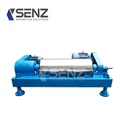
Once the oil has undergone pre - treatment, it enters the core of our Used Cooking Oil Separator. Our separators are based on the principle of centrifugation, which uses the centrifugal force generated by a rapidly rotating drum to separate substances of different densities.
In the case of used cooking oil, the separator effectively separates the oil from water, solid particles, and other impurities. The high - density solids and water are forced to the outer wall of the rotating drum, where they are collected and removed through separate outlets. The oil, being of lower density, is collected from the center of the drum.
Our separators are equipped with advanced technology that enhances the separation efficiency, even when dealing with high - acid - value oil. For example, the design of the drum's internal components is optimized to create a stable flow pattern, ensuring that the oil, water, and solids are separated cleanly.
Moreover, the high - speed rotation of the drum generates intense centrifugal forces, which can break up any remaining emulsions in the oil. This is particularly important for high - acid - value oils, as they are more prone to emulsification due to the presence of FFAs and soaps.
Post - treatment and Quality Assurance
After the initial separation, the oil may still contain some residual impurities and a small amount of FFAs. To ensure the highest quality of the recovered oil, a post - treatment step is carried out. This can involve processes such as filtration to remove any remaining solid particles and further chemical treatment to reduce the acid value to an acceptable level.
We also have a comprehensive quality control system in place. Samples of the separated oil are regularly tested to monitor the acid value, moisture content, and other key parameters. This allows us to make real - time adjustments to the separation and treatment processes, ensuring that the final product meets the required standards.
Related Products and Their Role
In addition to our Used Cooking Oil Separators, we also offer a range of related centrifuges that can be used in the overall process of handling high - acid - value oil. For example, the Beer Yeast Centrifuge Separator can be used in some pre - treatment steps where biological processes are involved. Yeast can be used to consume some of the impurities and FFAs in the oil, and this centrifuge can then separate the yeast from the oil.
The Scroll Discharge Decanter Centrifuge is another valuable tool. It can handle large volumes of oil - water - solids mixtures and is particularly effective in separating high - density solids from the oil. This can be very useful in the early stages of the separation process when dealing with used cooking oil that contains a significant amount of food debris and other solid contaminants.
The Wastewater Centrifuge plays a crucial role in the overall waste management aspect. After the oil has been separated, the wastewater still contains some residual oil and other contaminants. The wastewater centrifuge can further separate the remaining oil from the water, allowing for proper disposal or treatment of the wastewater and maximizing the recovery of valuable oil.
Contact Us for Procurement and Consultation
If you are in the food industry, a commercial kitchen, or any other business that generates used cooking oil, our Used Cooking Oil Separators and related centrifuges can provide an effective solution for handling high - acid - value oil. We have a team of experts who can offer customized solutions based on your specific needs and the characteristics of your used cooking oil.
Whether you are looking to improve the quality of your recovered oil, reduce waste, or comply with environmental regulations, we are here to help. Please contact us to start a procurement discussion and find out how our products can benefit your operations.
References
- Flick, Ernest W. Measuring and Controlling the Quality of Foods and Beverages. CRC Press, 2012.
- Shimada, Yukio, and Hideki Kishimoto. "Recycling of used edible oils: fundamental aspects and recent trends." Progress in Lipid Research 38.5 (1999): 385 - 400.
- Srivastava, Amita K., and Ram G. Prasad. "Biodiesel production from oils and fats with high free fatty acids." Renewable and Sustainable Energy Reviews 14.1 (2010): 578 - 590.