
Hey there! I'm a supplier of complete sets of equipment, and I often get asked whether these sets require special storage conditions. Well, the answer isn't a simple yes or no. It really depends on the types of equipment included in the set.
Let's start by understanding what a complete set of equipment usually consists of. It can range from small - scale laboratory setups to large - scale industrial machinery. For instance, in a wastewater treatment plant, a complete set might include a Flocculant Auto Dosing System, a centrifuge, and a screw conveyor. Each of these pieces has its own unique storage needs.
First off, let's talk about the environment. Temperature and humidity play a huge role in storing equipment. Most electronic components in the equipment are sensitive to extreme temperatures. High temperatures can cause the components to overheat, leading to malfunctions or even permanent damage. On the other hand, low temperatures can make some materials brittle. For example, rubber seals in pumps can become hard and crack in cold conditions.


Humidity is another major factor. Excessive moisture in the air can lead to corrosion of metal parts. Rust not only affects the appearance of the equipment but also weakens its structural integrity. If you've got a Screw Conveyor made of metal, storing it in a humid environment without proper protection can cause the screws to rust, which will ultimately reduce its efficiency and lifespan.
Now, let's look at the different types of equipment in a complete set and their specific storage requirements.
Centrifuges
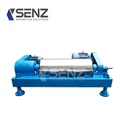
Centrifuges are used in many industries, from laboratories to large - scale manufacturing. They have precision components that need to be protected. When it comes to storage, you should keep them in a clean and dry environment. Dust can accumulate on the moving parts of the centrifuge, which can cause friction and wear. Also, make sure to store the centrifuge in an upright position to prevent any damage to the internal mechanisms. For more detailed information on centrifuge maintenance, you can check out Centrifuge Maintenance.
Flocculant Auto Dosing Systems
These systems are used to add flocculants to a liquid in a controlled manner. The chemicals used in these systems are often sensitive to light and temperature. Some flocculants can degrade when exposed to direct sunlight for long periods. So, it's important to store the dosing system in a cool, dark place. Also, make sure to keep the chemical containers tightly sealed to prevent evaporation and contamination.
Screw Conveyors
As mentioned earlier, screw conveyors are prone to corrosion. When storing them, you should clean them thoroughly to remove any debris or residue. After cleaning, apply a protective coating to the metal parts. If possible, store the conveyor in a climate - controlled environment to prevent rusting.
In addition to environmental factors, the way you store the equipment also matters. You should keep the equipment organized and properly labeled. This makes it easier to access and maintain the equipment when needed. If you stack the equipment, make sure to do it in a way that won't cause damage. For example, don't stack heavy equipment on top of more delicate pieces.
Another thing to consider is the packaging. When you receive the complete set of equipment, it usually comes with packaging materials designed to protect it during transit. If you're not going to use the equipment right away, it's a good idea to keep it in its original packaging. The packaging is often designed to absorb shocks and vibrations, which can prevent damage during storage.
Security is also an important aspect of storage. You want to make sure that the equipment is protected from theft and vandalism. If you're storing the equipment in a warehouse, make sure it has proper security measures in place, such as alarms and surveillance cameras.
Let's talk about long - term storage. If you're planning to store the equipment for an extended period, you might need to take some additional steps. For example, you may need to perform regular maintenance checks even during storage. This can include lubricating moving parts, checking for leaks, and inspecting for any signs of damage.
Some equipment may also require periodic testing to ensure that it's still in working condition. For instance, if you've got an electrical component in the complete set, you may need to test it every few months to make sure it's not losing its charge or functionality.
So, to sum it up, complete sets of equipment often do require special storage conditions. The key is to understand the specific needs of each piece of equipment in the set and take the necessary steps to protect it. Whether it's controlling the temperature and humidity, keeping it clean, or using proper packaging, every little thing counts when it comes to preserving the quality and functionality of the equipment.
If you're in the market for a complete set of equipment or have any questions about storage and maintenance, feel free to reach out. We're here to help you make the best decisions for your business. Our team of experts can provide you with all the information you need and assist you in finding the right equipment for your needs.
References
- General knowledge of industrial equipment storage from years of experience in the industry.
- Technical manuals provided by equipment manufacturers.