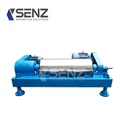

Can a laboratory centrifuge be used for separating antibodies? This is a question that often arises in the biotechnology and medical research fields. As a laboratory centrifuge supplier, I have extensive experience and in - depth knowledge on this topic, and I'm here to share detailed insights.
Understanding the Basics of Antibody Separation
Antibodies are proteins produced by the immune system in response to foreign substances, such as bacteria and viruses. In research and medical applications, the separation of antibodies is a critical step. High - purity antibodies are essential for a variety of purposes, including diagnostic tests, therapeutic development, and basic immunology research.
The principle behind antibody separation is to isolate these specific proteins from a complex biological sample, which may contain cells, other proteins, and various biomolecules. Common methods for antibody separation include chromatography, precipitation, and filtration. However, the question of whether a laboratory centrifuge can play a role in this process is worth exploring.
The Working Principle of Laboratory Centrifuges
A laboratory centrifuge works based on the principle of centrifugal force. When a sample is placed in a centrifuge rotor and spun at high speeds, the different components in the sample experience different forces according to their density, size, and shape. Denser components move towards the bottom of the centrifuge tube, while less dense components remain closer to the top.
This separation based on density is useful in many laboratory applications, such as separating cells from plasma in blood samples, purifying DNA or RNA, and harvesting microorganisms.
Using Centrifuges in Antibody Separation: The Feasibility
In some cases, a laboratory centrifuge can indeed be used for antibody separation.
Initial Sample Clarification
One of the most common applications of centrifuges in antibody - related processes is the initial clarification of the sample. For example, when antibody - producing cells are cultured in a bioreactor, the resulting cell culture broth contains a mixture of cells, cell debris, and the secreted antibodies. By centrifuging the broth at an appropriate speed and time, the cells and large cell debris can be pelleted at the bottom of the tube or the centrifuge container. The supernatant, which contains the antibodies along with smaller soluble proteins and other biomolecules, can then be carefully removed for further purification steps.
Precipitation - Assisted Separation
Antibodies can be precipitated from a solution using certain substances, such as ammonium sulfate. After adding the precipitating agent to the antibody - containing sample and allowing the precipitation reaction to occur, a centrifuge can be used to collect the antibody precipitate. The centrifugal force will drive the precipitated antibodies to the bottom of the tube, making it easy to separate them from the supernatant. This is a relatively simple and cost - effective way to initially concentrate the antibodies, although further purification steps are usually required to obtain high - purity antibodies.
Limitations of Centrifuges in Antibody Separation
While a laboratory centrifuge has its uses in antibody separation, it also has several limitations.
Lack of Specificity
Centrifugation is a separation method based on physical properties such as density and size. It does not have the ability to specifically target antibodies among a large number of other proteins and biomolecules in the sample. In a complex biological mixture, many other proteins may have similar densities or sizes to the antibodies, making it difficult to obtain highly pure antibodies solely through centrifugation.
Complexity of Multicomponent Systems
Antibody samples can be very complex, containing different subtypes of antibodies, as well as various contaminants. Centrifugation may not be able to effectively separate these closely - related components. For instance, different immunoglobulin classes (e.g., IgG, IgM, IgA) may have overlapping density ranges, and a centrifuge cannot distinguish between them.
Complementary Methods
To overcome the limitations of centrifuges in antibody separation, other techniques are often combined with centrifugation.
Chromatography techniques, such as affinity chromatography, ion - exchange chromatography, and size - exclusion chromatography, are highly specific and can achieve a high degree of purity. Affinity chromatography, for example, uses a ligand that specifically binds to the antibodies, allowing them to be selectively retained and then eluted. After the initial sample clarification by centrifugation, chromatography can be used as a follow - up step to further purify the antibodies.
Other Applications of Laboratory Centrifuges
Apart from antibody separation, laboratory centrifuges have a wide range of other applications. For example, they are used in Wheat Starch Extraction. In the process of extracting wheat starch, a centrifuge can separate the starch granules from other components of the wheat flour suspension based on their different densities.


Another application is in the Volute Screw Press. The centrifuge can assist in the dewatering and separation process, improving the efficiency of the press.
In the food industry, Fruit Pulp Decanter Centrifuges are used to separate fruit pulp from juice, which is an important step in fruit juice production.
Conclusion and Call to Action
In conclusion, a laboratory centrifuge can be a useful tool in the process of antibody separation, especially for initial sample clarification and precipitation - assisted separation. However, due to its limitations in terms of specificity and the complexity of antibody samples, it is usually combined with other separation techniques to achieve high - purity antibody products.
If you are involved in antibody research, production, or any other field that requires the use of laboratory centrifuges, we are here to provide you with high - quality centrifuge products. Our centrifuges are designed with advanced technology, high precision, and reliable performance to meet your various experimental and production needs. Whether you need a small - scale centrifuge for a research laboratory or a large - scale industrial centrifuge, we have the right solution for you. Contact us for more information on our products and to start a procurement discussion.
References
- Wilson, I. A., & Stanfield, R. L. (2015). Antibody structure and function: The basis for engineering therapeutics. Annual Review of Biochemistry, 84, 1-24.
- Hermanson, G. T. (2013). Bioconjugate Techniques. Academic Press.
- Subramanian, G. (2014). Centrifugation: A Practical Approach. Oxford University Press.