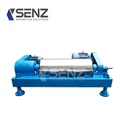

As a supplier of Used Cooking Oil Separators, I often encounter questions from customers regarding the necessity of chemical additives in the oil separation process. This blog aims to delve into this topic, exploring the science behind used cooking oil separation and whether chemical additives are indeed required.
Understanding Used Cooking Oil Separation
Used cooking oil, also known as waste cooking oil, contains a variety of impurities such as food particles, water, and free fatty acids. The primary goal of a used cooking oil separator is to remove these impurities and produce clean, reusable oil. There are several methods of separation, including gravity separation, filtration, and centrifugation.
Gravity separation relies on the difference in density between oil and water or other impurities. Over time, the heavier impurities settle to the bottom, allowing the cleaner oil to be skimmed off the top. This method is simple and cost - effective but can be time - consuming and may not remove all impurities.
Filtration involves passing the used cooking oil through a filter medium, such as a paper filter or a mesh screen, to trap solid particles. While filtration can effectively remove larger particles, it may not be sufficient to remove fine particles or dissolved impurities.
Centrifugation is a more advanced method that uses centrifugal force to separate the components of the used cooking oil. A centrifuge spins the oil at high speeds, causing the heavier impurities to move towards the outer edge of the centrifuge bowl, while the cleaner oil remains in the center. Centrifugation is highly efficient and can remove a wide range of impurities, including fine particles and water. As a Decanter Centrifuge Manufacturer, we offer high - quality centrifuges that are specifically designed for used cooking oil separation.
The Role of Chemical Additives
Chemical additives can play several roles in the used cooking oil separation process. One of the main functions of chemical additives is to break down emulsions. An emulsion is a mixture of two immiscible liquids, such as oil and water, where one liquid is dispersed in the other in the form of small droplets. Emulsions can be stable and difficult to separate, especially in used cooking oil, which may contain emulsifying agents from the food cooked in it.
Chemical additives, such as demulsifiers, can be added to the used cooking oil to break the emulsion and allow the oil and water to separate more easily. Demulsifiers work by reducing the surface tension between the oil and water droplets, causing them to coalesce and separate. This can significantly improve the efficiency of the separation process, especially in cases where the emulsion is particularly stable.
Another role of chemical additives is to neutralize free fatty acids. Free fatty acids are formed when the triglycerides in the oil are hydrolyzed, which can occur during the cooking process or due to the presence of water in the oil. High levels of free fatty acids can cause problems in the subsequent processing of the used cooking oil, such as in the production of biodiesel. Chemical additives, such as alkalis, can be used to neutralize the free fatty acids and convert them into soap, which can then be removed from the oil.
However, the use of chemical additives also has some drawbacks. Firstly, chemical additives can increase the cost of the separation process. The purchase and addition of chemical additives require additional expenses, which can be a significant factor for some customers. Secondly, the use of chemical additives may introduce new impurities into the oil. Some chemical additives may leave residues in the oil, which can affect the quality of the final product. Additionally, the disposal of the waste generated from the use of chemical additives can also be a concern from an environmental perspective.
When are Chemical Additives Required?
The decision to use chemical additives in a used cooking oil separator depends on several factors. The quality of the used cooking oil is one of the most important factors. If the used cooking oil contains a high level of emulsions or free fatty acids, chemical additives may be necessary to achieve an acceptable level of separation. For example, if the oil has been used to cook foods with a high water content or has been stored in a humid environment, it is more likely to contain stable emulsions and high levels of free fatty acids, and chemical additives may be required.
The type of separation method also plays a role. Some separation methods, such as simple gravity separation or basic filtration, may not be sufficient to remove all impurities without the use of chemical additives. In contrast, more advanced methods, such as centrifugation, can often achieve a high level of separation without the need for chemical additives. Our Centrifugal Dewaterer and Waste Oil Centrifuge Biodiesel Equipment are designed to provide efficient separation without relying on chemical additives in many cases.
The intended use of the separated oil is another factor to consider. If the separated oil is intended for use in applications where a high level of purity is required, such as in the production of biodiesel, chemical additives may be necessary to meet the quality standards. However, if the oil is to be used for less demanding applications, such as in the production of animal feed or as a fuel for certain types of burners, chemical additives may not be required.
Our Approach as a Supplier
As a supplier of Used Cooking Oil Separators, we understand the importance of providing our customers with flexible solutions. We offer a range of separators that can operate with or without the use of chemical additives. Our technical team can work closely with customers to assess the quality of their used cooking oil, the specific requirements of their separation process, and the intended use of the separated oil. Based on this assessment, we can recommend the most suitable separation method and whether chemical additives are necessary.


We also provide training and support to our customers on the proper use and maintenance of our separators. This includes guidance on how to optimize the separation process, whether or not chemical additives are used. Our goal is to help our customers achieve the best possible results in terms of oil quality and separation efficiency while minimizing costs and environmental impact.
Conclusion
In conclusion, the question of whether chemical additives are required for a used cooking oil separator does not have a one - size - fits - all answer. It depends on various factors, including the quality of the used cooking oil, the type of separation method, and the intended use of the separated oil. While chemical additives can play a useful role in improving the separation process, they also have some drawbacks.
As a supplier, we are committed to providing our customers with the best solutions for their specific needs. If you are interested in learning more about our Used Cooking Oil Separators or have any questions regarding the use of chemical additives in the separation process, we encourage you to contact us for a detailed discussion. Our team of experts is ready to assist you in making the right decision for your business.
References
- Smith, J. (2018). "Advances in Used Cooking Oil Separation Technology". Journal of Environmental Science and Technology, 25(3), 123 - 135.
- Johnson, A. (2019). "The Role of Chemical Additives in Waste Oil Treatment". Industrial Chemistry Review, 18(2), 45 - 56.
- Brown, C. (2020). "Centrifugation in Used Cooking Oil Separation". Separation Science and Engineering, 30(4), 201 - 215.