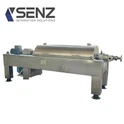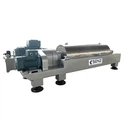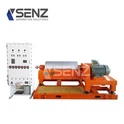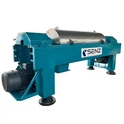


Firstly, the process of sewage treatment does not simply transfer pollutants into sludge. The so-called sludge is actually a combination of various microorganisms and inorganic substances. In sewage treatment processes, most organic pollutants are degraded and converted by microorganisms into their own cellular components such as proteins, as well as substances such as CO2 and nitrogen. But there are indeed many substances that are only adsorbed into microbial microbiota.
This has a lot of negative impacts on sludge. If not properly treated, it may be washed away by rainwater or have a high water content (such as over 80%), and pollutants in the water will return to the water. Additionally, microorganisms in the water can also have negative impacts on human beings, animals, and the ecological environment. If the sludge generated from printing and dyeing wastewater is not treated properly, it will dye the entire river; The consequences of improper treatment of sludge generated from other wastewater such as chromium containing wastewater and heavy metal wastewater can be imagined. So sludge also belongs to hazardous solid waste, abbreviated as hazardous waste.
The sludge generated by urban sewage treatment plants has a relatively small negative impact compared to the entire sewage treatment industry, but it cannot be ignored. Among these water plants, the vast majority of them can only treat sludge with a moisture content below 80%.
The main reason is investment and operating costs. Traditional belt filter presses have low processing costs, low investment, relatively simple maintenance, and mature processes. The plate and frame filter press can process the moisture content of sludge to below 50%, greatly reducing its volume. Moreover, when the sludge is used for combustion, its calorific value can also meet the requirements. However, due to government restrictions on the total investment of the project, BOT companies cannot increase their own investment unless the government agrees to increase water prices and achieve a return on additional investment.
The decrease in sludge moisture content can be achieved through equipment upgrading, with relatively small investment. However, subsequent co production projects such as burning materials, brick making, and fertilizer production require preferential policies from the government to attract investment. There are already over N such enterprises, and they are doing very well. A vibrant sludge disposal alliance has now been formed to jointly develop the sludge market.
Overall, the so-called difficulties are the government's support, the supervision of environmental protection departments in various regions, and policy oriented mandatory upgrading and transformation of environmental protection enterprises. For enterprises, if given a good return on investment, choosing honest and authoritative enterprises, and the joint production of related enterprises, the output value of this market is definitely more than a few billion yuan.
The sludge produced by sewage plants is generally referred to as sewage sludge or urban sludge in academia. Many people have already mentioned the composition of sludge, but it will not be elaborated here. The focus is on two aspects:
Firstly, there is the issue of sludge drying. The sludge dehydrated by the sewage treatment plant has a moisture content of about 80%, which is roughly one part of the sludge and four parts of the water. If it can be dried to a moisture content of 20%, its volume will shrink to 1/5 of the original. For such a large annual sludge production, the reduction rate is considerable; In addition, the prospects for resource utilization of dried sludge are also better.
Given the high content of organic matter in sludge, its calorific value is relatively high. I have conducted tests and found that urban sludge with a moisture content (external water) of about 10% has a calorific value of up to 10MJ/kg (the calorific value of standard coal is 29.3MJ/kg). The sludge sample here is still untreated sewage without rainwater sewage separation (with an ash content of up to 50%, which reduces the calorific value of the sludge).
If the drying cost of sludge is reduced, it can be completely thrown into the power plant for combustion and power generation.
Secondly, there is the issue of resource utilization of sludge. At present, the relatively mature technology is incineration, and the heavy metals in sludge limit its agricultural use. Although pyrolysis technology can be used to produce bio oil and activated carbon, the odor is simply unbearable, and the fluidized bed pyrolysis technology is actually immature (during the practical operation stage, it was found that the fluidized bed cannot self heat, and the invented dual bed operation is difficult, and the cost of wrapping the electric heating wire is too high).
1、 Source of sludge
Firstly, we need to define the concept of sludge. Broadly speaking, sludge includes sewage sludge (i.e. municipal sludge, the product of municipal sewage treatment plants treating sewage, including initial settling sludge, excess sludge, and a portion of sludge from sedimentation tanks), industrial sludge (the product of industrial sewage treatment, which has different properties due to different sources of industrial wastewater, such as possible oil content and particularly high content of certain substances), pipeline sludge (sludge obtained from pipeline dredging) Water supply sludge (sludge generated by waterworks) and river and lake sediment (such as sediment excavated from dredging rivers).
In general, it refers to sewage sludge, which is a common type with a huge output.
2、 Necessity of handling and disposal
The nature of sludge has two sides: on the one hand, it contains a large amount of organic matter and nutrients such as nitrogen, phosphorus, and potassium, making it useful (which is also the foundation of sludge land use); On the other hand, some pollutants contained in sewage are transferred to sludge, resulting in high water content, strong odor, and a large number of pathogenic bacteria, parasite eggs, chromium, mercury and other heavy metals, dioxins and other toxic, harmful and Carcinogen substances that are difficult to be degraded. Without effective treatment and disposal, it is very easy to cause secondary pollution to groundwater, soil, etc., directly threatening environmental safety and public health, Greatly reducing the environmental benefits of sewage treatment facilities and triggering multiple public events.
3、 Why is it difficult to handle and dispose of
Because more than a decade ago people did not attach importance to it, but later found that sewage must be treated, and not treated, so they invested manpower, material resources, and financial resources (the most important) to vigorously address the problem of water. The same applies to sludge.
The lack of attention in concept and the emphasis on water and light sludge are the root causes of the current situation of sludge treatment and disposal.
Originally, no one took it seriously. They thought that the sewage plant only needed to treat the water thoroughly, and the sludge generated was not managed. As a result, a series of drawbacks such as lack of policies, lack of funds, weak awareness, and outdated technology have been exposed, leading to serious delays in the construction of sludge treatment and disposal facilities.
For example, the issue of inconsistent standards: in order to reduce the difficulty of operating sewage treatment plants, it was previously simply stipulated that the moisture content of factory sludge should be 80%. However, the question is: where can 80% of dehydrated sludge go? There are hidden dangers in landfilling, and the incineration heat value is not enough. As for composting and digestion, they do not operate well at all. How can we do a good job without connecting the process before and after? The only advantage is that if there is a problem, no one is responsible. Anyway, the sewage plant is qualified, and the landfill and incineration facilities also have their own admission standards. In the end, the problem was not resolved, but all parties are not responsible, so they simply fall into the river.
4、 Disposal methods
The problem of sludge treatment is to solve the problem of continuously decreasing water content. The common treatment methods currently include deep dehydration, composting, digestion, etc., and the final disposal includes land use, incineration, landfill, etc.
After deep dehydration, the moisture content of the sludge is around 60% and can be directly buried. In emergency situations, a small amount of it can be mixed with household waste for burning. However, currently, the majority of chemical conditioning uses iron salt and lime, with a high increase in inorganic matter and the introduction of chloride ions, which has a certain impact on the incineration conditions and the furnace itself. But this technology has low cost, and chemical conditioning agents are very common. All that is needed is a pressure filtration equipment (with many domestic products). As long as there is a landfill facility, it can be connected downstream. Currently, it is a technology developed in many regions. The odor problem of compost is too serious, but the most fatal thing is that the product chain is not connected, and the final product has no way out. Anaerobic digestion is suitable for large sewage plants. The equipment and automatic control requirements are high, and the operation is difficult. In particular, the high sand content of domestic sludge has damaged many equipment manufacturers and operators.
From the perspective of final disposal, both domestically and internationally, land use has been given the first priority, which is to make the most of the nutrients in sludge. However, land use must undergo pre-treatment such as composting and digestion to ensure compliance before it can be applied. The biggest problem is the issue of heavy metals. China has strict standards for several aspects of land use (such as landscaping, greening, soil improvement, agriculture, etc.), but in practice, many regions lack awareness of this, thinking that dumping sludge into the ground is considered land use. This has serious consequences, and sludge cannot be directly used for land use.
Incineration is a common practice in foreign countries, and it has also been explored in China. Sludge can be burned separately (many in foreign countries, but few in China), or it can be combined with household waste (with the strictest flue gas emission standards and the ability to synergistically utilize heat sources and flue gas purification equipment) Coal fired power plants (must pass strict environmental assessment, because the flue gas purification of power plants is different from that of domestic Incineration facilities, which may cause pollution after adding sludge) and cement kilns (also a problem of flue gas standards, in addition, beware of some projects driving the production capacity of the cement industry in the name of sludge treatment) are mixed together. Before incineration, drying treatment is generally required. When the moisture content drops to 40%, it will not affect the incineration conditions. The calorific value is already very close. We have conducted experiments in incineration plants and can also refer to literature. I personally recommend this.
Landfill is the simplest method with low technical difficulty, but it must be noted that the current admission standard is 60%, 80% of sludge cannot be landfilled, and there may be Soil mechanics risks such as landslide and sedimentation.
With the development of China's social economy and the improvement of urbanization level, the sludge production of urban sewage plants in China has rapidly increased. It is estimated that in 2011, China's sludge production (80% moisture content) exceeded 30 million tons. Sludge disposal technologies include sanitary landfill, incineration, aerobic fermentation, resource utilization and other methods. Among them, sludge aerobic composting is recommended as a Technology roadmap in the Technical Guide for Sludge Treatment and Disposal of Urban Sewage Treatment Plants (Trial) because of its moderate investment and operating costs, as well as the resource utilization of organic matter and nutrients in sludge.
At present, the common aerobic fermentation technology for sludge at home and abroad mainly adopts concrete constructed trough or silo structures, which maintain the aerobic state in the pile through manual or mechanical flipping, natural or forced ventilation, and ensure the temperature of the pile and the normal growth of microorganisms. The odor, water vapor, and leachate generated during the composting process are difficult to control, seriously affecting the surrounding environment and damaging public health. In addition, composting also has many problems such as long composting time and large land occupation.
The City Bluebook "China's Urban Development Report" issued by the Institute of Urban Development and Environment of the Chinese Academy of Social Sciences and the "China's Urban Status Report" jointly issued by the Chinese Science Center of the International Eurasian Academy of Sciences, the Chinese Association of Mayors and UN Habitat pointed out that there are 657 cities in China, and the total administrative area of cities at all levels is 5.216 million square kilometers, accounting for 54.3% of the total land area of 9.6 million square kilometers. The number of established towns has increased to 19683. The population of Demographics of China is 1347.35 million, including 690.79 million urban population and 656.56 million rural population. The urban population accounts for 51.27% of the total population. The urban population exceeded the rural population for the first time, which is a historic change in China's social structure.
From the report of the 18th National Congress of the Communist Party of China to the Central Economic Work Conference, from the 12th Five Year Plan to the Premier's speech, new urbanization has been given an important position. The central government has designated it as an important national development strategy, which has become the greatest potential for China's long-term economic development.
According to the research results of China's Low Carbon Sustainable city Development Strategy, by 2050, China's urbanization level will reach 70% -75%, and the contribution rate of urban economy in the national economic aggregate will reach 90%.
The Bluebook points out that China's urban development faces a series of serious challenges, including environmental and ecological pressure, urban security, Social polarization and other issues, in the face of the quiet arrival of the urban era dominated by an urban society.
Resources and environment are important contents of contemporary urban construction and management, especially land and water resources, which are related to the sustainable development ability, human settlement environment safety, and public safety of cities.
According to the new standards, two-thirds of cities in China do not meet the air quality standards; 57.2% of monitoring points in cities nationwide have poor or extremely poor water quality; Two-thirds of large and medium-sized cities are surrounded by garbage; Urban natural vegetation coverage is low, the area of reinforced concrete jungle is expanding, and Urban green space accounts for only 10% of urban construction land. The area of urban wetlands has sharply decreased, biodiversity continues to decrease, excessive exploitation of urban groundwater, and accelerated land subsidence.
At present, the overall trend of deteriorating environmental conditions has not been fundamentally curbed, environmental conflicts have become prominent, and pressure continues to increase; Some key watersheds and sea areas suffer from severe water pollution, with some regions and cities experiencing prominent atmospheric haze. In many areas, the emissions of major pollutants exceed environmental capacity.
Urban infrastructure is an important support for the level of urban development and civilization, and is the material foundation for the coordinated development of urban economy and society. The construction of urban infrastructure in China is constantly accelerating under the promotion of urbanization. In 2010, the investment in urban municipal infrastructure reached 1430.5 billion yuan, an increase of 155% compared to 2005.
It can be foreseen that in the next 20 to 30 years, the construction of urban infrastructure such as water supply, sewage treatment, garbage treatment, gas, heating, roads, and landscaping will inevitably exhibit large-scale growth with the continuous promotion of the new urbanization process. At the same time, the world is facing enormous pressure from climate change and resource environment, and the development of extensive growth has become difficult to adapt to the various needs of the new situation. Therefore, a green, ecological, and low-carbon sustainable development model has become a new direction for China's new urbanization efforts.
Sludge is rich in nutrients such as organic matter, nitrogen, phosphorus, and potassium that cause water pollution. It also contains a large number of pathogenic microorganisms, which are prone to decay and odor. If disposed of improperly, it can cause serious environmental pollution and ecological damage, and is also a great waste of resources. According to statistics, only about 10-20% of sludge in China has achieved safe and harmless disposal, and a large amount of sludge has not been effectively disposed of. Large sludge production and improper treatment can cause serious environmental pollution. At the same time, sludge contains a large amount of nutrients, and after proper treatment, it will become a new resource.
Under the leadership of the Ministry of Housing and Urban Rural Development, multiple units engaged in the design and operation of urban sewage plants in China have jointly conducted standard research, and a total of 9 industry standards have been released over the past 4 years. In the following years, four technical guidelines were successively issued. The "12th Five Year Plan for the Construction of National Urban Sewage Treatment and Recycling Facilities" issued by the State Council states that during the "12th Five Year Plan" period, China plans to increase approximately 430 billion yuan in investment in sewage treatment and related facilities, including 34.7 billion yuan in investment in sludge treatment and disposal facilities. This series of technical documents have made some guiding provisions on the selection of technology, technological development trends, specific implementation plans, and investment and financing methods for sludge disposal, pointing out the development direction for sludge treatment and disposal in urban sewage treatment plants in China.