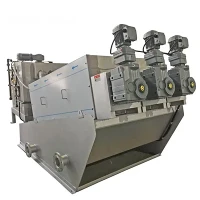


Optimization of sewage process can reduce the production of excess sludge, and sludge wall breaking and strong drying technology can improve the dewatering performance of sludge; Ultimately, sludge resource utilization is achieved through sludge carbonization technology, which solves the problem of sludge production from the source and ultimately achieves the goal of zero sludge discharge.
The so-called sludge carbonization refers to the process of releasing water from the sludge through certain means, while maximizing the retention of carbon value in the sludge, resulting in a significant increase in carbon content in the final product. Worldwide, sludge carbonization is mainly divided into three types.
High temperature carbonization. During carbonization, there is no pressure, and the temperature is between 649-982 ℃. Firstly, dry the sludge to a moisture content of about 30%, and then enter the carbonization furnace for high-temperature carbonization and granulation. Carbonized particles can be used as low-level fuels, with a calorific value of approximately 8360-12 540 kJ/kg (in Japan or the United States). This technology can achieve sludge reduction and resource utilization, but due to its complex technology, high operating costs, and low calorific value content in the product, it has not yet been widely applied, with the largest scale being 30 cubic meters of wet sludge.
⑵ Medium temperature carbonization. During carbonization, there is no pressure, and the temperature is 426-537 ℃. Firstly, dry the sludge to a moisture content of about 90%, and then enter the carbonization furnace for decomposition. Oil, reaction water (steam condensate), biogas (uncondensed air), and solid carbides are generated in the process. In addition, this technology carbonizes sludge after drying, and its economic benefits are not significant. Apart from a treatment plant in Australia, there are no other potential users.
⑶ Low temperature carbonization. Before carbonization, there is no need for drying. During carbonization, the pressure is increased to 6-8 MPa, and the carbonization temperature is 315 ℃. The carbonized sludge becomes a liquid state, with a moisture content of less than 50% after dehydration. After drying and granulation, it can be used as a low-level fuel, with a calorific value of about 15048-20482 kJ/kg (in the United States). This technology uses heating and pressure to completely decompose the biomass in the sludge, and 75% of the water in the sludge can be removed by mechanical methods alone, greatly saving energy consumption during operation. The complete cracking of sludge ensures its complete stability. During the process of sludge carbonization, the majority of the heat value in the sludge is retained, creating conditions for the reuse of energy after cracking of 14t.