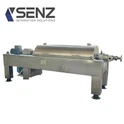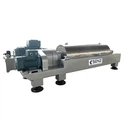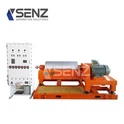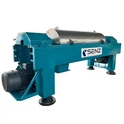


Horizontal spiral centrifuge often encounters common faults, typically manifested as difficult start-ups, and intense vibrations during international freight transport. The troubleshooting issues for the horizontal spiral centrifuge are summarized as follows:
Issue One: Unable to operate.
1. The startup current of the centrifuge is large, leading to the maintenance posture of electrical switches;
2. Too much material stored in the drum, causing the screw conveyor to encounter resistance;
3. Low steam pressure or malfunctioning pressure controller.
Issue Two: Intense vibrations during international freight transport.
1. Drum calibration not aligned at both ends during maintenance and installation, compromising the precision of rotor dynamic balancing;
2. Deterioration of lubricating grease;
3. Ineffective main bearings;
4. Loose fit between the inner bore of the main bearing and the shaft;
5. Common faults in the screw conveyor bearings;
6. Failure to tighten the foundation bolts of the ash discharge port or rigid pipe connections;
7. Loosening of the engine flange, causing differential vibrations;
8. Damage to the differential (usually due to oil deficiency);
9. Improper closure of the feeding valve after stopping air, causing material leakage inside the drum and imbalance;
10. Loosening and deformation at the junctions of rotating components;
11. Poor rotor dynamic balancing when replacing new components;
12. Severe damage to relevant components;
13. Material deposition inside the casing causing friction with the outer drum.
Issue Three: High current during operation.
1. Triangular belts and rolling barrels (especially the main rolling shaft) rolling due to oil stains, resulting in the consumption of frictional kinetic energy (at this time, the main drum and sub-belt pulley of the differential are hot);
2. Common faults in the differential (usually due to oil deficiency), causing burns on the outer casing of the differential, sub-belt pulley, and keyed shaft.Horizontal spiral centrifuge maintenance
Issue Four: Bearing seat temperature exceeds 70 degrees or temperature rise exceeds 35 degrees during no-load operation.
1. Oil is affected and loses lubrication due to the following reasons:
(1) Bearing seat is contaminated with foreign substances (such as steam, water, liquid raw materials, etc.);
(2) Extended use affecting oil quality;
(3) Low-quality finished oil.
2. Bearing damage or excessive clearance;
3. Drive belt is too tight, causing friction in the main bearing, increasing output power, and overheating;
4. Insufficient oil supply or engine shutdown.
Issue Five: High temperature of the differential (exceeding 85 degrees).
1. Insufficient diesel in the differential;
2. Heavy load;
3. Heat dissipation difference;
4. Damage to differential bearings or components;
5. New differential.
Issue Six: High rotation speed of the drum and screw.
1. Excessive material or load;
2. Contact and jamming between the screw and drum;
3. Differential damage;
4. Coarse particles in the raw materials entering the centrifuge.
Issue Seven: Common faults during actual operation.
1. Low steam pressure or incorrect maintenance of oil working pressure;
2. Overload of the main motor.
Issue Eight: Inability to discharge.
1. Suspended solid concentration is too low or added too little;
2. Small difference in the ratio of solid to liquid;
3. Reversal of the equipment's rotational direction;
4. Damage to the differential;
5. Blockage or accumulation of raw materials in the drum discharge port;
6. Material deposition between the casing and the drum.