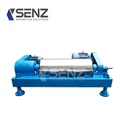

Hey there! As a supplier of DDGS Dewatering Centrifuges, I often get asked about the temperature rise during the operation of these machines. In this blog, I'll share some insights on what causes the temperature rise, why it matters, and how to deal with it.
Let's start with the basics. A DDGS (Distillers Dried Grains with Solubles) dewatering centrifuge is a crucial piece of equipment in the ethanol production process. It separates the liquid and solid components of DDGS, helping to reduce the moisture content of the solids. But during operation, the centrifuge can heat up, and understanding why this happens is essential for efficient and reliable performance.


What Causes the Temperature Rise?
There are several factors that can contribute to the temperature rise in a DDGS dewatering centrifuge. One of the main causes is friction. As the centrifuge spins at high speeds, there's a lot of contact between the moving parts, such as the bowl and the scroll. This friction generates heat, just like when you rub your hands together quickly. The more the centrifuge operates, the more friction there is, and the higher the temperature can get.
Another factor is the viscosity of the DDGS slurry. If the slurry is too thick or viscous, it can put more strain on the centrifuge. The machine has to work harder to separate the liquid and solid components, which in turn generates more heat. Think of it like trying to push a heavy cart through thick mud – it takes a lot more effort, and you'll probably start to heat up yourself!
The ambient temperature also plays a role. If the centrifuge is operating in a hot environment, it's going to be harder for the machine to dissipate the heat it generates. Just like you feel hotter on a sunny day, the centrifuge will have a higher temperature when the surrounding air is warm.
Why Does the Temperature Rise Matter?
You might be wondering, "So what if the centrifuge gets a little hot? It's just doing its job, right?" Well, actually, the temperature rise can have some significant impacts.
First of all, excessive heat can damage the centrifuge's components. High temperatures can cause the materials to expand, which can lead to misalignment and increased wear and tear. Over time, this can shorten the lifespan of the centrifuge and lead to costly repairs or replacements.
Secondly, the temperature rise can affect the quality of the DDGS. If the centrifuge gets too hot, it can cause the proteins in the DDGS to denature. This can change the nutritional value of the DDGS, making it less suitable for animal feed, which is one of its main uses.
Finally, a high-temperature centrifuge can be a safety hazard. If the heat isn't properly managed, it could potentially lead to a fire or other safety incidents. That's definitely something we want to avoid!
How to Deal with the Temperature Rise?
Now that we know what causes the temperature rise and why it matters, let's talk about how to deal with it.
One of the simplest ways is to ensure proper lubrication. Using high-quality lubricants can reduce friction between the moving parts, which in turn reduces the heat generated. It's like putting oil on a squeaky hinge – it makes everything run more smoothly.
Another important step is to monitor the temperature regularly. Most modern DDGS dewatering centrifuges come with temperature sensors that can provide real-time data. By keeping an eye on the temperature, you can detect any abnormal increases early on and take action before it's too late.
You can also try to optimize the operating conditions. For example, adjusting the feed rate of the DDGS slurry can help. If the centrifuge is overloaded, it will generate more heat. By finding the right feed rate, you can ensure that the centrifuge is working efficiently without overheating.
In addition, proper ventilation is crucial. Make sure the centrifuge is installed in a well-ventilated area, and consider using fans or other cooling devices to help dissipate the heat. This is especially important in hot environments.
Related Products
If you're interested in other types of centrifuges, we also offer some great options. Check out our Oil Sludge Decanter Centrifuge, which is designed to handle oil sludge separation. We also have a Centrifuge Machine For Sludge Dewatering that's perfect for various sludge dewatering applications. And if you're in the market for a Humic Acid Potassium Extraction Machine, we've got you covered too.
Conclusion
In conclusion, the temperature rise in a DDGS dewatering centrifuge is a common issue that can have significant impacts. But by understanding what causes it, why it matters, and how to deal with it, you can ensure the efficient and reliable operation of your centrifuge.
If you're in the market for a DDGS dewatering centrifuge or have any questions about temperature management, don't hesitate to reach out. We're here to help you make the right choice and keep your centrifuge running smoothly.
References
- "Centrifuge Technology Handbook" - A comprehensive guide on centrifuge operation and maintenance.
- Industry reports on DDGS production and centrifuge performance.