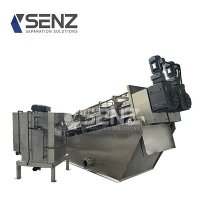
Hey there! As a supplier of sludge decanter centrifuges, I often get asked about the temperature range for the normal operation of these machines. So, I thought I'd take a moment to share some insights on this topic.
First off, let's understand what a sludge decanter centrifuge is. It's a piece of equipment used to separate solids from liquids in sludge. This process is crucial in various industries, like wastewater treatment, mining, and food processing. The centrifuge works by spinning the sludge at high speeds, using centrifugal force to push the heavier solids to the outer edge while the lighter liquid stays in the center.
Now, onto the temperature range. The normal operating temperature for a sludge decanter centrifuge typically falls between 0°C and 40°C (32°F and 104°F). This range is based on the materials used in the centrifuge's construction and the properties of the sludge being processed.
At the lower end of the spectrum, around 0°C, the viscosity of the sludge can increase significantly. Higher viscosity means the sludge is thicker and more resistant to flow. This can put extra strain on the centrifuge's motor and bearings as they have to work harder to spin the sludge. It might also lead to slower separation rates since the solids and liquids are more difficult to separate when the sludge is thick. In extreme cold, there's even a risk of the sludge freezing inside the centrifuge, which can cause serious damage to the machine.
On the other hand, when the temperature gets close to 40°C, there are different challenges. High temperatures can cause the lubricants in the centrifuge to break down more quickly. Lubricants are essential for reducing friction between moving parts, like the bearings and the motor shaft. If the lubricant breaks down, it can lead to increased wear and tear on these parts, shortening their lifespan and potentially causing the centrifuge to malfunction. Additionally, high temperatures can affect the chemical properties of the sludge. Some sludges may contain volatile components that can evaporate or react at elevated temperatures, which can change the separation process and the quality of the separated solids and liquids.
It's important to note that these are general guidelines, and the ideal temperature range can vary depending on the specific model of the centrifuge and the characteristics of the sludge. For example, if the sludge contains a lot of organic matter, it might have a different optimal temperature range compared to sludge from a mining operation.
To ensure the centrifuge operates within the right temperature range, there are a few things you can do. First, you can install temperature sensors on the centrifuge. These sensors can monitor the temperature inside the machine and send alerts if it gets too high or too low. You can also use cooling or heating systems, depending on the ambient temperature. In hot climates, a cooling system can help keep the centrifuge at a safe temperature, while in cold areas, a heating system can prevent the sludge from freezing.
Another factor to consider is the location of the centrifuge. If it's placed in a poorly ventilated area, the heat generated by the machine during operation can build up, causing the temperature to rise above the normal range. So, make sure the centrifuge is installed in a well - ventilated space with enough room for air to circulate.


Now, if you're thinking about other types of centrifuges, we also offer some great options. Check out our Soya Milk Decanter Centrifuge, Protein Centrifuge, and Soymilk Decanter Centrifuge. These centrifuges are designed for specific applications and have their own unique operating requirements.
If you're in the market for a sludge decanter centrifuge or any of our other centrifuges, I'd love to have a chat with you. Whether you have questions about the temperature range, the features of our machines, or the pricing, don't hesitate to reach out. We're here to help you find the best centrifuge solution for your needs. Contact us, and let's start a conversation about how we can work together to improve your separation processes.
References
- "Centrifuge Handbook", Published by a leading industrial equipment research firm.
- Technical manuals of various sludge decanter centrifuge models.