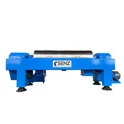

When it comes to dewatering press machines, one of the most frequently asked questions is about their size. As a supplier of dewatering press machines, I am well - versed in this topic and would like to share some insights with you.
The Concept of Size in Dewatering Press Machines
The size of a dewatering press machine can be described in multiple ways. Generally, we consider physical dimensions such as length, width, and height, as well as the capacity in terms of the amount of material it can process.
Physical dimensions are crucial as they determine where the machine can be installed. A large - scale industrial dewatering press might need a dedicated, spacious area in a factory. For example, some large - sized dewatering presses can have a length of over 5 meters, a width of around 2 - 3 meters, and a height of 2 - 3 meters. These dimensions are designed to accommodate large - volume processing and the internal mechanisms of the machine.
Capacity is another important aspect of size. It is usually measured in terms of the amount of wet material that can be processed per hour or per batch. Smaller dewatering press machines, which are often used in laboratories or small - scale operations, may have a capacity of a few kilograms per hour. On the other hand, industrial - grade dewatering presses can handle several tons of material per hour.
Factors Affecting the Size of Dewatering Press Machines
- Application Requirements
- Different industries have different dewatering needs. For example, in the mining industry, large - scale dewatering is required to separate water from ore slurries. To meet the high - volume processing demands, mining dewatering press machines are typically large in size. They need to be able to handle large quantities of material continuously.
- In the food industry, such as fruit pulp processing, the dewatering requirements are different. The Fruit Pulp Decanter Centrifuge used for this purpose may be smaller in size as the processing scale is often more moderate. It is designed to handle the specific characteristics of fruit pulp, such as its relatively soft texture and high moisture content.
- Technology and Design
- The type of dewatering technology employed can also influence the size of the machine. Some dewatering press machines use mechanical pressure, while others use centrifugal force. Centrifugal dewatering machines, like the Industrial Centrifuge Machine, often have a more compact design compared to some large - scale mechanical dewatering presses. However, the capacity of a centrifuge can still vary widely depending on its design and power.
- The internal design of the machine, including the number of filter plates, the size of the filter area, and the layout of the dewatering chambers, also affects the overall size. Machines with more filter plates or a larger filter area will generally be larger in physical dimensions to accommodate these components.
Common Sizes in the Market
- Small - Scale Dewatering Press Machines
- These are suitable for small businesses, research institutions, or home - based operations. They usually have a compact design, with a length of around 1 - 2 meters, a width of 0.5 - 1 meter, and a height of 1 - 1.5 meters. Their processing capacity can range from a few kilograms to tens of kilograms per hour. For example, a small - scale dewatering press used for laboratory experiments may have a capacity of 5 - 10 kg per hour.
- Medium - Scale Dewatering Press Machines
- Medium - scale machines are commonly used in medium - sized factories or processing plants. They typically have a length of 2 - 4 meters, a width of 1 - 2 meters, and a height of 1.5 - 2.5 meters. Their processing capacity can range from tens of kilograms to a few tons per hour. These machines are often used in industries such as wastewater treatment, small - scale food processing, and light manufacturing.
- Large - Scale Dewatering Press Machines
- Large - scale dewatering press machines are designed for heavy - duty industrial applications. They can have a length of over 5 meters, a width of 2 - 3 meters, and a height of 2 - 3 meters. Their processing capacity can be several tons per hour. For example, in the oil and gas industry, Oil Field Centrifuge machines are often large - scale to handle the high - volume dewatering requirements of drilling mud and other oil - related waste materials.
Choosing the Right Size of Dewatering Press Machine
- Assess Your Needs
- First, you need to determine the amount of material you need to dewater. If you are a small - scale business, a small - or medium - scale dewatering press may be sufficient. However, if you are a large - scale industrial operation, a large - scale machine will be necessary to meet your production requirements.
- Consider the space available in your facility. Make sure the machine can fit into the designated area without causing any operational or safety issues.
- Evaluate the Cost - Benefit
- Larger machines generally have a higher upfront cost, but they can also offer higher processing efficiency and lower operating costs per unit of material processed. Smaller machines are more affordable initially, but they may have limitations in terms of capacity and processing speed. You need to balance the cost and the benefits based on your long - term business goals.
Conclusion
In conclusion, the size of a common dewatering press machine varies widely depending on the application, technology, and design. As a supplier, we understand that each customer has unique needs, and we are committed to providing the most suitable dewatering press machines. Whether you need a small - scale machine for a laboratory or a large - scale machine for an industrial plant, we can offer a range of options to meet your requirements.
If you are interested in purchasing a dewatering press machine or have any questions about the size and specifications, please feel free to contact us for a detailed discussion. We look forward to working with you to find the perfect dewatering solution for your business.


References
- "Industrial Centrifugation Technology" by H. Stichlmair and J. Fair
- "Dewatering of Sludges and Wastes" by G. Tchobanoglous and F. Burton