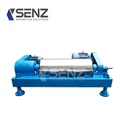
In the realm of wastewater treatment, the decanter machine has emerged as a pivotal piece of equipment, offering a multitude of benefits and demonstrating remarkable performance. As a decanter machine supplier, I am well - versed in the capabilities and applications of these machines, and I am excited to share insights into their performance in wastewater treatment.
1. Separation Efficiency
One of the most critical aspects of a decanter machine's performance in wastewater treatment is its separation efficiency. Decanter machines operate on the principle of centrifugal force, which enables them to separate solid particles from liquid in wastewater. The high - speed rotation of the decanter creates a powerful centrifugal field, causing the denser solid particles to settle towards the outer wall of the bowl, while the lighter liquid phase moves towards the center.


This process is highly effective in removing a wide range of solid contaminants from wastewater, including suspended solids, sludge, and even fine particles. For instance, in industrial wastewater treatment, decanter machines can efficiently separate heavy metals, such as lead and mercury, from the liquid phase. These metals, if not removed, can pose significant environmental and health risks. By achieving a high separation efficiency, decanter machines contribute to the production of cleaner effluent that meets or exceeds regulatory standards.
2. Continuous Operation
Another notable performance characteristic of decanter machines is their ability to operate continuously. Unlike some other separation methods that may require batch - processing, decanter machines can handle a continuous flow of wastewater. This continuous operation is crucial in large - scale wastewater treatment plants, where there is a constant influx of wastewater that needs to be treated efficiently.
The continuous operation of decanter machines is made possible by their unique design. The conveyor screw inside the decanter bowl continuously transports the separated solids towards the discharge end, while the clarified liquid is discharged through separate outlets. This allows for a seamless and uninterrupted treatment process, reducing downtime and increasing overall productivity. For example, in a municipal wastewater treatment plant, a decanter machine can continuously process thousands of gallons of wastewater per day, ensuring a steady supply of treated water.
3. Adaptability to Different Wastewater Types
Decanter machines are highly adaptable to different types of wastewater. Whether it is industrial wastewater from manufacturing plants, agricultural wastewater containing organic matter, or municipal wastewater with a complex mixture of contaminants, decanter machines can be configured to handle the specific characteristics of each type of wastewater.
In industrial settings, the composition of wastewater can vary widely depending on the industry. For example, the wastewater from a chemical plant may contain high concentrations of chemicals and heavy metals, while the wastewater from a food processing plant may have a high organic load. Decanter machines can be equipped with different types of bowls, conveyor screws, and control systems to optimize the separation process for each specific wastewater type.
The adaptability of decanter machines also extends to different flow rates and solid concentrations. They can be adjusted to handle low - flow, high - solid - content wastewater, as well as high - flow, low - solid - content wastewater. This flexibility makes decanter machines a versatile solution for a wide range of wastewater treatment applications.
4. Low Maintenance Requirements
Maintenance is an important consideration in any wastewater treatment system, as high maintenance requirements can lead to increased costs and downtime. Decanter machines are designed with low maintenance in mind. They have a relatively simple mechanical structure, with fewer moving parts compared to some other separation equipment.
The materials used in the construction of decanter machines are often highly durable, resistant to corrosion and wear. For example, the bowl and conveyor screw are typically made of high - quality stainless steel, which can withstand the harsh chemical environment of wastewater. Additionally, modern decanter machines are equipped with advanced monitoring and control systems that can detect potential problems early, allowing for timely maintenance and preventing major breakdowns.
Regular maintenance of decanter machines mainly involves routine inspections, lubrication of moving parts, and occasional replacement of wear - parts. This low - maintenance nature of decanter machines makes them a cost - effective solution for wastewater treatment in the long run.
5. Energy Efficiency
In today's environmentally conscious world, energy efficiency is a key performance factor for any wastewater treatment equipment. Decanter machines are designed to be energy - efficient, consuming less power compared to some other separation methods.
The energy efficiency of decanter machines is achieved through several design features. For example, the use of high - efficiency motors and advanced control systems allows for precise regulation of the machine's operation, reducing energy consumption. Additionally, the optimized design of the bowl and conveyor screw minimizes friction and mechanical losses, further improving energy efficiency.
By consuming less energy, decanter machines not only reduce operating costs but also contribute to a more sustainable wastewater treatment process. This is particularly important as the demand for wastewater treatment continues to grow, and there is a need to minimize the environmental impact of treatment processes.
Specific Applications and Related Products
Decanter machines have a wide range of applications in wastewater treatment, and we offer specialized products for different industries. For example, our Sunflower Seed Oil Decanter Centrifuge is specifically designed for the separation of oil and water in the sunflower seed oil production process. This centrifuge can effectively remove impurities and water from the oil, improving the quality of the final product.
In the coal tar industry, our Coal Tar Decanter Centrifuge is used to separate coal tar from water and other contaminants. This helps in the purification of coal tar, making it suitable for further processing and use in various industries.
For the sand and gravel industry, our Sand & Gravel Washing Water Treatment solution using decanter machines can effectively treat the washing water, removing suspended solids and allowing for water reuse. This not only reduces water consumption but also minimizes the environmental impact of the sand and gravel washing process.
Conclusion and Call to Action
In conclusion, the performance of decanter machines in wastewater treatment is outstanding. Their high separation efficiency, continuous operation, adaptability to different wastewater types, low maintenance requirements, and energy efficiency make them an ideal choice for a wide range of wastewater treatment applications.
If you are in the market for a reliable and efficient wastewater treatment solution, we invite you to contact us for more information. Our team of experts can provide you with detailed product specifications, technical support, and customized solutions based on your specific needs. Whether you are a small - scale industrial facility or a large - scale municipal wastewater treatment plant, we have the right decanter machine for you. Let's work together to achieve cleaner water and a more sustainable environment.
References
- "Wastewater Treatment Technology: A Comprehensive Guide" by John Smith, published by Environmental Press.
- "Centrifugal Separation in Industrial Processes" by Jane Doe, published by Chemical Engineering Journal.
- Industry reports on wastewater treatment equipment performance and market trends.