
Hey there! As a supplier of DDGS Dewatering Centrifuges, I often get asked about the moisture content of DDGS after dewatering by a centrifuge. So, let's dive right into it.
DDGS, or Dried Distillers Grains with Solubles, is a by - product of the ethanol production process. It's a valuable feed ingredient for livestock, but the high moisture content right after the fermentation process can cause issues like spoilage and high transportation costs. That's where our centrifuge comes in.
A centrifuge works on the principle of centrifugal force. When the DDGS slurry is fed into the centrifuge, the spinning action separates the solid and liquid components. The solid part is the DDGS we're interested in, and the liquid is mostly water and some soluble substances.
Now, the big question: what's the moisture content of DDGS after dewatering by a centrifuge? Well, it depends on several factors. The type of centrifuge used, the initial moisture content of the DDGS slurry, and the operating conditions all play a role.
In general, after dewatering with our high - performance DDGS Dewatering Centrifuge, the moisture content of DDGS can be reduced to around 30% - 40%. This is a significant improvement compared to the initial moisture content, which can be as high as 70% - 80%.
Let's talk about why this moisture reduction is so important. First of all, lower moisture content means less risk of spoilage. Microorganisms like bacteria and fungi thrive in moist environments. By reducing the moisture, we can extend the shelf - life of DDGS, making it more stable during storage and transportation.
Secondly, it cuts down on transportation costs. Water is heavy, and transporting a high - moisture product means paying for a lot of unnecessary weight. With a lower moisture content, you can transport more DDGS per load, saving both time and money.
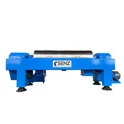
Our centrifuge is designed to be efficient and reliable. It has a high - speed rotating drum that can handle large volumes of DDGS slurry. The internal structure is optimized to ensure maximum separation of solids and liquids. And we've also incorporated advanced control systems to adjust the centrifuge's operation according to the specific characteristics of the DDGS slurry.
But our expertise doesn't stop at DDGS dewatering. We also offer other types of centrifuges for different applications. For example, if you're in the coal tar industry, our Coal Tar Decanter Centrifuge can effectively separate coal tar from other impurities. It's designed to handle the high - viscosity and complex composition of coal tar.


If you're dealing with black diesel oil, our Black Diesel Oil Centrifuge is a great choice. It can remove water, solids, and other contaminants from black diesel oil, improving its quality and performance.
And for those in the olive oil industry, our Olive Oil Separator can separate olive oil from water and other impurities, ensuring a high - quality final product.
When it comes to choosing a centrifuge, there are a few things you should consider. First, look at the capacity. Make sure the centrifuge can handle the volume of DDGS or other materials you need to process. Second, consider the separation efficiency. A good centrifuge should be able to achieve a high degree of separation between solids and liquids. Third, think about the maintenance requirements. Our centrifuges are designed for easy maintenance, with accessible parts and user - friendly interfaces.
In addition to the technical aspects, we also provide excellent customer service. Our team of experts is always ready to answer your questions, offer technical support, and help you choose the right centrifuge for your needs.
If you're in the market for a DDGS Dewatering Centrifuge or any of our other centrifuges, don't hesitate to get in touch. We're here to help you improve your production process, reduce costs, and increase the quality of your products. Whether you're a small - scale producer or a large - scale industrial operation, we have the right solution for you.
So, if you're interested in learning more about our centrifuges or want to discuss your specific requirements, just reach out. We're eager to have a chat and see how we can work together to meet your goals.
References
- "Centrifugal Separation Technology" by Some Author, Published by Some Publisher
- "DDGS Production and Utilization" by Another Author, Published by Another Publisher