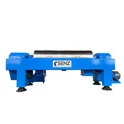

Decantadors, also known as decanters, are essential pieces of equipment in various industries, from food and beverage to wastewater treatment and agriculture. As a decantador supplier, I've witnessed firsthand the importance of these machines in streamlining processes and ensuring high - quality output. One question that frequently arises from our customers is whether decantadors require special care. In this blog, we'll explore this topic in depth.
Understanding Decantadors
Before delving into the care requirements, it's crucial to understand what decantadors are and how they work. Decantadors are centrifugal machines designed to separate solid and liquid components in a mixture. They use the principle of centrifugal force to achieve this separation. As the mixture is spun at high speeds, the denser solid particles are forced to the outer edge of the centrifuge bowl, while the lighter liquid phase remains closer to the center. This separation process is highly efficient and is used in a wide range of applications.
In the food industry, for example, decantadors are used for Potato Starch Extraction. They help in separating the starch from the potato pulp, ensuring a pure and high - quality starch product. In the kitchen waste management sector, Kitchen Waste Disposal Centrifuges are used to separate the liquid and solid components of kitchen waste, making it easier to process and recycle. In the agricultural field, Manure Decanters are employed to separate the liquid and solid fractions of manure, which can then be used for different purposes such as fertilization and biogas production.
Special Care Requirements
Decantadors do indeed require special care to ensure their optimal performance and longevity. Here are some key aspects of their care:
Regular Cleaning
One of the most important aspects of decantador care is regular cleaning. Over time, solid particles can accumulate inside the centrifuge bowl and other components, which can affect the machine's efficiency. Cleaning should be carried out according to the manufacturer's instructions. This may involve disassembling certain parts of the decantador, using appropriate cleaning agents, and thoroughly rinsing all components. For example, in a food processing environment, any food residues left in the decantador can lead to bacterial growth, which can contaminate future batches of products.
Lubrication
Proper lubrication is essential for the smooth operation of decantadors. The moving parts, such as bearings and gears, need to be lubricated at regular intervals. Using the correct type of lubricant is crucial, as the wrong lubricant can cause damage to the components. The frequency of lubrication depends on the usage of the decantador. In high - volume production environments, more frequent lubrication may be required.
Inspection and Maintenance
Regular inspections are necessary to detect any signs of wear and tear or potential problems. Components such as belts, seals, and motors should be inspected regularly. Any damaged or worn - out parts should be replaced immediately to prevent further damage to the decantador. Maintenance schedules should be established based on the manufacturer's recommendations and the actual usage of the machine. For example, if a decantador is used continuously for long hours, more frequent inspections may be needed.
Operator Training
Proper operator training is also a form of care for decantadors. Operators should be trained on how to operate the decantador correctly, including starting and stopping procedures, adjusting settings, and monitoring the machine's performance. Incorrect operation can lead to premature wear and tear of the machine and may even cause safety hazards. Training should also cover basic troubleshooting techniques so that operators can address minor issues before they become major problems.
Benefits of Special Care
Taking special care of decantadors offers several benefits. Firstly, it ensures the consistent performance of the machine. A well - maintained decantador will provide accurate and efficient separation, which is crucial for the quality of the end - product. For example, in the potato starch extraction process, a properly maintained decantador will result in a higher yield of pure starch.
Secondly, special care extends the lifespan of the decantador. By preventing premature wear and tear, the machine can operate for a longer period, reducing the need for frequent replacements. This translates into cost savings for the business.
Thirdly, proper care enhances safety. A well - maintained decantador is less likely to malfunction, reducing the risk of accidents in the workplace. This is especially important in industries where the decantador is used in high - risk environments.
Conclusion
In conclusion, decantadors do require special care. From regular cleaning and lubrication to proper inspection and operator training, every aspect of care plays a vital role in ensuring the optimal performance, longevity, and safety of the machine. As a decantador supplier, we are committed to providing our customers with not only high - quality decantadors but also the knowledge and support needed to take care of these machines.


If you are in the market for a decantador or need more information about their care and maintenance, we invite you to reach out to us. Our team of experts is ready to assist you in finding the right decantador for your specific needs and to provide guidance on its proper care.
References
- Manufacturer's manuals of various decantador models
- Industry research on centrifuge technology and maintenance