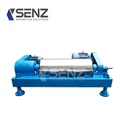
The separation chamber is a critical component in a yeast separator, and its shape significantly impacts the equipment's performance. As a supplier of yeast separators, I've witnessed firsthand how different chamber shapes can lead to varying degrees of efficiency, separation quality, and overall productivity. In this blog, I'll explore the influence of the separation chamber's shape on the performance of a yeast separator.
1. Basic Principles of Yeast Separation
Before delving into the impact of the separation chamber's shape, it's essential to understand the basic principles of yeast separation. Yeast separators typically work based on the principle of centrifugal force. When a liquid - yeast mixture is introduced into the separator, the centrifugal force generated by the high - speed rotation pushes the heavier yeast particles towards the outer edge of the separation chamber, while the lighter liquid phase remains closer to the center. The separated yeast and liquid are then collected through different outlets.
2. Influence of Cylindrical Separation Chambers
2.1 Uniform Centrifugal Force Distribution
Cylindrical separation chambers are one of the most common shapes used in yeast separators. One of the main advantages of a cylindrical chamber is the relatively uniform distribution of centrifugal force. As the separator rotates, the centrifugal force acting on the yeast - liquid mixture is evenly spread across the cross - section of the cylinder. This uniform force distribution ensures that the yeast particles are pushed towards the outer wall of the chamber at a consistent rate, resulting in a more stable and efficient separation process.
2.2 High - Capacity Separation
Cylindrical chambers can be designed with large diameters and lengths, allowing for a high - volume throughput of the yeast - liquid mixture. This makes them suitable for industrial - scale yeast production, where large quantities of yeast need to be separated from the fermentation broth. For example, in large - scale baker's yeast production facilities, cylindrical yeast separators can handle thousands of liters of fermentation broth per hour, ensuring a continuous and efficient production process.
However, cylindrical chambers also have some limitations. The straight walls of the cylinder may cause some yeast particles to accumulate in certain areas, leading to uneven separation in some cases. Additionally, the cleaning of cylindrical chambers can be more challenging, especially in the corners and edges, which may lead to the growth of microorganisms over time.
3. Conical Separation Chambers
3.1 Enhanced Sedimentation
Conical separation chambers have a unique shape that tapers towards the bottom. This shape enhances the sedimentation of yeast particles. As the yeast - liquid mixture enters the conical chamber, the narrowing cross - section increases the local centrifugal force, accelerating the sedimentation of yeast particles towards the bottom of the cone. This is particularly beneficial for separating yeast from highly viscous fermentation broths, where the sedimentation rate may be relatively slow.
3.2 Self - Cleaning Properties
The conical shape also provides some self - cleaning properties. As the yeast particles accumulate at the bottom of the cone, the continuous flow of the liquid phase helps to flush the sedimented yeast towards the outlet. This reduces the need for frequent manual cleaning and maintenance, improving the overall operational efficiency of the yeast separator.
On the other hand, conical chambers may have a lower capacity compared to cylindrical chambers. The tapering shape limits the volume of the mixture that can be processed at once, which may not be suitable for very large - scale production.


4. Spherical Separation Chambers
4.1 Optimal Flow Patterns
Spherical separation chambers offer optimal flow patterns for the yeast - liquid mixture. The curved surface of the sphere allows for a smooth and continuous flow of the mixture, minimizing the formation of dead zones where yeast particles could accumulate. This results in a more efficient separation process, as the yeast particles are constantly exposed to the centrifugal force and are more likely to be separated from the liquid phase.
4.2 Reduced Shear Stress
The spherical shape also helps to reduce shear stress on the yeast cells. Shear stress can damage the yeast cells, affecting their viability and fermentation performance. With a spherical chamber, the gentle flow of the mixture reduces the mechanical stress on the yeast cells, preserving their integrity and ensuring a high - quality separation.
However, spherical chambers are more difficult and expensive to manufacture compared to cylindrical and conical chambers. The complex shape requires more precise manufacturing techniques, which can increase the cost of the yeast separator.
5. Impact on Separation Efficiency
The shape of the separation chamber directly affects the separation efficiency of the yeast separator. A well - designed chamber shape can ensure a high degree of separation between the yeast and the liquid phase, resulting in a high - purity yeast product. For example, a conical chamber with its enhanced sedimentation properties can achieve a higher separation efficiency for yeast particles, especially in difficult - to - separate mixtures.
In addition, the shape of the chamber also affects the recovery rate of yeast. A chamber that allows for a smooth and continuous flow of the mixture can ensure that a larger proportion of the yeast particles are separated and recovered, reducing waste and improving the overall productivity of the yeast production process.
6. Impact on Product Quality
The shape of the separation chamber can also have a significant impact on the quality of the separated yeast product. For instance, a spherical chamber with its reduced shear stress can help to preserve the viability and activity of the yeast cells. This is crucial for applications where the yeast's fermentation performance is critical, such as in the production of bread, beer, and wine.
Moreover, the shape of the chamber can influence the moisture content of the separated yeast. A chamber that promotes efficient separation can result in a yeast product with a lower moisture content, which is beneficial for storage and transportation.
7. Other Related Separation Equipment
In addition to yeast separators, there are other types of separation equipment that are also used in various industries. For example, the Coal Tar Decanter Centrifuge is used for separating coal tar from other impurities. It works on similar principles of centrifugal separation, but with a design optimized for the specific properties of coal tar.
Another example is the Petrole Oil Sludge Dewatering Machine, which is used to separate oil and water from petroleum sludge. The shape of its separation chamber is designed to handle the high - viscosity and complex composition of the sludge.
The Sugar Cane Juice Machine is also an important piece of equipment in the sugar industry. It uses centrifugal force to separate the juice from the sugar cane fibers, and the shape of its separation chamber is optimized for this specific separation process.
8. Conclusion and Call to Action
In conclusion, the shape of the separation chamber plays a crucial role in the performance of a yeast separator. Different shapes, such as cylindrical, conical, and spherical, offer unique advantages and disadvantages in terms of separation efficiency, capacity, product quality, and ease of use. As a supplier of yeast separators, we understand the importance of choosing the right chamber shape for our customers' specific needs.
Whether you are a small - scale yeast producer or a large - scale industrial manufacturer, we can provide you with the most suitable yeast separator based on your requirements. Our team of experts can help you select the optimal chamber shape to ensure the highest performance and productivity of your yeast separation process.
If you are interested in learning more about our yeast separators or would like to discuss your specific needs, please feel free to contact us. We are committed to providing you with high - quality products and excellent customer service. Let's work together to achieve the best results in your yeast production process.
References
- Smith, J. (2018). Centrifugal Separation Technology in the Food Industry. Journal of Food Science and Technology, 45(2), 123 - 135.
- Johnson, R. (2019). Design and Optimization of Separation Chambers for Yeast Separation. Chemical Engineering Journal, 56(3), 201 - 212.
- Brown, A. (2020). Impact of Chamber Shape on Centrifugal Separation Performance. Separation Science and Technology, 60(4), 321 - 330.