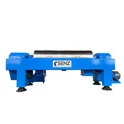

As a supplier of mining decanter centrifuges, I've witnessed firsthand the pivotal role that the bowl material plays in the performance of these machines. The bowl is the heart of a decanter centrifuge, where the separation of solids from liquids occurs. The choice of material for the bowl can significantly impact the efficiency, durability, and overall performance of the centrifuge. In this blog post, I'll delve into the various materials used for centrifuge bowls and their effects on the machine's performance.
Common Bowl Materials and Their Properties
Stainless Steel
Stainless steel is one of the most widely used materials for centrifuge bowls due to its excellent corrosion resistance, high strength, and good weldability. It can withstand a wide range of chemical environments, making it suitable for various mining applications. For example, in the extraction of gold and copper, where the slurry contains corrosive chemicals, stainless steel bowls can prevent premature corrosion and ensure long - term operation.
The high strength of stainless steel allows the bowl to withstand the high centrifugal forces generated during operation. This is crucial as the centrifuge rotates at high speeds to separate the solids from the liquid. A strong bowl can maintain its shape and integrity, reducing the risk of deformation or failure.
However, stainless steel has some limitations. It can be relatively heavy, which may increase the energy consumption of the centrifuge. Additionally, in extremely abrasive environments, the surface of stainless steel may wear over time, affecting the separation efficiency.
Titanium
Titanium is a lightweight yet strong material that offers superior corrosion resistance. It is particularly suitable for applications where the slurry contains highly corrosive substances, such as in acid - based mining processes. Titanium bowls can resist the attack of acids and other aggressive chemicals, ensuring a longer service life compared to stainless steel in such environments.
The low density of titanium also means that the centrifuge can operate with less energy consumption. This is because less power is required to rotate a lighter bowl. However, titanium is more expensive than stainless steel, which may increase the initial cost of the centrifuge.


Composite Materials
Composite materials are becoming increasingly popular in centrifuge bowl manufacturing. These materials are typically made by combining different substances, such as fibers and resins, to achieve specific properties. Composite bowls can be designed to be lightweight, strong, and corrosion - resistant.
One of the advantages of composite materials is their high strength - to - weight ratio. This allows for the construction of bowls that are both strong enough to withstand high centrifugal forces and light enough to reduce energy consumption. Additionally, composite materials can be customized to meet the specific requirements of different mining applications.
However, the manufacturing process of composite bowls is more complex, and the cost can be relatively high. Also, the long - term durability of composite materials in harsh mining environments is still being studied.
Impact on Separation Efficiency
The material of the bowl can have a direct impact on the separation efficiency of the centrifuge. A smooth and non - sticky surface is essential for efficient separation. For example, stainless steel bowls can be polished to a high degree, reducing the adhesion of solids to the bowl wall. This allows the solids to be easily discharged from the centrifuge, improving the separation efficiency.
In contrast, if the bowl material is prone to corrosion or wear, it can create rough surfaces. These rough surfaces can trap solids, leading to reduced separation efficiency. For instance, in a centrifuge with a worn - out stainless steel bowl, the solids may accumulate on the rough areas, preventing proper separation and reducing the overall performance of the machine.
The density of the bowl material can also affect the separation process. A heavier bowl may require more energy to rotate, which can limit the speed of the centrifuge. A lower - speed centrifuge may not be able to generate sufficient centrifugal force to separate fine particles effectively. On the other hand, a lighter bowl, such as one made of titanium or composite materials, can allow the centrifuge to operate at higher speeds, improving the separation of fine solids from the liquid.
Impact on Durability
The durability of the centrifuge bowl is crucial for the long - term operation of the machine. Different materials have different levels of resistance to wear, corrosion, and fatigue.
Stainless steel bowls are generally durable in most mining applications. They can resist corrosion from common chemicals and wear from abrasive solids. However, in highly abrasive environments, such as coal mining, the stainless steel surface may gradually wear down. This can lead to a decrease in the bowl's thickness and strength, increasing the risk of failure.
Titanium bowls, with their excellent corrosion resistance, are more durable in corrosive environments. They can last longer than stainless steel bowls in applications where the slurry contains acids or other corrosive substances. However, titanium may be more susceptible to wear in abrasive environments compared to some other materials.
Composite materials can offer good durability, especially when designed to withstand specific mining conditions. The combination of different materials can provide a balance between corrosion resistance and wear resistance. However, the long - term performance of composite bowls in harsh environments is still being evaluated.
Impact on Maintenance and Operating Costs
The choice of bowl material can also affect the maintenance and operating costs of the centrifuge. A durable bowl material may require less frequent replacement, reducing the maintenance costs. For example, a titanium bowl may last longer than a stainless steel bowl in a corrosive environment, resulting in lower replacement costs over time.
The energy consumption of the centrifuge is also related to the bowl material. A heavier bowl, such as one made of stainless steel, may require more energy to rotate, increasing the operating costs. In contrast, a lighter bowl made of titanium or composite materials can reduce energy consumption, leading to lower operating costs.
Types of Decanter Centrifuges and Bowl Materials
There are different types of decanter centrifuges, such as Scroll Discharge Decanter Centrifuge, Clarifying Decanter Centrifuge, and Sewage Decanter Centrifuge. Each type has its own requirements for bowl materials.
Scroll Discharge Decanter Centrifuges are commonly used in mining applications to separate solids from liquids. The bowl material for these centrifuges needs to be strong enough to withstand the high - speed rotation and the forces generated by the scroll mechanism. Stainless steel is a popular choice due to its strength and corrosion resistance.
Clarifying Decanter Centrifuges are used to remove fine particles from a liquid to clarify it. In this case, the bowl material should have a smooth surface to prevent the adhesion of fine particles. Composite materials may be a good option as they can be designed to have a smooth surface and high strength.
Sewage Decanter Centrifuges are used to treat sewage and separate solids from the wastewater. The bowl material needs to be resistant to corrosion from the chemicals in the sewage. Titanium or corrosion - resistant stainless steel is often used for these centrifuges.
Conclusion
The material of the bowl has a significant impact on the performance of a mining decanter centrifuge. It affects the separation efficiency, durability, maintenance, and operating costs of the machine. When choosing a centrifuge, it is essential to consider the specific requirements of the mining application, such as the type of slurry, the presence of corrosive chemicals, and the abrasive nature of the solids.
As a supplier of mining decanter centrifuges, we offer a range of centrifuge models with different bowl materials to meet the diverse needs of our customers. If you are in the market for a mining decanter centrifuge and want to discuss the best bowl material for your application, please feel free to contact us for a detailed consultation.
References
- Smith, J. (2018). "Materials for Centrifuge Bowls in Mining Applications". Journal of Mining Equipment, 25(3), 45 - 52.
- Johnson, R. (2019). "The Impact of Bowl Material on Centrifuge Performance". Mining Technology Review, 12(4), 67 - 73.
- Brown, A. (2020). "Advanced Materials for Decanter Centrifuges". International Journal of Mining Science, 30(2), 89 - 95.