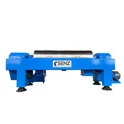

Hey there! As a supplier of 3 - Phase Decanter Centrifuges, I've had my fair share of experiences dealing with different materials, especially biological ones. Using a 3 - Phase Decanter Centrifuge for biological materials comes with a whole set of special considerations that we need to keep in mind.


First off, let's talk about the nature of biological materials. They're often delicate and sensitive. Unlike some industrial materials that can withstand harsh conditions, biological samples can be easily damaged. For example, cells in a biological solution can be disrupted if the centrifuge operates at too high a speed or for too long. This means we have to be really careful when setting the operating parameters of the centrifuge.
One of the key considerations is the speed of the centrifuge. The speed needs to be adjusted based on the type of biological material. For instance, if we're dealing with a sample that contains large and robust cells, we might be able to use a relatively higher speed. But if it's a sample with fragile cells or proteins, a lower speed is necessary to prevent damage. It's like driving a car; you wouldn't drive at full speed on a bumpy road with a precious cargo.
Another important factor is the temperature. Biological materials are usually temperature - sensitive. Most biological reactions and the integrity of cells and proteins are maintained within a specific temperature range. If the centrifuge generates too much heat during operation, it can denature proteins or kill cells. So, we need to have a good cooling system in place to keep the temperature under control. Some of our 3 - Phase Decanter Centrifuges are equipped with advanced cooling mechanisms to ensure that the temperature stays within the optimal range for the biological materials.
The chemical environment is also crucial. Biological materials are often in a specific buffer solution that maintains their stability. When using the centrifuge, we need to make sure that the materials are not exposed to any chemicals that could react with them. For example, some metals in the centrifuge parts could potentially react with certain biological substances. That's why we use high - quality, non - reactive materials in the construction of our centrifuges to minimize any chemical interactions.
Now, let's talk about the separation process itself. In a 3 - Phase Decanter Centrifuge, we're aiming to separate three different phases: solids, liquids, and sometimes another liquid phase. When dealing with biological materials, the separation needs to be as gentle as possible. We don't want to break up the cells or cause any unwanted chemical changes. The design of the centrifuge plays a big role here. Our Three - Phase Separation Decanter is specifically designed to handle biological materials with care. It has a unique internal structure that allows for a smooth and efficient separation process.
The feed rate is also an important consideration. If we feed the biological material into the centrifuge too quickly, it can overwhelm the separation process and lead to incomplete separation. On the other hand, if the feed rate is too slow, it can be time - consuming and inefficient. We need to find the right balance based on the properties of the biological material and the capacity of the centrifuge.
In addition to these technical considerations, there are also some practical aspects. For example, cleaning and maintenance are essential when working with biological materials. After each use, the centrifuge needs to be thoroughly cleaned to prevent cross - contamination. Biological materials can carry bacteria, viruses, or other pathogens, so proper cleaning is not only important for the accuracy of future separations but also for the safety of the operators. Our centrifuges are designed with easy - to - clean components, making the cleaning process more efficient.
Let's also touch on the application of 3 - Phase Decanter Centrifuges in different biological fields. In the food industry, for example, these centrifuges are used to separate oil, water, and solids in processes like Horizontal Separation Equipment Olive Avocado Oil Extraction Machine. When extracting olive or avocado oil, the centrifuge needs to separate the oil from the water and solid particles without damaging the oil's quality. The same goes for the pharmaceutical industry. In drug manufacturing, biological materials need to be separated accurately to ensure the purity and effectiveness of the drugs.
Another area where 3 - Phase Decanter Centrifuges are used is in wastewater treatment. Biological wastewater often contains a mixture of solids, liquids, and microorganisms. The centrifuge can help separate these components, making the wastewater treatment process more efficient. However, when dealing with biological wastewater, we need to be aware of the potential presence of harmful microorganisms and take appropriate safety measures.
Now, if you're in the market for a 3 - Phase Decanter Centrifuge for your biological material separation needs, we've got you covered. Our centrifuges are designed with all these special considerations in mind. We've spent years perfecting our products to ensure that they can handle a wide range of biological materials with high efficiency and reliability.
Whether you're in the food, pharmaceutical, or wastewater treatment industry, our Industrial Waste Oil Centrifuge and other 3 - Phase Decanter Centrifuges can provide the solution you need. If you're interested in learning more about our products or have any questions regarding the use of 3 - Phase Decanter Centrifuges for biological materials, don't hesitate to get in touch. We're here to help you make the right choice for your business.
References
- Principles of Centrifugation in Biotechnology. A. Smith, 2018
- Biological Separation Techniques. B. Johnson, 2019
- Applications of Decanter Centrifuges in the Food Industry. C. Brown, 2020