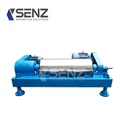

Yo, folks! As a supplier of small decanter centrifuges, I've seen firsthand how the design of the bowl can have a huge impact on the centrifuge's performance. In this blog, I'm gonna break down what makes a good bowl design and how it affects the overall efficiency of a small decanter centrifuge.
Let's start with the basics. A decanter centrifuge is a machine that separates different components of a liquid mixture based on their density. It works by spinning the mixture at high speeds, which creates a centrifugal force that pushes the heavier components to the outer edge of the bowl while the lighter components stay closer to the center. The bowl is the key component of the centrifuge, as it's where the separation process takes place.
One of the most important factors in bowl design is its shape. The shape of the bowl can affect how the mixture flows through the centrifuge and how efficiently the separation process occurs. For example, a conical bowl design is often used in small decanter centrifuges because it helps to direct the heavier components towards the outer edge of the bowl, making it easier for them to be removed. This design also helps to prevent the lighter components from being trapped in the heavier ones, which can improve the overall separation efficiency.
Another important aspect of bowl design is its size. The size of the bowl can affect the capacity of the centrifuge and how quickly it can process a given volume of mixture. A larger bowl can typically handle more mixture at once, but it may also require more energy to spin at the same speed as a smaller bowl. On the other hand, a smaller bowl may be more energy-efficient, but it may also have a lower capacity and take longer to process the same volume of mixture.
The material used to make the bowl is also an important consideration. The bowl needs to be strong enough to withstand the high speeds and forces generated by the centrifuge, as well as resistant to corrosion and wear. Common materials used for bowl construction include stainless steel, titanium, and composite materials. Each material has its own advantages and disadvantages, so it's important to choose the one that's best suited for the specific application.
In addition to the shape, size, and material of the bowl, the design of the internal components of the centrifuge can also have a significant impact on its performance. For example, the design of the conveyor screw, which is used to remove the separated solids from the bowl, can affect how efficiently the solids are removed and how much liquid is carried along with them. A well-designed conveyor screw can help to minimize the amount of liquid that's removed with the solids, which can improve the overall separation efficiency and reduce the amount of waste generated.
Now, let's talk about some specific applications of small decanter centrifuges and how bowl design can affect their performance in these applications.


Waste Oil Centrifuge Biodiesel Equipment
When it comes to Waste Oil Centrifuge Biodiesel Equipment, the bowl design is crucial for separating the impurities from the waste oil. The impurities in waste oil can include dirt, water, and other contaminants that can affect the quality of the biodiesel produced. A well-designed bowl can help to ensure that these impurities are efficiently separated from the oil, resulting in a higher-quality biodiesel product.
Slaughterhouse Wastewater Treatment
In Slaughterhouse Wastewater Treatment, the bowl design plays a key role in separating the solids from the wastewater. The solids in slaughterhouse wastewater can include blood, feces, and other organic matter, which can be difficult to separate from the water. A properly designed bowl can help to ensure that these solids are efficiently removed from the wastewater, reducing the environmental impact of the slaughterhouse and improving the quality of the treated water.
Fish Meal Dewatering Centrifuge
For Fish Meal Dewatering Centrifuge, the bowl design is important for separating the water from the fish meal. The fish meal is a valuable product that can be used as a feed ingredient for animals, but it needs to be properly dewatered to prevent spoilage. A well-designed bowl can help to ensure that the water is efficiently removed from the fish meal, resulting in a higher-quality product that can be stored and transported more easily.
So, as you can see, the design of the bowl has a significant impact on the performance of a small decanter centrifuge. Whether you're using the centrifuge for waste oil processing, wastewater treatment, or fish meal dewatering, choosing the right bowl design is essential for achieving the best possible results.
If you're in the market for a small decanter centrifuge, I encourage you to reach out to us. We have a wide range of centrifuge models available, each with its own unique bowl design and features. Our team of experts can help you choose the right centrifuge for your specific application and provide you with all the support and guidance you need to ensure its successful operation.
In conclusion, the bowl design is a critical factor in the performance of a small decanter centrifuge. By understanding the importance of bowl shape, size, material, and internal components, you can make an informed decision when choosing a centrifuge for your application. And if you need any help or have any questions, don't hesitate to contact us. We're here to help you get the most out of your centrifuge and achieve your separation goals.
References
- "Decanter Centrifuge Handbook," by Alfa Laval
- "Centrifugal Separation Technology," by John Wiley & Sons