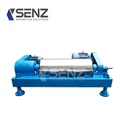

In the industrial realm, the safety of a complete set of equipment is of paramount importance. As a seasoned supplier of complete sets of equipment, I've witnessed firsthand how crucial safety features are not only for the well - being of operators but also for the smooth and efficient operation of industrial processes. In this blog, I will delve into the various safety features of a complete set of equipment, highlighting their significance and how they contribute to overall industrial safety.
1. Physical Protection and Enclosures
One of the most basic yet effective safety features is the use of physical enclosures. These enclosures are designed to prevent accidental contact with moving parts, hot surfaces, or hazardous substances. For example, in a Screw Conveyor, an enclosed housing protects operators from getting their clothing, hair, or hands caught in the rotating screws. The enclosure is typically made of robust materials such as steel or thick plastic, which can withstand impacts and provide a barrier against external factors.
Similarly, electrical components in a complete set of equipment are often housed in specialized enclosures. These enclosures are rated according to their level of protection against dust and water ingress, commonly known as IP (Ingress Protection) ratings. High - rated enclosures prevent dust and moisture from entering the electrical parts, reducing the risk of short - circuits, electrical fires, and malfunctions.


2. Safety Interlocks
Safety interlocks are mechanisms that ensure certain operations cannot occur unless specific conditions are met. In a centrifuge, for instance, Centrifuge Maintenance often emphasizes the importance of interlocks. A centrifuge will not start unless the lid is properly closed. This prevents operators from being exposed to high - speed rotating parts, which can cause serious injury in case of accidental contact.
In automated production lines, safety interlocks are used to prevent the start of machinery if safety guards are removed or if there are objects in the working area. These interlocks are usually connected to sensors that detect the position of guards or the presence of foreign objects. If the conditions are not met, the machinery will either not start or will immediately stop its operation.
3. Emergency Stop Buttons
Emergency stop buttons, also known as e - stops, are a critical safety feature in any complete set of equipment. These buttons are placed in easily accessible locations throughout the equipment and the work area. In case of an emergency, such as a machinery malfunction, a hazardous situation, or an operator getting caught in the machinery, pressing an e - stop button will immediately halt the operation of all relevant equipment.
The design of e - stop buttons is standardized to ensure they are easily recognizable and operable. They are usually large, red, and have a prominent shape, often a mushroom - head design, which makes them easy to press, even in a panic situation. Once an e - stop is pressed, the equipment cannot be restarted until the root cause of the emergency has been addressed and the e - stop button has been reset.
4. Overload Protection
Overload protection is essential for preventing damage to equipment and ensuring the safety of operators. In electrical systems, overload protection devices such as circuit breakers and fuses are used to prevent excessive current from flowing through the wires. If the current exceeds a certain limit, the circuit breaker will trip or the fuse will blow, cutting off the power supply to the equipment.
In mechanical systems, overload protection can be achieved through the use of torque limiters or shear pins. For example, in a Screw Conveyor, a torque limiter can be installed to prevent the conveyor from jamming due to excessive load. If the torque exceeds the set limit, the torque limiter will disengage, stopping the conveyor and preventing damage to the motor and other components.
5. Alarm Systems
Alarm systems are crucial for alerting operators to potential safety hazards or abnormal operating conditions. These systems can use visual and auditory signals to get the attention of operators. In a chemical processing plant, for example, a Flocculant Auto Dosing System may be equipped with an alarm system to indicate a low level of flocculant, a malfunction in the dosing mechanism, or a process parameter going out of range.
Visual alarms can include flashing lights, which are easily visible even in noisy or dimly lit environments. Auditory alarms, such as sirens or beeps, can be set to different tones and volumes to indicate different levels of urgency. Some advanced alarm systems can also be connected to a central monitoring station, allowing for remote monitoring and quick response in case of an emergency.
6. Fire and Explosion Protection
In industries where there is a risk of fire or explosion, appropriate safety features are essential. Equipment may be designed with flame - arresters, which prevent the spread of flames in case of an explosion. These devices are often installed in ventilation systems or pipes that carry flammable gases or vapors.
Explosion - proof enclosures are also used in areas where there is a high risk of explosion. These enclosures are designed to contain an internal explosion without allowing the flame or pressure to escape to the surrounding environment. They are constructed with special materials and seals to ensure their integrity under high - pressure conditions.
7. Training and Documentation
While not a physical safety feature, proper training and documentation are integral to the safe operation of a complete set of equipment. As a supplier, we provide comprehensive training to operators on how to use the equipment safely, including how to operate safety features, perform routine maintenance, and respond to emergencies.
Detailed documentation, such as user manuals, safety guides, and maintenance schedules, is also provided with the equipment. These documents contain important information about the equipment's safety features, operating procedures, and potential hazards. By ensuring that operators are well - informed and properly trained, the risk of accidents can be significantly reduced.
Conclusion
The safety features of a complete set of equipment play a vital role in protecting operators, preventing damage to the equipment, and ensuring the smooth and efficient operation of industrial processes. From physical enclosures and safety interlocks to alarm systems and fire protection, each feature contributes to the overall safety of the equipment.
If you are in the market for a reliable and safe complete set of equipment, we invite you to contact us for procurement and further discussions. Our team of experts is ready to assist you in finding the most suitable equipment for your specific needs and ensuring its safe and efficient operation.
References
- Industry safety standards and regulations provided by relevant authorities.
- Technical manuals and research papers on equipment safety features.