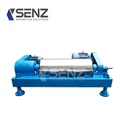

As a supplier of 3 Phase Centrifuges, I understand the importance of noise reduction in industrial settings. Noise from centrifuges can be a significant issue, not only causing discomfort to operators but also potentially leading to long - term hearing problems. Moreover, excessive noise can disrupt the workflow in the surrounding environment and may even lead to non - compliance with local noise regulations. In this blog, I will explore some effective noise - reduction measures for 3 Phase Centrifuges.
1. Equipment Design and Construction
- Vibration Isolation
- One of the primary causes of noise in 3 Phase Centrifuges is vibration. When the centrifuge operates, the high - speed rotation of the drum and other moving parts can generate vibrations that are transmitted to the surrounding structure, resulting in noise. To address this, the use of high - quality vibration isolation mounts is crucial. These mounts are designed to absorb and dampen the vibrations, preventing them from being transferred to the floor or other equipment.
- For example, rubber or spring - based isolation mounts can be installed between the centrifuge base and the floor. These materials have excellent shock - absorbing properties, which can significantly reduce the amount of vibration and, consequently, the noise produced. By choosing mounts with the appropriate stiffness and damping characteristics, the noise level can be effectively minimized.
- Enclosure Design
- Another effective way to reduce noise is through proper enclosure design. A well - designed enclosure can act as a sound barrier, preventing the noise generated by the centrifuge from escaping into the surrounding environment. The enclosure should be made of materials with high sound - absorption properties, such as acoustic panels or fiberglass insulation.
- The design of the enclosure should also take into account the ventilation requirements of the centrifuge. Airflow is necessary to cool the centrifuge during operation, but improper ventilation design can create additional noise. Therefore, the enclosure should be designed with ventilation ducts that are lined with sound - absorbing materials to reduce the noise associated with airflow.
2. Maintenance and Lubrication
- Regular Maintenance
- Regular maintenance of the 3 Phase Centrifuge is essential for noise reduction. Worn - out or damaged parts can cause abnormal vibrations and increased noise levels. Components such as bearings, belts, and seals should be inspected regularly and replaced when necessary.
- For instance, if a bearing is worn, it can cause the shaft of the centrifuge to wobble, resulting in increased noise and vibration. By replacing the bearing in a timely manner, the smooth operation of the centrifuge can be restored, and the noise level can be reduced.
- Proper Lubrication
- Lubrication is also a key factor in noise reduction. Adequate lubrication reduces friction between moving parts, which in turn reduces noise. The lubricants used should be of high quality and appropriate for the specific application of the centrifuge.
- Incorrect lubrication can lead to increased wear and tear on the components, as well as higher noise levels. Therefore, operators should follow the manufacturer's recommendations regarding the type and frequency of lubrication.
3. Operational Optimization
- Optimal Speed Control
- The operating speed of the 3 Phase Centrifuge can have a significant impact on the noise level. Higher speeds generally result in more noise. By optimizing the operating speed based on the specific requirements of the separation process, the noise level can be reduced.
- For example, if the separation process can be achieved at a lower speed without sacrificing the separation efficiency, then operating the centrifuge at that lower speed will result in less noise. Advanced control systems can be used to precisely adjust the speed of the centrifuge according to the process requirements.
- Load Balancing
- Unbalanced loads in the centrifuge can cause excessive vibrations and noise. It is important to ensure that the load is evenly distributed within the centrifuge drum. This can be achieved through proper loading procedures and the use of load - balancing devices if necessary.
- If the load is not balanced, the centrifuge may experience uneven forces during rotation, leading to increased noise and potential damage to the equipment. Operators should be trained to load the centrifuge correctly to minimize unbalanced loads.
4. Additional Noise - Reduction Devices
- Silencers
- Silencers can be installed on the intake and exhaust ports of the centrifuge to reduce the noise associated with airflow. These devices work by absorbing and dissipating the sound energy in the air.
- There are different types of silencers available, such as reactive silencers and absorptive silencers. Reactive silencers use chambers and baffles to reflect and cancel out the sound waves, while absorptive silencers use sound - absorbing materials to convert the sound energy into heat.
- Sound - Dampening Mats
- Sound - dampening mats can be placed around the centrifuge or on the floor beneath it. These mats are made of materials with high sound - absorption coefficients, such as rubber or foam. They can help to reduce the noise that is transmitted through the floor or reflected from nearby surfaces.
5. Consideration of the Installation Environment
- Location Selection
- The location where the 3 Phase Centrifuge is installed can also affect the noise level. It is advisable to install the centrifuge in an area that is away from areas with high human traffic or sensitive equipment. For example, installing the centrifuge in a separate room or a sound - insulated enclosure within the facility can help to contain the noise.
- Additionally, the location should have a stable foundation. A weak or uneven foundation can amplify the vibrations of the centrifuge and increase the noise level. Therefore, the floor or pedestal on which the centrifuge is installed should be level and strong enough to support the weight and vibrations of the equipment.
As a supplier of 3 Phase Centrifuge, we are committed to providing high - quality products with effective noise - reduction features. Our Three - Phase Separation Decanter and Industrial Waste Oil Centrifuge are designed with advanced noise - reduction technologies to ensure a quiet and efficient operation.


If you are interested in our 3 Phase Centrifuges or have any questions regarding noise reduction in centrifuge operations, we welcome you to contact us for further discussion and procurement negotiation. We look forward to serving your separation needs with our reliable and noise - efficient centrifuge solutions.
References
- "Industrial Centrifuge Technology Handbook"
- "Noise Control Engineering: Principles and Applications"