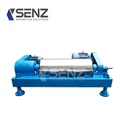
Hey there! As a supplier of 3 Phase Centrifuges, I often get asked about the control systems of these cool machines. So, I thought I'd write this blog to give you the lowdown on what makes the control systems of a 3 Phase Centrifuge tick.
First off, let's understand what a 3 Phase Centrifuge is. It's a powerful piece of equipment used in various industries for separating different phases of a mixture, like separating solids from liquids or different types of liquids from each other. You can check out our 3 Phase Centrifuge on our website to get a better idea of what it looks like and what it can do.
Now, let's dive into the control systems. There are several key components that make up the control systems of a 3 Phase Centrifuge, and each plays a crucial role in ensuring the centrifuge operates efficiently and effectively.
Speed Control
One of the most important aspects of a 3 Phase Centrifuge control system is speed control. The speed at which the centrifuge rotates determines how effectively it can separate the different phases of the mixture. If the speed is too low, the separation may not be complete, and if it's too high, it could cause damage to the centrifuge or the materials being processed.
Most 3 Phase Centrifuges use a variable frequency drive (VFD) to control the speed. A VFD allows you to adjust the speed of the centrifuge motor by changing the frequency of the electrical power supplied to it. This gives you precise control over the rotation speed, which is essential for achieving the desired separation results.
Feed Rate Control
Another critical control system in a 3 Phase Centrifuge is the feed rate control. The feed rate refers to the amount of material that is fed into the centrifuge per unit of time. Controlling the feed rate is important because it affects the separation efficiency and the overall performance of the centrifuge.
If the feed rate is too high, the centrifuge may not be able to handle the volume of material, leading to poor separation and potentially clogging the machine. On the other hand, if the feed rate is too low, the centrifuge may not be operating at its full capacity, which can be inefficient and costly.
To control the feed rate, most 3 Phase Centrifuges are equipped with a feed pump that can be adjusted to deliver the material at a specific rate. Some centrifuges also use sensors to monitor the feed rate and automatically adjust the pump to maintain a consistent flow.
Torque Control
Torque control is another important feature of the control systems in a 3 Phase Centrifuge. Torque refers to the rotational force applied to the centrifuge drum. Monitoring and controlling the torque is crucial because it can indicate the load on the centrifuge and help prevent overloading.
If the torque exceeds the maximum limit, it could cause the centrifuge to stop or even damage the motor. To prevent this, the control system is designed to monitor the torque and adjust the speed or feed rate as needed to keep the torque within a safe range.
Temperature Control
Temperature control is also an essential part of the control systems in a 3 Phase Centrifuge. The temperature of the centrifuge and the materials being processed can affect the separation efficiency and the quality of the end products.
In some applications, such as the extraction of oil from olive or avocado using a Horizontal Separation Equipment Olive Avocado Oil Extraction Machine, maintaining a specific temperature is crucial for obtaining high-quality oil. To control the temperature, the centrifuge may be equipped with a cooling or heating system that can be adjusted to keep the temperature within the desired range.
Automation and Monitoring
Modern 3 Phase Centrifuges often come with advanced automation and monitoring systems. These systems allow you to control and monitor the centrifuge remotely, which can save time and improve efficiency.
For example, you can set up the centrifuge to operate at specific times or under certain conditions. The monitoring system can also provide real-time data on the performance of the centrifuge, such as the speed, feed rate, torque, and temperature. This data can be used to optimize the operation of the centrifuge and detect any potential problems before they cause significant damage.
Safety Control
Safety is always a top priority when it comes to operating a 3 Phase Centrifuge. The control systems are designed to include various safety features to protect the operators and the equipment.
For instance, there are usually emergency stop buttons that can be used to immediately stop the centrifuge in case of an emergency. The control system also monitors for any abnormal conditions, such as overheating or excessive vibration, and will automatically shut down the centrifuge if necessary.
Applications of 3 Phase Centrifuges and Their Control Systems
3 Phase Centrifuges are used in a wide range of industries, including wastewater treatment, food and beverage, chemical, and oil and gas. In the wastewater treatment industry, for example, a Sludge Dewatering Unit based on a 3 Phase Centrifuge can be used to separate the solid sludge from the liquid wastewater. The control systems ensure that the separation is efficient and that the dewatered sludge can be easily disposed of.
In the food and beverage industry, 3 Phase Centrifuges are used for separating cream from milk, clarifying fruit juices, and extracting oil from various seeds. The precise control systems allow for high-quality separation, which is essential for maintaining the quality of the food and beverage products.


Conclusion
In conclusion, the control systems of a 3 Phase Centrifuge are complex and sophisticated, but they are what make these machines so versatile and effective. From speed control to safety features, each component of the control system plays a vital role in ensuring the centrifuge operates smoothly and efficiently.
If you're in the market for a 3 Phase Centrifuge or need more information about our products, don't hesitate to reach out. We're here to help you find the right solution for your specific needs. Whether you're looking for a centrifuge for a small-scale operation or a large industrial application, we've got you covered. Contact us today to start the conversation about your procurement and see how our 3 Phase Centrifuges can benefit your business.
References
- "Centrifugal Separation Technology" by A. L. Kohl and R. B. Nielsen
- "Industrial Centrifugation Technology" by Peter A. Schweitzer