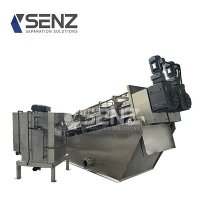

Hey there! I'm a supplier of Decanter Machines, and today I'm gonna talk about chemical - resistant Decanter Machines. You might be wondering, what exactly are these machines and why are they so important? Well, stick around, and I'll break it all down for you.


What are Decanter Machines?
First off, let's get a basic understanding of Decanter Machines. These are types of centrifuges that are used to separate different phases of a mixture, usually a solid - liquid or liquid - liquid mixture. They work by spinning the mixture at high speeds, which creates a centrifugal force. This force causes the heavier components to move towards the outer edge of the centrifuge, while the lighter components stay closer to the center.
Think of it like when you spin a salad spinner. The water gets flung out to the sides, leaving your salad dry. Decanter Machines take this concept to an industrial level. They're used in a wide range of industries, from food and beverage to wastewater treatment. For more info on industrial - scale centrifuges, check out this Industrial Centrifuge Machine page.
The Need for Chemical Resistance
Now, in many industrial applications, the mixtures being separated contain chemicals. These chemicals can be corrosive, abrasive, or otherwise harmful to the materials of the Decanter Machine. That's where chemical - resistant Decanter Machines come in.
Let's say you're in the chemical manufacturing industry. You're dealing with all sorts of strong acids and bases. If you use a regular Decanter Machine, these chemicals can eat away at the machine's components over time. This not only shortens the machine's lifespan but can also lead to leaks and other safety hazards. A chemical - resistant Decanter Machine, on the other hand, is built to withstand these harsh chemicals.
How are They Made Chemical - Resistant?
Manufacturers use a few different methods to make Decanter Machines chemical - resistant. One common approach is to use special materials. For example, some parts of the machine might be made from stainless steel alloys that are specifically formulated to resist corrosion. These alloys contain elements like chromium and nickel, which form a protective layer on the surface of the metal, preventing the chemicals from reacting with it.
Another method is to apply coatings. There are various types of coatings available, such as epoxy coatings or ceramic coatings. These coatings act as a barrier between the machine's components and the chemicals in the mixture. They're tough and durable, and can significantly extend the life of the Decanter Machine.
Applications of Chemical - Resistant Decanter Machines
Waste Dewatering
One of the most important applications of chemical - resistant Decanter Machines is in Waste Dewatering. In wastewater treatment plants, the wastewater often contains chemicals like heavy metals, detergents, and organic solvents. A chemical - resistant Decanter Machine can effectively separate the solid waste from the water, even in the presence of these chemicals. This helps in reducing the volume of waste that needs to be disposed of, and also makes the treated water safer to release back into the environment.
Food and Beverage Industry
In the food and beverage industry, there are many processes that involve the use of chemicals. For example, in the production of fruit juices, acids are used to adjust the pH level. A chemical - resistant Decanter Machine can be used to separate the pulp from the juice without being damaged by these acids. It ensures that the final product is of high quality and free from any contaminants that might be released if the machine were to corrode.
Tapioca Extraction
The Tapioca Extraction Centrifuge is another area where chemical - resistant Decanter Machines are crucial. During the tapioca extraction process, chemicals are used to break down the tapioca starch from the plant material. A chemical - resistant Decanter Machine can efficiently separate the starch from the other components, ensuring a high - yield and pure product.
Benefits of Using Chemical - Resistant Decanter Machines
Longer Lifespan
As I mentioned earlier, chemical - resistant Decanter Machines last longer. Since they can withstand the corrosive effects of chemicals, you don't have to replace them as often. This saves you a lot of money in the long run, as you're not constantly buying new machines.
Reduced Maintenance
These machines also require less maintenance. With regular Decanter Machines, you might have to constantly check for signs of corrosion and replace parts. But with chemical - resistant ones, the need for such frequent maintenance is greatly reduced. This means less downtime for your operations, and more productivity.
Safety
Safety is a major concern in any industrial setting. Chemical - resistant Decanter Machines reduce the risk of leaks and other safety hazards that can be caused by chemical corrosion. This protects your workers and the environment from potential harm.
Choosing the Right Chemical - Resistant Decanter Machine
When it comes to choosing a chemical - resistant Decanter Machine, there are a few things you need to consider. First, you need to know what kind of chemicals you'll be dealing with. Different chemicals have different levels of corrosiveness, so you need a machine that can handle the specific chemicals in your application.
You also need to think about the capacity of the machine. How much mixture do you need to separate per hour? Make sure you choose a machine that can meet your production requirements.
Another important factor is the cost. Chemical - resistant Decanter Machines can be more expensive than regular ones, but you need to look at the long - term benefits. Consider the savings in maintenance and replacement costs over the life of the machine.
Conclusion
So, there you have it! Chemical - resistant Decanter Machines are essential in many industrial applications where chemicals are involved. They offer a longer lifespan, reduced maintenance, and improved safety. Whether you're in waste dewatering, the food and beverage industry, or tapioca extraction, these machines can make a big difference in your operations.
If you're interested in learning more about our chemical - resistant Decanter Machines or if you're looking to make a purchase, feel free to reach out. We're here to help you find the perfect machine for your needs.
References
- Chemical Engineering Handbook, various editions
- Industrial Centrifuge Technology: Principles, Design and Applications, by various authors