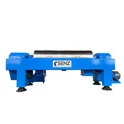

Improving the reliability of a sewage decanter centrifuge is crucial for ensuring efficient wastewater treatment processes. As a sewage decanter centrifuge supplier, I have witnessed firsthand the challenges that can arise in maintaining the reliability of these machines. In this blog, I will share some key strategies and best practices that can help enhance the reliability of sewage decanter centrifuges.
Understanding the Basics of Sewage Decanter Centrifuges
Before delving into the ways to improve reliability, it's important to understand how sewage decanter centrifuges work. A sewage decanter centrifuge is a machine used to separate solids from liquids in sewage treatment. It operates on the principle of centrifugal force, where the rotation of the centrifuge drum causes the denser solids to settle at the outer edge while the lighter liquid phase remains in the center.
Regular Maintenance and Inspection
One of the most effective ways to improve the reliability of a sewage decanter centrifuge is through regular maintenance and inspection. This includes checking the mechanical components such as bearings, seals, and belts for wear and tear. Regular lubrication of moving parts is also essential to reduce friction and prevent premature failure.
- Bearing Maintenance: Bearings are critical components in a sewage decanter centrifuge. They support the rotating drum and ensure smooth operation. Regularly check the bearings for proper alignment and lubrication. Replace any worn or damaged bearings promptly to avoid costly breakdowns.
- Seal Inspection: Seals prevent the leakage of fluids from the centrifuge. Inspect the seals regularly for signs of damage or wear. Replace seals as needed to maintain the integrity of the centrifuge.
- Belt Tension: The belts that drive the centrifuge drum need to be properly tensioned. Check the belt tension regularly and adjust it as necessary to ensure efficient power transmission.
Monitoring and Control Systems
Implementing monitoring and control systems can significantly improve the reliability of a sewage decanter centrifuge. These systems can provide real-time data on the performance of the centrifuge, allowing operators to detect and address potential issues before they escalate.
- Vibration Monitoring: Excessive vibration can indicate problems with the centrifuge, such as imbalance or misalignment. Install vibration sensors to monitor the vibration levels of the centrifuge. If the vibration levels exceed the recommended limits, take immediate action to correct the issue.
- Temperature Monitoring: Monitoring the temperature of the centrifuge components, such as the bearings and motor, can help detect overheating. Overheating can lead to premature failure of the components. Set up temperature sensors and alarms to alert operators when the temperature exceeds the safe limits.
- Process Control: Use advanced process control systems to optimize the operation of the sewage decanter centrifuge. These systems can adjust the speed, feed rate, and other parameters based on the characteristics of the sewage being treated. This ensures that the centrifuge operates at its optimal efficiency and reliability.
Proper Installation and Commissioning
Proper installation and commissioning of the sewage decanter centrifuge are essential for its reliable operation. Ensure that the centrifuge is installed on a stable and level foundation. Follow the manufacturer's instructions for installation and commissioning to ensure that the centrifuge is set up correctly.
- Alignment: Proper alignment of the centrifuge components is crucial for smooth operation. Misalignment can cause excessive vibration, increased wear and tear, and reduced reliability. Use alignment tools to ensure that the centrifuge drum, motor, and other components are properly aligned.
- Calibration: Calibrate the centrifuge regularly to ensure accurate measurement of parameters such as speed, temperature, and flow rate. This helps to maintain the efficiency and reliability of the centrifuge.
Operator Training
Well-trained operators are essential for the reliable operation of a sewage decanter centrifuge. Provide comprehensive training to operators on the operation, maintenance, and troubleshooting of the centrifuge. This includes training on safety procedures, proper handling of chemicals, and emergency response.
- Operation Training: Train operators on how to start, stop, and adjust the operation of the centrifuge. Teach them how to monitor the performance of the centrifuge and how to make adjustments to optimize its operation.
- Maintenance Training: Provide training on the maintenance procedures for the centrifuge, including lubrication, inspection, and replacement of components. Train operators on how to identify and troubleshoot common problems.
- Safety Training: Ensure that operators are trained on safety procedures, such as wearing appropriate personal protective equipment (PPE) and following lockout/tagout procedures. Provide training on emergency response procedures in case of a malfunction or accident.
Application-Specific Considerations
Different applications may require specific considerations to improve the reliability of a sewage decanter centrifuge. For example, in Slaughterhouse Wastewater Treatment, the centrifuge may need to handle high volumes of solids and fats. In Waste Oil Processing Centrifuge, the centrifuge may need to be designed to handle viscous fluids. In Coal Tar Decanter Centrifuge, the centrifuge may need to be resistant to corrosion.
- Material Selection: Choose the appropriate materials for the centrifuge components based on the specific application. For example, in applications where the centrifuge is exposed to corrosive chemicals, use corrosion-resistant materials such as stainless steel.
- Design Modifications: Consider making design modifications to the centrifuge to improve its performance and reliability in specific applications. For example, in applications where the centrifuge needs to handle high volumes of solids, increase the capacity of the centrifuge or add additional features such as a solids discharge system.
Conclusion
Improving the reliability of a sewage decanter centrifuge requires a comprehensive approach that includes regular maintenance, monitoring, proper installation, operator training, and application-specific considerations. By implementing these strategies, you can ensure that your sewage decanter centrifuge operates efficiently and reliably, reducing downtime and maintenance costs.
If you are interested in learning more about our sewage decanter centrifuges or have any questions about improving their reliability, please feel free to contact us for a procurement discussion. We are committed to providing high-quality products and services to meet your wastewater treatment needs.


References
- Smith, J. (2018). Wastewater Treatment Technology. New York: Wiley.
- Johnson, A. (2019). Centrifuge Design and Operation. London: Elsevier.
- Brown, C. (2020). Maintenance Strategies for Industrial Equipment. Chicago: McGraw-Hill.