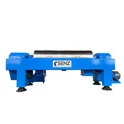
Evaluating the performance improvement of a small decanter centrifuge after modification is a crucial process for any supplier, including us as a Small Decanter Centrifuge provider. This evaluation not only helps us understand the effectiveness of the modifications but also provides valuable insights for future product development and customer satisfaction.
Understanding the Modifications
Before delving into the evaluation process, it is essential to understand the nature of the modifications made to the small decanter centrifuge. Modifications can range from simple adjustments to major overhauls, depending on the specific requirements of the application. Some common modifications include changes to the bowl design, conveyor speed, and the addition of advanced control systems.


For instance, if the centrifuge is used for Palm Oil Clarifier Decanter Centrifuge, modifications might be aimed at improving the separation efficiency of palm oil from impurities. This could involve optimizing the bowl geometry to enhance the sedimentation process or adjusting the conveyor speed to ensure proper discharge of the separated phases.
Key Performance Indicators (KPIs)
To evaluate the performance improvement of the small decanter centrifuge after modification, we need to establish a set of key performance indicators (KPIs). These KPIs will serve as benchmarks to measure the effectiveness of the modifications and determine whether the desired improvements have been achieved.
Separation Efficiency
Separation efficiency is one of the most critical KPIs for a decanter centrifuge. It measures the ability of the centrifuge to separate different phases, such as solids and liquids or two immiscible liquids. A higher separation efficiency indicates that the centrifuge is performing better in terms of isolating the desired components from the feed material.
To measure separation efficiency, we can use techniques such as gravimetric analysis or particle size distribution analysis. By comparing the separation efficiency before and after the modification, we can determine the impact of the changes on the centrifuge's performance.
Throughput
Throughput refers to the amount of feed material that the centrifuge can process within a given time frame. An increase in throughput after modification indicates that the centrifuge is operating more efficiently and can handle larger volumes of material.
To measure throughput, we can record the flow rate of the feed material and the duration of the centrifuge operation. By comparing the throughput before and after the modification, we can assess the improvement in the centrifuge's processing capacity.
Power Consumption
Power consumption is another important KPI that reflects the energy efficiency of the centrifuge. A reduction in power consumption after modification indicates that the centrifuge is operating more efficiently and consuming less energy.
To measure power consumption, we can use power meters to record the electrical energy consumed by the centrifuge during operation. By comparing the power consumption before and after the modification, we can evaluate the energy savings achieved by the changes.
Product Quality
Product quality is a crucial factor in determining the success of a decanter centrifuge. The modified centrifuge should be able to produce a high-quality product that meets the specific requirements of the application.
To evaluate product quality, we can analyze the properties of the separated phases, such as the purity of the oil or the moisture content of the solids. By comparing the product quality before and after the modification, we can determine whether the changes have resulted in an improvement in the final product.
Evaluation Process
Once the KPIs have been established, we can proceed with the evaluation process. The evaluation process typically involves the following steps:
Baseline Measurement
Before making any modifications to the centrifuge, we need to establish a baseline measurement of its performance. This involves recording the values of the KPIs under normal operating conditions. The baseline measurement will serve as a reference point for comparing the performance of the centrifuge before and after the modification.
Modification Implementation
After the baseline measurement has been completed, we can proceed with the implementation of the modifications. The modifications should be carried out by experienced technicians following the manufacturer's guidelines and best practices.
Post-Modification Measurement
Once the modifications have been implemented, we need to measure the values of the KPIs again to evaluate the performance improvement of the centrifuge. The post-modification measurement should be carried out under the same operating conditions as the baseline measurement to ensure a fair comparison.
Data Analysis
After the post-modification measurement has been completed, we need to analyze the data to determine the extent of the performance improvement. This involves comparing the values of the KPIs before and after the modification and calculating the percentage change in each KPI.
Interpretation of Results
Based on the data analysis, we can interpret the results and determine whether the modifications have been successful in improving the performance of the centrifuge. If the performance improvement meets or exceeds the desired targets, we can conclude that the modifications have been effective. Otherwise, we may need to consider further modifications or adjustments to the centrifuge.
Case Studies
To illustrate the evaluation process, let's consider a case study of a small decanter centrifuge used for Used Cooking Oil Separator. The centrifuge was modified to improve its separation efficiency and throughput.
Baseline Measurement
Before the modification, the centrifuge had a separation efficiency of 80% and a throughput of 100 liters per hour. The power consumption was 5 kW, and the product quality was satisfactory but could be improved.
Modification Implementation
The modifications included optimizing the bowl design, adjusting the conveyor speed, and installing a new control system. The modifications were carried out by a team of experienced technicians over a period of two weeks.
Post-Modification Measurement
After the modification, the centrifuge was tested under the same operating conditions as the baseline measurement. The results showed that the separation efficiency had increased to 90%, the throughput had increased to 150 liters per hour, the power consumption had decreased to 4 kW, and the product quality had improved significantly.
Data Analysis
The data analysis showed that the modifications had resulted in a 10% increase in separation efficiency, a 50% increase in throughput, a 20% reduction in power consumption, and a significant improvement in product quality. These results indicate that the modifications were successful in improving the performance of the centrifuge.
Conclusion
Evaluating the performance improvement of a small decanter centrifuge after modification is a complex but essential process. By establishing a set of key performance indicators and following a systematic evaluation process, we can accurately measure the effectiveness of the modifications and determine whether the desired improvements have been achieved.
As a Small Decanter Centrifuge supplier, we are committed to providing our customers with high-quality products and services. We understand the importance of evaluating the performance of our centrifuges and continuously improving their efficiency and reliability. If you are interested in learning more about our Olive Oil Separator or other centrifuge products, please feel free to contact us for a detailed discussion and procurement negotiation.
References
- Manufacturer's manuals and technical documentation
- Industry standards and guidelines
- Research papers and case studies on decanter centrifuge performance evaluation