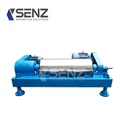

When it comes to operating a sludge decanter centrifuge efficiently, selecting the right motor is crucial. As a seasoned supplier of sludge decanter centrifuges, I've witnessed firsthand how the proper motor can significantly enhance the performance, reliability, and cost - effectiveness of these machines. In this blog, I'll share some key considerations to help you make an informed decision when choosing a motor for your sludge decanter centrifuge.
1. Power Requirements
The first step in choosing a motor is to determine the power requirements of your sludge decanter centrifuge. The power needed depends on several factors, including the size of the centrifuge, the type and volume of sludge being processed, and the desired throughput.
Larger centrifuges or those handling high - viscosity sludges generally require more power to operate effectively. You need to calculate the power based on the torque required to rotate the centrifuge bowl and the conveyor at the desired speed. It's important to note that underestimating the power can lead to overloading of the motor, reduced performance, and potential damage to the equipment. On the other hand, over - sizing the motor can result in unnecessary energy consumption and higher operating costs.
For example, if you are dealing with a small - scale sludge treatment plant that processes relatively low - volume and low - viscosity sludge, a motor with a lower power rating might be sufficient. However, for large industrial applications where high - volume and high - density sludges are involved, a more powerful motor will be necessary.
2. Speed and Control
The speed of the motor directly affects the separation efficiency of the sludge decanter centrifuge. Different types of sludge may require different rotational speeds to achieve optimal separation. A variable - speed motor provides greater flexibility as it allows you to adjust the speed according to the specific characteristics of the sludge.
In addition to speed, precise speed control is essential. Some advanced motors come with built - in speed control systems that can maintain a constant speed even under varying load conditions. This ensures consistent performance and better separation results. For instance, if the sludge feed rate changes, a motor with good speed control can adjust accordingly to maintain the desired separation efficiency.
Moreover, some applications may require the centrifuge to operate at different speeds during different stages of the sludge treatment process. A motor with programmable speed control can be very useful in such cases, allowing you to set different speed profiles for different phases of operation.
3. Efficiency and Energy Consumption
Energy efficiency is a major concern in today's industrial environment. A high - efficiency motor can significantly reduce energy costs over the long term. When choosing a motor for your sludge decanter centrifuge, look for motors with high efficiency ratings.
Motors with advanced designs, such as permanent magnet motors, often offer better energy efficiency compared to traditional induction motors. These motors can convert a higher percentage of electrical energy into mechanical energy, resulting in less wasted energy and lower operating costs.
You should also consider the power factor of the motor. A high power factor means that the motor is using electrical power more effectively. Motors with a low power factor can cause additional losses in the electrical system and increase the overall energy consumption.
4. Reliability and Durability
Sludge decanter centrifuges often operate in harsh environments, with exposure to moisture, chemicals, and vibrations. Therefore, the motor you choose must be reliable and durable. Look for motors that are designed to withstand these challenging conditions.
Motors with robust enclosures can protect the internal components from dust, water, and corrosive substances. For example, a motor with an IP (Ingress Protection) rating of IP55 or higher is suitable for use in environments where there is a risk of dust and water ingress.
In addition, the motor should have a long service life and require minimal maintenance. Motors with high - quality bearings, windings, and other components are less likely to fail and will need fewer repairs over time. This reduces downtime and ensures continuous operation of the sludge decanter centrifuge.
5. Compatibility with the Centrifuge
The motor must be compatible with the sludge decanter centrifuge in terms of mechanical and electrical specifications. It should be able to mount properly on the centrifuge and transmit power efficiently to the rotating components.
Check the shaft size, coupling type, and mounting dimensions of the motor to ensure a proper fit. Electrical compatibility is also crucial. The motor's voltage, frequency, and phase should match the electrical supply available at your facility.
Furthermore, some centrifuges may require a specific type of motor starter or control panel. Make sure that the motor you choose is compatible with the existing or planned control system of the centrifuge.
6. Cost Considerations
The initial cost of the motor is an important factor, but it should not be the only consideration. While a cheaper motor may seem attractive at first, it may end up costing more in the long run due to higher energy consumption, frequent breakdowns, and shorter service life.
When evaluating the cost, consider the total cost of ownership, which includes the purchase price, energy costs, maintenance costs, and potential replacement costs over the life of the motor. A more expensive but high - quality and energy - efficient motor may provide better value in the long term.
Related Products
If you are interested in other types of centrifuges, we also offer a range of related products. For example, our Black Diesel Oil Centrifuge is designed for efficient separation of impurities from black diesel oil. Our Sewage Decanter Centrifuge is specifically tailored for sewage treatment applications, and the Avocado Oil Production Line Decanter is ideal for the production of high - quality avocado oil.
Conclusion
Choosing the right motor for a sludge decanter centrifuge is a complex decision that requires careful consideration of multiple factors. By taking into account power requirements, speed and control, efficiency, reliability, compatibility, and cost, you can select a motor that will optimize the performance of your centrifuge and reduce operating costs.


If you are in the process of selecting a motor for your sludge decanter centrifuge or have any questions about our products, we are here to help. Our team of experts can provide you with detailed information and guidance to ensure that you make the best choice for your specific application. Feel free to reach out to us to start a discussion about your procurement needs.
References
- "Centrifuge Technology Handbook", published by a leading industry research institute.
- Technical documents from motor manufacturers.
- Case studies of sludge decanter centrifuge operations in different industries.