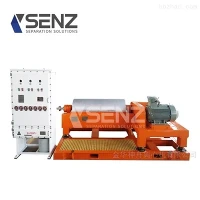

In the field of wastewater treatment and environmental protection, sludge dewatering equipment plays a crucial role. Among them, screw press sludge dewatering equipment is widely used due to its high efficiency and reliability. One of the key factors affecting the performance of screw press sludge dewatering equipment is the rotation speed of the screw. In this blog post, I'll share some insights on how to adjust the rotation speed of the screw in screw press sludge dewatering equipment, as a professional supplier of Sludge Dewatering Equipment.
Understanding the Importance of Screw Rotation Speed
The rotation speed of the screw in screw press sludge dewatering equipment directly impacts the dewatering efficiency, sludge treatment capacity, and the quality of the dewatered sludge. If the rotation speed is too high, the sludge may not have enough time to be properly compressed, resulting in insufficient dewatering and higher moisture content in the dewatered sludge. On the other hand, if the rotation speed is too low, the treatment capacity will be reduced, and the equipment may become less efficient. Therefore, finding the optimal rotation speed is essential for achieving the best dewatering results.
Factors Affecting Screw Rotation Speed
Before adjusting the screw rotation speed, it's necessary to understand the factors that can influence it. These factors include the characteristics of the sludge, the design and specifications of the equipment, and the desired dewatering effect.
- Sludge Characteristics: Different types of sludge have different physical and chemical properties, such as viscosity, particle size, and moisture content. For example, sludge with high viscosity may require a lower rotation speed to ensure proper compression and dewatering. In contrast, sludge with low viscosity can tolerate a higher rotation speed.
- Equipment Design and Specifications: The design and specifications of the screw press sludge dewatering equipment, such as the screw pitch, diameter, and length, also affect the optimal rotation speed. Equipment with a larger screw diameter and longer length may be able to handle higher rotation speeds, while equipment with a smaller screw may require a lower rotation speed.
- Desired Dewatering Effect: The desired moisture content of the dewatered sludge and the treatment capacity are also important factors to consider. If a lower moisture content is required, a lower rotation speed may be necessary to ensure more thorough dewatering. However, if a higher treatment capacity is needed, a higher rotation speed may be appropriate.
Methods for Adjusting Screw Rotation Speed
There are several methods for adjusting the rotation speed of the screw in screw press sludge dewatering equipment, including mechanical adjustment, electrical adjustment, and intelligent control.
- Mechanical Adjustment: Mechanical adjustment involves changing the gear ratio or pulley diameter of the drive system to adjust the rotation speed of the screw. This method is relatively simple and cost - effective, but it may have limitations in terms of the range of adjustment and the precision of control. For example, using a variable - speed pulley can provide a certain range of speed adjustment, but the adjustment steps may be relatively large.
- Electrical Adjustment: Electrical adjustment is a more common and precise method. It uses a variable - frequency drive (VFD) to control the speed of the electric motor that drives the screw. By adjusting the frequency of the electrical power supplied to the motor, the rotation speed of the screw can be accurately controlled within a wide range. VFDs offer several advantages, such as smooth speed adjustment, energy savings, and the ability to adapt to different operating conditions.
- Intelligent Control: With the development of automation technology, intelligent control systems are increasingly being used in screw press sludge dewatering equipment. These systems use sensors to monitor various parameters, such as the moisture content of the sludge, the pressure inside the equipment, and the torque of the screw. Based on the monitored data, the control system can automatically adjust the rotation speed of the screw to achieve the optimal dewatering effect.
Step - by - Step Guide to Adjusting Screw Rotation Speed
Here is a step - by - step guide on how to adjust the rotation speed of the screw in screw press sludge dewatering equipment:
- Understand the Equipment: Familiarize yourself with the design and operation manual of the screw press sludge dewatering equipment. This will help you understand the range of adjustable rotation speeds and the recommended operating parameters.
- Analyze the Sludge: Conduct a thorough analysis of the sludge to be treated, including its viscosity, particle size, and moisture content. This information will help you determine the initial rotation speed setting.
- Set the Initial Rotation Speed: Based on the sludge characteristics and the equipment specifications, set an initial rotation speed. It's usually recommended to start with a relatively low speed and gradually increase it while monitoring the dewatering effect.
- Monitor the Dewatering Effect: During the operation of the equipment, closely monitor the moisture content of the dewatered sludge, the treatment capacity, and the pressure inside the equipment. If the dewatering effect is not satisfactory, adjust the rotation speed accordingly.
- Fine - tune the Rotation Speed: Continuously fine - tune the rotation speed based on the monitoring results until the optimal dewatering effect is achieved. Keep in mind that the optimal rotation speed may vary depending on the changes in sludge characteristics and operating conditions.
Complementary Equipment and Their Impact on Screw Rotation Speed
In a sludge dewatering system, other equipment such as the Centrifuge Feed Pump and Screw Conveyor can also have an impact on the screw press sludge dewatering equipment and its screw rotation speed.


- Centrifuge Feed Pump: The centrifuge feed pump is responsible for transporting the sludge to the screw press. The flow rate and pressure provided by the pump can affect the amount of sludge entering the dewatering equipment. If the pump provides a high - flow rate, the screw press may need to operate at a higher rotation speed to handle the increased sludge volume. Conversely, a low - flow rate may allow for a lower rotation speed.
- Screw Conveyor: The screw conveyor is used to transport the dewatered sludge out of the equipment. The speed of the screw conveyor should be coordinated with the rotation speed of the screw in the dewatering equipment. If the screw conveyor operates too slowly, the dewatered sludge may accumulate in the equipment, affecting its normal operation. On the other hand, if it operates too fast, it may cause unnecessary energy consumption.
Conclusion
Adjusting the rotation speed of the screw in screw press sludge dewatering equipment is a complex but important task. By understanding the factors affecting the rotation speed, using appropriate adjustment methods, and closely monitoring the dewatering effect, you can achieve the optimal performance of the equipment. As a professional Sludge Dewatering Equipment supplier, we are committed to providing high - quality equipment and technical support to our customers. If you have any questions or needs regarding sludge dewatering equipment or the adjustment of screw rotation speed, please feel free to contact us for further discussion and procurement negotiation.
References
- Smith, J. (2018). Wastewater Treatment Handbook. Elsevier.
- Johnson, R. (2019). Sludge Dewatering Technology and Applications. CRC Press.