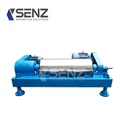

In the industrial landscape, the ability of equipment to function in high - temperature environments is a crucial consideration. As a supplier of a complete set of equipment, I have encountered numerous inquiries regarding the suitability of our products for such harsh conditions. In this blog, I will delve into the factors that determine whether a complete set of equipment can be used in a high - temperature environment, the challenges it faces, and the solutions we offer.
Understanding High - Temperature Environments
High - temperature environments can vary significantly in terms of their specific conditions. Temperatures can range from moderately high, around 50 - 100°C, to extremely high, exceeding 500°C in some industrial processes such as metal smelting or glass manufacturing. Additionally, factors like humidity, the presence of corrosive gases, and the duration of exposure to high temperatures all play a role in determining the equipment's performance.
Challenges Faced by Equipment in High - Temperature Environments
Material Degradation
One of the most significant challenges is material degradation. Many common materials used in equipment construction, such as plastics and some metals, can experience changes in their physical and chemical properties at high temperatures. Plastics may soften, melt, or become brittle, while metals can undergo oxidation, which weakens their structure over time. For example, in a high - temperature drying process, the plastic components of a centrifuge may start to deform, affecting its balance and efficiency.
Lubrication Issues
Lubricants are essential for the smooth operation of moving parts in equipment. However, high temperatures can cause lubricants to thin out, evaporate, or break down chemically. This leads to increased friction between moving parts, which can result in premature wear and tear, and ultimately, equipment failure. In a Centrifuge Feed Pump, proper lubrication is crucial for the impeller's rotation. If the lubricant fails due to high temperatures, the pump's performance will be severely compromised.


Electrical and Electronic Component Failure
Modern equipment often contains a significant number of electrical and electronic components. High temperatures can cause these components to overheat, leading to malfunctions or permanent damage. For instance, circuit boards may experience solder joint failures, and sensors may provide inaccurate readings. In a sludge dewatering system, electronic sensors are used to monitor the moisture content. If these sensors fail due to high temperatures, the entire dewatering process may be disrupted.
Our Solutions for High - Temperature Applications
Material Selection
We carefully select materials that can withstand high temperatures. For metal components, we use heat - resistant alloys such as stainless steel and nickel - based alloys. These materials have excellent resistance to oxidation and maintain their mechanical properties at elevated temperatures. For non - metal parts, we use high - temperature plastics and ceramics that are specifically designed for harsh environments. For example, in our Sludge Dewatering Equipment, we use ceramic filter plates that can operate at high temperatures without significant degradation.
Advanced Lubrication Systems
To address lubrication issues, we incorporate advanced lubrication systems into our equipment. These systems are designed to maintain the proper viscosity and lubricating properties of the lubricant even at high temperatures. We use high - temperature lubricants that are formulated to resist evaporation and chemical breakdown. Additionally, some of our equipment is equipped with automatic lubrication systems that can continuously monitor and adjust the lubricant supply. In our centrifuge, the bearings are lubricated with a high - temperature grease that ensures smooth operation even in hot environments.
Thermal Management
We implement effective thermal management strategies to protect electrical and electronic components. This includes the use of heat sinks, fans, and insulation materials. Heat sinks are used to dissipate heat from components, while fans help to circulate air and maintain a lower temperature within the equipment enclosure. Insulation materials are used to prevent heat transfer from the hot environment to sensitive components. In our control panels, we use high - quality insulation to protect the circuit boards from the surrounding high temperatures.
Case Studies
Metal Smelting Industry
In a metal smelting plant, our complete set of equipment was installed to handle the high - temperature slag processing. The centrifuge in the system was designed with heat - resistant materials and an advanced lubrication system. Despite the extremely high temperatures in the smelting environment, the centrifuge has been operating smoothly for several years, separating the valuable metals from the slag efficiently. Regular Centrifuge Maintenance has also ensured its long - term reliability.
Glass Manufacturing
In a glass manufacturing facility, our sludge dewatering equipment was used to treat the wastewater generated during the production process. The equipment was exposed to high temperatures due to the nearby glass furnaces. By using ceramic filter plates and a well - designed thermal management system, the dewatering equipment has been able to maintain its performance, reducing the moisture content of the sludge effectively.
Conclusion
In conclusion, a complete set of equipment can be used in a high - temperature environment, provided that the appropriate measures are taken to address the challenges. Through careful material selection, advanced lubrication systems, and effective thermal management, our equipment is designed to withstand the rigors of high - temperature applications.
If you are in need of a complete set of equipment for a high - temperature environment, we are here to help. Our team of experts can provide you with customized solutions based on your specific requirements. Contact us to start a procurement discussion and find the best equipment for your operations.
References
- ASM Handbook Committee. (2000). ASM Handbook Volume 2: Properties and Selection: Nonferrous Alloys and Special - Purpose Materials. ASM International.
- Shigley, J. E., Mischke, C. R., & Budynas, R. G. (2004). Mechanical Engineering Design. McGraw - Hill.
- Incropera, F. P., & DeWitt, D. P. (2002). Fundamentals of Heat and Mass Transfer. John Wiley & Sons.