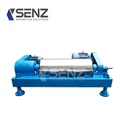

In the realm of industrial operations, the concept of complete sets of equipment is of paramount importance. As a seasoned supplier of complete sets of equipment, I've witnessed firsthand the diverse needs and applications across various industries. The question at hand is whether there are different types of complete sets of equipment, and the answer is a resounding yes. In this blog post, I'll delve into the various types of complete sets of equipment, their applications, and how they can benefit your business.
Understanding Complete Sets of Equipment
Before we explore the different types, let's first understand what a complete set of equipment entails. A complete set of equipment refers to a collection of machinery, tools, and components that are designed to work together seamlessly to achieve a specific industrial process or task. These sets are carefully engineered to ensure maximum efficiency, productivity, and reliability. They are often customized to meet the unique requirements of each client, taking into account factors such as production capacity, space limitations, and budget constraints.
Types of Complete Sets of Equipment
1. Water Treatment Complete Sets of Equipment
Water treatment is a critical process in many industries, including manufacturing, food and beverage, and pharmaceuticals. Water treatment complete sets of equipment are designed to remove impurities, contaminants, and pollutants from water, making it suitable for various applications. These sets typically include a combination of filtration systems, chemical dosing units, and disinfection equipment.


For example, a water treatment plant might use a complete set of equipment that includes a Flocculant Auto Dosing System. This system automatically adds flocculants to the water, causing the impurities to clump together and settle at the bottom of the tank. The clarified water can then be further treated using filtration systems and disinfection equipment to ensure it meets the required quality standards.
2. Waste Management Complete Sets of Equipment
Waste management is another area where complete sets of equipment play a crucial role. These sets are designed to handle different types of waste, including solid waste, liquid waste, and hazardous waste. They typically include a combination of collection, transportation, processing, and disposal equipment.
One example of a waste management complete set of equipment is a screw conveyor system. A Screw Conveyor is a simple yet effective device that uses a rotating screw to move materials along a trough. In a waste management facility, screw conveyors can be used to transport solid waste from one location to another, such as from a collection point to a processing unit.
3. Manufacturing Complete Sets of Equipment
In the manufacturing industry, complete sets of equipment are used to produce a wide range of products, from consumer goods to industrial components. These sets typically include a combination of machinery, tools, and automation systems that are designed to streamline the production process and improve efficiency.
For instance, a manufacturing plant might use a complete set of equipment for the production of plastic products. This set could include injection molding machines, extrusion machines, and auxiliary equipment such as cooling systems and material handling equipment. By using a complete set of equipment, the plant can ensure that the production process is optimized, resulting in higher quality products and increased productivity.
4. Laboratory Complete Sets of Equipment
Laboratories require specialized equipment to conduct various experiments, tests, and analyses. Laboratory complete sets of equipment are designed to meet the specific needs of different types of laboratories, such as research laboratories, clinical laboratories, and industrial laboratories.
These sets typically include a combination of analytical instruments, such as spectrometers and chromatographs, as well as equipment for sample preparation, such as centrifuges. A Centrifuge Maintenance service is often an important part of a laboratory complete set of equipment, as proper maintenance ensures the accurate and reliable operation of the centrifuge.
Benefits of Using Complete Sets of Equipment
1. Increased Efficiency
One of the main benefits of using complete sets of equipment is increased efficiency. Since all the components are designed to work together seamlessly, there is less downtime due to compatibility issues or equipment failures. This results in a more streamlined production process and higher productivity.
2. Cost Savings
Complete sets of equipment can also lead to cost savings. By purchasing a complete set, you can often get a better price than if you were to buy each component separately. Additionally, since the equipment is designed to work together, there is less need for additional training or support, which can further reduce costs.
3. Improved Quality
Using a complete set of equipment can also improve the quality of your products or services. Since the equipment is designed to work together, it can ensure that the production process is consistent and accurate, resulting in higher quality products.
4. Customization
As a supplier of complete sets of equipment, I understand that every client has unique requirements. That's why we offer customized solutions that are tailored to meet the specific needs of each client. Whether you need a small-scale system for a laboratory or a large-scale production line for a manufacturing plant, we can design and build a complete set of equipment that meets your exact specifications.
Contact Us for Procurement and洽谈
If you're in the market for a complete set of equipment, I encourage you to contact us to discuss your needs. Our team of experts has years of experience in the industry and can provide you with the guidance and support you need to make the right decision. We offer a wide range of complete sets of equipment for various industries, and we're committed to providing our clients with the highest quality products and services.
Whether you're looking for a water treatment complete set of equipment, a waste management complete set of equipment, or a manufacturing complete set of equipment, we have the solution for you. Contact us today to learn more about our products and services and to start the procurement process.
References
- Smith, J. (2020). Industrial Equipment Handbook. New York: Industrial Press.
- Jones, A. (2019). Water Treatment Technology. London: Elsevier.
- Brown, C. (2018). Waste Management Best Practices. Chicago: Wiley.