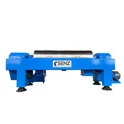

Hey there! As a supplier of Gluten Wheat Flour Separators, I've been getting a lot of questions lately about how our machines work on wheat flour with different protein contents. So, I thought I'd take a moment to break it down for you.
First off, let's talk about what a Gluten Wheat Flour Separator actually does. In simple terms, it's a machine that separates gluten from wheat flour. Gluten is a protein found in wheat, and it gives bread and other baked goods their elasticity and structure. By separating the gluten from the flour, we can create different types of flour with varying protein contents, which are used for different baking purposes.
Now, let's get into the separation effect on wheat flour with different protein contents. Wheat flour can be classified into three main types based on its protein content: low-protein flour (also known as cake flour), medium-protein flour (all-purpose flour), and high-protein flour (bread flour).
Low-Protein Flour (Cake Flour)
Low-protein flour typically has a protein content of around 7 - 9%. This type of flour is used for making delicate baked goods like cakes, pastries, and cookies. When our Gluten Wheat Flour Separator processes low-protein flour, it gently separates the gluten from the starch. Since there's less gluten in the first place, the separation process is relatively straightforward. The separator uses a combination of mechanical and pneumatic forces to separate the gluten, which is then collected in one chamber, while the remaining flour (mostly starch) is collected in another. The result is a pure, low-protein flour that's perfect for making light and fluffy cakes.


Medium-Protein Flour (All-Purpose Flour)
All-purpose flour has a protein content of about 10 - 12%. It's a versatile flour that can be used for a wide range of baking, from bread to cakes. Our Gluten Wheat Flour Separator is designed to handle medium-protein flour efficiently. The machine first breaks down the wheat flour particles and then uses a series of sieves and air currents to separate the gluten from the starch. The gluten is removed, and the remaining flour has a more balanced protein and starch ratio, making it suitable for various baking applications.
High-Protein Flour (Bread Flour)
High-protein flour has a protein content of 12 - 14% or more. This type of flour is essential for making bread because the high gluten content gives the bread its structure and chewiness. When processing high-protein flour, our Gluten Wheat Flour Separator has to work a bit harder. The separator uses a more intensive separation process to extract as much gluten as possible. It may involve multiple stages of separation, including centrifugation and filtration. The end result is a high-quality bread flour with a concentrated gluten content, which is ideal for making artisanal bread.
One of the key features of our Gluten Wheat Flour Separator is its ability to adjust the separation process based on the protein content of the wheat flour. This means that whether you're working with low, medium, or high-protein flour, our machine can be fine-tuned to achieve the best separation results.
Now, let's talk about some of the other products we offer that are related to the separation process. We also supply Centrifugal Dewaterer, which is used to remove excess water from the separated gluten. This is an important step in the production process, as it helps to preserve the quality of the gluten and makes it easier to store and transport.
Another product we have is the Septage Dewatering system. This is used to dewater septage, which is a by-product of the wastewater treatment process. Our septage dewatering system is highly efficient and can significantly reduce the volume of septage, making it easier to dispose of.
We also offer a Yeast Separator, which is used to separate yeast from other components in the fermentation process. This is crucial for the production of high-quality yeast, which is used in baking and brewing.
In conclusion, our Gluten Wheat Flour Separator is a powerful and versatile machine that can effectively separate gluten from wheat flour with different protein contents. Whether you're a small bakery or a large-scale flour mill, our machine can help you produce high-quality flour for your baking needs.
If you're interested in learning more about our Gluten Wheat Flour Separator or any of our other products, don't hesitate to reach out. We're here to answer any questions you may have and help you find the right solution for your business. Let's start a conversation and see how we can work together to improve your flour production process.
References
- "Wheat Flour: Composition, Properties, and Uses" - Journal of Cereal Science
- "Gluten Separation Technology in the Flour Milling Industry" - International Journal of Food Science and Technology