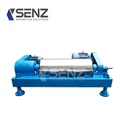

The bowl, a crucial component of a small decanter centrifuge, plays a pivotal role in the separation process. The material from which the bowl is made can significantly impact the centrifuge's separation performance. As a supplier of small decanter centrifuges, understanding these impacts is essential for providing the best products to clients across various industries, from waste management to food processing.
Material Properties and Their Influence on Separation
The physical and chemical properties of the bowl material directly affect how well the centrifuge can separate different components of a mixture. For instance, density is a fundamental property. A bowl made of a material with an appropriate density can ensure stable rotation during high - speed operation. If the density is too high, it may require more energy to reach the desired rotational speed, increasing operational costs. On the other hand, if the density is too low, the bowl may not have enough inertia to maintain a stable and smooth rotation, leading to uneven separation.
Hardness is another critical factor. In applications where the mixture contains abrasive particles, such as in Sludge Dewatering Technologies, a hard bowl material is necessary. A soft material would quickly wear out, which could lead to leaks, reduced separation efficiency, and frequent maintenance requirements. Stainless steel is a popular choice in such applications due to its relatively high hardness and corrosion resistance. It can withstand the abrasive action of sludge particles and the corrosive nature of some waste materials, ensuring a longer service life and consistent separation performance.
Chemical Resistance and Separation
When dealing with different types of mixtures, the chemical resistance of the bowl material becomes crucial. In the Oil Sludge Decanter Centrifuge application, the bowl is exposed to various oil - based substances, some of which may be highly corrosive. A material that is not chemically resistant will react with the oil sludge, leading to degradation of the bowl surface. This can cause pitting, cracking, and ultimately, a failure of the separation process.
Materials like titanium alloys offer excellent chemical resistance. They can resist the attack of many corrosive chemicals found in oil sludge, such as acids and alkalis. This ensures that the bowl maintains its integrity over time, providing a reliable separation environment for the oil and solid components in the sludge. In addition, the smooth surface of a chemically - resistant bowl can prevent the adhesion of oil and solids, making the separation process more efficient and reducing the need for frequent cleaning.
Thermal Properties and Separation
The thermal properties of the bowl material also have an impact on the separation performance. During the operation of a decanter centrifuge, friction is generated due to the high - speed rotation of the bowl and the movement of the mixture inside. This friction can cause a rise in temperature. A material with good thermal conductivity can dissipate the heat effectively, preventing overheating of the centrifuge.
Overheating can have several negative effects on the separation process. It can change the viscosity of the mixture, making it more difficult to separate the components. For example, in the Fish Oil Decanter Centrifuge, if the temperature is too high, the fish oil may become more viscous, and the separation of the oil from the fish waste may be less efficient. Copper alloys are known for their high thermal conductivity. Using a bowl made of a copper - based material can help maintain a stable temperature during operation, ensuring optimal separation of the fish oil from other substances.
Impact on Separation Efficiency
The choice of bowl material can directly impact the separation efficiency of a small decanter centrifuge. A well - chosen material can enhance the speed and quality of separation. For example, a smooth - surfaced bowl material can reduce the flow resistance of the mixture inside the centrifuge. This allows the different components to move more freely towards their respective collection areas, resulting in a faster separation process.
In addition, the material's ability to maintain its shape under high - speed rotation is crucial. If the bowl deforms during operation, the centrifugal force distribution will be uneven, leading to sub - optimal separation. Materials with high strength and stiffness, such as certain types of carbon fiber composites, can resist deformation even at high rotational speeds. This ensures that the centrifugal force is evenly distributed across the mixture, improving the separation efficiency and the purity of the separated components.
Impact on Maintenance and Downtime
The bowl material also affects the maintenance requirements and downtime of the centrifuge. As mentioned earlier, a durable and corrosion - resistant material like stainless steel or titanium alloy will require less frequent maintenance. This is because it is less likely to be damaged by the abrasive and corrosive substances in the mixture.
Less maintenance means less downtime for the centrifuge. In industrial applications, downtime can be extremely costly. For example, a waste treatment plant relying on a small decanter centrifuge for sludge dewatering cannot afford long periods of downtime. By choosing the right bowl material, the centrifuge can operate continuously for longer periods, increasing the overall productivity of the facility.
Influence on Product Quality
The material of the bowl can have an impact on the quality of the separated products. In food and beverage applications, such as the separation of fruit juices or milk, the bowl material must be food - grade. Materials that are not food - grade can contaminate the products, making them unfit for consumption.


Stainless steel is a common choice in food - related applications due to its food - grade certification and ease of cleaning. It does not react with food substances, ensuring that the quality and taste of the separated products are maintained. In addition, a clean and non - reactive bowl surface can prevent the growth of bacteria, which is essential for ensuring the safety and quality of food products.
Conclusion
In conclusion, the bowl material of a small decanter centrifuge has a wide - ranging impact on its separation performance. From physical and chemical properties to thermal characteristics, each aspect of the material can affect the efficiency, maintenance, and product quality of the centrifuge. As a supplier of small decanter centrifuges, we understand the importance of selecting the right bowl material for different applications. We offer a variety of centrifuge models with bowls made from different materials to meet the specific needs of our clients.
If you are in need of a small decanter centrifuge for your business, whether it's for sludge dewatering, oil separation, or other separation processes, we are here to provide you with the best solutions. Our team of experts can help you choose the most suitable centrifuge with the right bowl material based on your specific requirements. Contact us for procurement and let's discuss how our products can enhance your separation processes.
References
- Chowdhury, S., & Hasan, M. (2018). Impact of bowl design and material on the performance of decanter centrifuges. Journal of Separation Science, 41(10), 2150 - 2159.
- Feng, Y., & Li, X. (2019). Study on the influence of bowl material properties on the separation efficiency of small - scale decanter centrifuges. Centrifugal Separation Technology, 15(3), 189 - 202.
- Singh, R., & Gupta, S. (2020). Material selection for decanter centrifuge bowls in different industrial applications. International Journal of Separation Processes, 27(2), 87 - 95.