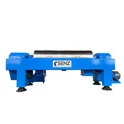

Hey there! As a supplier of Sludge Dewatering Equipment, I've seen firsthand how crucial each component is in making these machines work effectively. In this blog, I'm gonna break down the key components of sludge dewatering equipment, so you can better understand what goes into these systems and make an informed decision when you're looking to buy.
1. Sludge Feeding System
The first step in the sludge dewatering process is getting the sludge into the equipment. That's where the sludge feeding system comes in. This system is responsible for transporting the sludge from its source to the dewatering unit.
One common type of equipment used in the sludge feeding system is the Screw Conveyor. A screw conveyor uses a rotating helical screw blade to move the sludge along a trough. It's a simple and effective way to transport sludge, especially for longer distances or when the sludge needs to be elevated. The screw conveyor can be adjusted to control the flow rate of the sludge, ensuring a consistent feed to the dewatering equipment.
Another option for the sludge feeding system is a sludge pump. Sludge pumps come in various types, such as centrifugal pumps or positive displacement pumps. Centrifugal pumps are great for moving large volumes of low - viscosity sludge, while positive displacement pumps are more suitable for high - viscosity or thick sludge. The choice of pump depends on the characteristics of the sludge, like its viscosity, solid content, and the required flow rate.


2. Conditioning Unit
Before the sludge can be effectively dewatered, it often needs to be conditioned. Conditioning involves adding chemicals, such as flocculants or coagulants, to the sludge. These chemicals help to bind the small particles in the sludge together, forming larger flocs. Larger flocs are easier to separate from the water during the dewatering process.
The conditioning unit usually consists of a mixing tank where the chemicals are added to the sludge and thoroughly mixed. The mixing process must be carefully controlled to ensure that the chemicals are evenly distributed throughout the sludge. Proper mixing can improve the efficiency of the dewatering process and reduce the amount of water in the final sludge cake.
3. Dewatering Unit
This is the heart of the sludge dewatering equipment. There are several types of dewatering units available, each with its own advantages and disadvantages.
3.1 Belt Press
A belt press is a widely used dewatering unit. It consists of two porous belts that move along in a series of rollers. The conditioned sludge is placed between the two belts, and as the belts pass through the rollers, pressure is applied to squeeze the water out of the sludge. The water drains through the porous belts, and the dewatered sludge cake is discharged at the end of the machine.
Belt presses are relatively simple to operate and maintain. They can handle a wide range of sludge types and are suitable for medium - to large - scale dewatering applications. However, they may require a significant amount of floor space and can have relatively high water consumption for belt cleaning.
3.2 Centrifuge
A centrifuge uses centrifugal force to separate the water from the sludge. The sludge is fed into a rotating drum, and the centrifugal force causes the heavier solids to settle to the outer wall of the drum, while the lighter water is forced towards the center and removed.
Centrifuges are known for their high - speed operation and can achieve a high degree of dewatering. They are compact and require less floor space compared to belt presses. However, they can be more expensive to purchase and operate, and proper Centrifuge Maintenance is crucial to ensure their long - term performance.
3.3 Plate and Frame Filter Press
A plate and frame filter press consists of a series of plates and frames that are stacked together. The conditioned sludge is pumped into the filter press, and as the pressure builds up, the water is forced through the filter cloths on the plates, leaving behind a dewatered sludge cake in the frames.
Plate and frame filter presses are capable of producing very dry sludge cakes. They are suitable for applications where a high degree of dewatering is required or where the sludge contains a high percentage of solids. However, they are relatively slow in operation and require regular manual intervention for cake discharge and filter cloth cleaning.
4. Cake Discharge System
Once the sludge has been dewatered, the dewatered sludge cake needs to be removed from the dewatering unit. The cake discharge system is responsible for this task.
In a belt press, the cake is usually scraped off the belts by a blade. In a centrifuge, the dewatered solids are discharged through a discharge port at the end of the drum. For a plate and frame filter press, the frames need to be opened, and the cake is manually or automatically removed.
5. Control System
A modern sludge dewatering equipment is often equipped with a control system. The control system monitors and controls various parameters of the dewatering process, such as the flow rate of the sludge, the dosage of chemicals, the speed of the dewatering unit, and the pressure.
The control system can be programmed to optimize the dewatering process based on the characteristics of the sludge and the desired output. It can also provide real - time feedback and alerts to the operator in case of any abnormal conditions, ensuring the safe and efficient operation of the equipment.
Why Choose Our Sludge Dewatering Equipment?
We understand that choosing the right sludge dewatering equipment is a big decision. Our equipment is designed with the highest quality components and the latest technology to ensure maximum efficiency and reliability. We offer a wide range of dewatering solutions to meet the specific needs of different industries and applications.
Whether you're dealing with municipal sewage sludge, industrial waste sludge, or sludge from other sources, we have the right equipment for you. Our team of experts is always ready to provide you with professional advice and support to help you select, install, and maintain the best dewatering equipment for your operation.
If you're interested in learning more about our sludge dewatering equipment or have any questions about the dewatering process, don't hesitate to get in touch. We're looking forward to having a chat with you and discussing how we can assist you with your sludge dewatering needs. Let's work together to find the perfect solution for your business!
References
- Tchobanoglous, G., Burton, F. L., & Stensel, H. D. (2003). Wastewater Engineering: Treatment and Reuse. McGraw - Hill.
- Metcalf & Eddy. (2014). Wastewater Engineering: Treatment, Disposal, and Reuse. John Wiley & Sons.