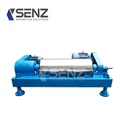

Hey there! As a supplier of laboratory centrifuges, I often get asked whether our machines are compatible with different types of sample tubes. It's a great question, and one that I'm more than happy to dive into.
Let's start by understanding what a laboratory centrifuge does. In simple terms, it's a device that spins samples at high speeds to separate their components based on density. This is super useful in various scientific fields, like biology, chemistry, and medicine. Now, when it comes to sample tubes, there's a wide range out there. We've got different sizes, shapes, and materials, each designed for specific types of samples and experiments.
Compatibility with Different Sizes
One of the first things to consider is the size of the sample tube. Tubes can range from tiny microcentrifuge tubes, which are usually around 0.2 - 2 mL in volume, to larger tubes that can hold 50 mL or more. Most of our laboratory centrifuges come with interchangeable rotors. These rotors are like the heart of the centrifuge, and they hold the sample tubes in place during spinning.
We offer rotors with different tube capacities and configurations. For example, some rotors are designed specifically for microcentrifuge tubes. They have small holes that perfectly fit these tiny tubes, ensuring a secure hold. On the other hand, we also have rotors with larger slots for bigger tubes. So, whether you're working with a few drops of a precious DNA sample in a microcentrifuge tube or a larger volume of a cell culture in a 50 mL tube, chances are we've got a rotor that can accommodate it.
Shape Matters Too
The shape of the sample tube is another factor. There are round - bottomed tubes, conical - bottomed tubes, and even flat - bottomed tubes. Our rotors are designed to be versatile. They can hold tubes of different shapes without any issues. The key is that the tube fits snugly in the rotor slot. This is important because a loose - fitting tube can cause imbalance during centrifugation, which can lead to inaccurate results or even damage the centrifuge.
For conical - bottomed tubes, the rotor slots are often shaped to match the tube's contour. This provides a stable base for the tube and helps in efficient separation. Round - bottomed tubes are also well - supported, and the rotors ensure that they don't roll around during spinning.
Material Compatibility
Sample tubes can be made from different materials, such as plastic, glass, or even metal in some specialized cases. Our laboratory centrifuges are compatible with a wide range of tube materials. Plastic tubes are very common because they're lightweight, inexpensive, and disposable. They're great for routine experiments. Our rotors can safely hold plastic tubes without causing any damage to the tubes or the centrifuge.
Glass tubes, on the other hand, are more durable and can withstand higher temperatures and chemical exposures. They're often used for more demanding experiments. We've designed our centrifuges to handle glass tubes carefully. The rotors provide a gentle yet secure hold to prevent the glass from breaking during high - speed spinning.
Specialized Applications
In some cases, you might be working with specialized sample tubes for unique applications. For example, if you're in the food industry, you might use tubes for analyzing sugar cane juice. Our centrifuges can be a great fit for such applications. You can check out our Sugar Cane Juice Machine which is a type of centrifuge designed with the right rotor configurations to handle the specific tubes used in sugar cane juice analysis.
If you're in the fishing or nutraceutical industry, you may need to separate fish oil from other components. Our Fish Oil Decanter Centrifuge is equipped to work with the appropriate sample tubes for this process. And for those who need to decant liquids in a laboratory setting, our Decantador is a great option. It's designed to be compatible with different tube types used in decanting operations.
Ensuring Compatibility
Before you start using a new type of sample tube with our centrifuge, it's always a good idea to double - check the compatibility. We provide detailed manuals with each centrifuge that list the compatible tube sizes, shapes, and materials for each rotor. If you're still unsure, our customer support team is just a call or an email away. We're always happy to help you figure out the best setup for your specific needs.


Conclusion
In conclusion, our laboratory centrifuges are highly compatible with different types of sample tubes. Thanks to our interchangeable rotors and careful design, you can use a wide variety of tubes in our machines. Whether you're a researcher in a small lab working with microcentrifuge tubes or a technician in a large industrial facility using big - volume tubes, we've got you covered.
If you're in the market for a new laboratory centrifuge or just want to learn more about how our machines can work with your sample tubes, don't hesitate to reach out. We're here to make your centrifugation processes as smooth and efficient as possible. Let's have a chat about your requirements, and we'll find the perfect centrifuge solution for you.
References
- Laboratory Centrifuge Handbook: A Guide to Selection and Use.
- Scientific Journals on Centrifugation Techniques.