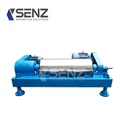

Hey there! As a supplier of sludge decanter centrifuges, I've seen firsthand how over - heating can be a real headache for users. In this post, I'm gonna share with you some practical ways to prevent over - heating in a sludge decanter centrifuge.
Understanding the Causes of Over - heating
Before we dive into the prevention methods, it's important to understand why a sludge decanter centrifuge might over - heat. There are several common reasons.
- High Viscosity of Sludge: When the sludge has a high viscosity, the centrifuge has to work harder to separate the solids from the liquids. This extra workload can cause the motor and other components to heat up. For example, if you're dealing with sludge that contains a lot of heavy metals or large organic particles, it's likely to be more viscous.
- Lack of Proper Lubrication: The moving parts in a centrifuge, such as the bearings and the drive shaft, need proper lubrication to run smoothly. Without enough lubrication, friction between the parts increases, which generates heat. If you notice that the centrifuge is making a lot of noise or vibrating more than usual, it could be a sign of poor lubrication.
- Overloading the Centrifuge: Putting too much sludge into the centrifuge at once can also lead to over - heating. The centrifuge has a maximum capacity, and if you exceed it, the motor will have to work overtime, causing it to heat up. It's like trying to carry more than you can handle; you're gonna get tired and hot!
Prevention Methods
1. Select the Right Sludge for the Centrifuge
Not all sludge is created equal, and some types are more suitable for a centrifuge than others. Before you start using the centrifuge, analyze the sludge's properties, including its viscosity, density, and particle size. If the sludge is too thick, you might need to pre - treat it by adding chemicals to reduce its viscosity. For example, some flocculants can be added to help the solids clump together, making them easier to separate.
2. Regular Lubrication and Maintenance
Lubrication is key to keeping the centrifuge running cool. Make sure to follow the manufacturer's recommendations for lubrication intervals and use the right type of lubricant. Check the lubricant levels regularly and top them up if necessary. Also, perform regular maintenance on the centrifuge, such as cleaning the filters and inspecting the belts and pulleys. A well - maintained centrifuge is less likely to over - heat.


3. Avoid Overloading
This one might seem obvious, but it's easy to overlook. Always check the centrifuge's maximum capacity and make sure you don't exceed it. If you have a large amount of sludge to process, divide it into smaller batches and run them through the centrifuge one by one. This way, the centrifuge won't have to work as hard, and it'll stay cooler.
4. Monitor the Temperature
Install a temperature monitoring system on the centrifuge. This will allow you to keep an eye on the temperature of critical components, such as the motor and the bearings. If the temperature starts to rise above the normal range, you can take action immediately, such as reducing the feed rate of the sludge or shutting down the centrifuge for a short period to let it cool down.
5. Ensure Proper Ventilation
A centrifuge generates a lot of heat during operation, and it needs proper ventilation to dissipate this heat. Make sure that the centrifuge is installed in a well - ventilated area. You can also use fans or other cooling devices to improve the air circulation around the centrifuge. If the centrifuge is in a closed room, consider installing an air - conditioning system to keep the temperature down.
Related Products
If you're interested in other types of centrifuges, we also offer a variety of options. Check out our Kitchen Waste Disposal Centrifuge, which is designed to handle the unique challenges of kitchen waste. Our Decanter Machine is another great choice for separating different types of substances. And if you're in the protein separation business, our Protein Centrifuge might be just what you need.
Conclusion
Preventing over - heating in a sludge decanter centrifuge is all about taking a proactive approach. By understanding the causes of over - heating and implementing the right prevention methods, you can ensure that your centrifuge operates efficiently and has a longer lifespan. If you have any questions or need more information about our sludge decanter centrifuges or other related products, feel free to reach out. We're here to help you find the best solution for your needs. If you're thinking about purchasing a centrifuge or need to discuss your specific requirements, don't hesitate to start a conversation with us.
References
- Centrifuge Operation Manuals
- Industry Research on Sludge Separation Technology