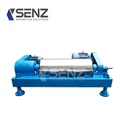

Hey there! As a supplier of 3 Phase Centrifuges, I've gotten a ton of questions about how to adjust the speed of these bad boys. It's a crucial aspect that can make or break the efficiency of your centrifuge, so I'm here to break it down for you in a way that's easy to understand.
First off, let's talk about why speed adjustment matters. A 3 Phase Centrifuge is used in a variety of industries, from food processing to chemical manufacturing. The speed at which the centrifuge spins determines how effectively it can separate different components of a mixture. For example, in the production of Olive Oil Decanter Centrifuge, the right speed is essential to separate the oil from the water and solids in the olive paste. If the speed is too low, the separation might not be complete, and you'll end up with a lower quality product. On the other hand, if the speed is too high, it could damage the centrifuge or the components you're trying to separate.
Now, let's get into the nitty - gritty of how to adjust the speed.


1. Understanding the Control System
Most modern 3 Phase Centrifuges come with a sophisticated control system. This system can be either manual or automated. If you have a manual control system, you'll typically have a speed controller that allows you to set the desired speed directly. It's usually a dial or a keypad where you can input the RPM (revolutions per minute).
For automated systems, things get a bit more high - tech. These systems use sensors and programmable logic controllers (PLCs) to adjust the speed based on various parameters. For instance, in a Horizontal Separation Equipment Olive Avocado Oil Extraction Machine, the system might adjust the speed according to the density of the mixture being processed.
2. Factors to Consider Before Adjusting
Before you start twiddling the knobs or entering numbers into the control panel, there are a few things you need to keep in mind.
- Type of Mixture: Different mixtures have different properties. If you're separating a mixture with large, heavy particles, you might need a higher speed to get them to settle at the bottom of the centrifuge. However, if the mixture contains delicate components, like biological cells, a lower speed is usually better to avoid damaging them.
- Desired Separation Efficiency: How pure do you need the separated components to be? If you're aiming for a high - purity separation, you might need to run the centrifuge at a specific speed for a longer period.
- Centrifuge Capacity: The size and capacity of your centrifuge also play a role. A larger centrifuge might require a different speed setting compared to a smaller one, even when processing the same mixture.
3. Step - by - Step Speed Adjustment
Let's assume you have a manual control system for the sake of simplicity.
- Power On: First, make sure your centrifuge is properly connected to a power source and turn it on. Let it run for a few minutes to warm up. This is important because the motor and other components need to reach their optimal operating temperature.
- Load the Centrifuge: Carefully load your mixture into the centrifuge bowl. Make sure it's evenly distributed to prevent any imbalance during operation. An imbalanced centrifuge can cause excessive vibration, which can damage the machine and affect the separation process.
- Set the Initial Speed: Refer to the manufacturer's guidelines to determine the recommended starting speed for your specific mixture. On the speed controller, set the RPM to this initial value. Start with a lower speed if you're unsure, and then gradually increase it if needed.
- Monitor the Process: Once the centrifuge starts spinning, keep an eye on it. Look for any signs of vibration, unusual noises, or leaks. You can also check the separation progress by taking small samples at regular intervals.
- Adjust the Speed: Based on your observations, you might need to adjust the speed. If the separation is not happening as expected, you can increase or decrease the RPM in small increments. For example, if you notice that the solids are not settling quickly enough, you can increase the speed by 100 - 200 RPM and see if it makes a difference.
- Finalize the Speed: Once you achieve the desired separation, note down the final speed setting. This will be useful for future runs with the same or similar mixtures.
4. Using Advanced Techniques
If you have an automated control system, you can take advantage of some advanced techniques to optimize the speed adjustment.
- Feedback Loops: Many automated systems use feedback loops to continuously adjust the speed. For example, a sensor can measure the density of the separated components and send a signal to the PLC. The PLC then adjusts the speed accordingly to maintain the desired separation efficiency.
- Pre - programmed Profiles: Some centrifuges allow you to create pre - programmed speed profiles. You can set different speeds for different stages of the separation process. This is particularly useful in complex applications, such as the operation of a Tricanter Centrifuge, where you need to separate three different components.
5. Maintenance and Safety
Proper maintenance is essential to ensure that your centrifuge can maintain the correct speed over time. Regularly clean the centrifuge bowl and check the bearings for wear and tear. Lubricate the moving parts as recommended by the manufacturer.
Safety is also a top priority. Always follow the safety instructions provided with the centrifuge. Wear appropriate protective gear, such as goggles and gloves, when operating the machine. Make sure the centrifuge is properly grounded to prevent electrical hazards.
Conclusion
Adjusting the speed of a 3 Phase Centrifuge is a skill that requires a good understanding of the machine, the mixture being processed, and the desired separation outcome. By following the steps outlined above and considering the factors I've mentioned, you can optimize the performance of your centrifuge and achieve high - quality separation results.
If you're in the market for a 3 Phase Centrifuge or need more advice on speed adjustment and other aspects of centrifuge operation, don't hesitate to reach out. We're here to help you make the most of your centrifuge investment and ensure that your processes run smoothly.
References
- Centrifuge Operation Manuals
- Industry research papers on centrifuge technology
- Manufacturer's technical specifications and guidelines