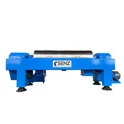

Fibrous materials are commonly found in sewage, and their presence can have a significant impact on the operation of a sewage decanter centrifuge. As a sewage decanter centrifuge supplier, I have witnessed firsthand the challenges and opportunities that fibrous materials present in the wastewater treatment process. In this blog post, I will explore how the presence of fibrous materials in sewage affects the operation of a sewage decanter centrifuge and discuss strategies to mitigate these effects.
Understanding Fibrous Materials in Sewage
Fibrous materials in sewage can originate from various sources, including domestic and industrial wastewater. Common fibrous materials found in sewage include cellulose fibers from paper and cardboard, synthetic fibers from textiles, and natural fibers from plant materials. These fibers can vary in size, shape, and chemical composition, which can influence their behavior in the sewage treatment process.
Impact on Decanter Centrifuge Operation
The presence of fibrous materials in sewage can affect the operation of a sewage decanter centrifuge in several ways:
1. Clogging and Blockages
Fibrous materials can accumulate in the decanter centrifuge, leading to clogging and blockages. This can occur in the feed inlet, the scroll conveyor, or the discharge ports. Clogging can reduce the efficiency of the centrifuge, increase the power consumption, and cause mechanical damage to the equipment.
2. Reduced Separation Efficiency
Fibrous materials can interfere with the separation process in the decanter centrifuge. The fibers can entangle with the sludge particles, making it difficult for the centrifuge to separate the solids from the liquid. This can result in a higher moisture content in the cake and a lower clarity in the centrate.
3. Wear and Tear
The presence of fibrous materials can cause increased wear and tear on the decanter centrifuge components. The fibers can abrade the scroll conveyor, the bowl, and the seals, leading to premature failure of the equipment. This can increase the maintenance costs and downtime of the centrifuge.
Strategies to Mitigate the Effects of Fibrous Materials
To mitigate the effects of fibrous materials on the operation of a sewage decanter centrifuge, several strategies can be employed:


1. Pre-Treatment
Pre-treatment of the sewage can help to remove or reduce the fibrous materials before they enter the decanter centrifuge. This can include screening, grinding, or chemical treatment. Screening can remove large fibrous materials, while grinding can break down the fibers into smaller particles. Chemical treatment can help to dissolve or disperse the fibers, making them easier to separate.
2. Centrifuge Design
The design of the decanter centrifuge can also play a role in mitigating the effects of fibrous materials. For example, a centrifuge with a larger feed inlet and a wider scroll conveyor can help to prevent clogging. Additionally, the use of wear-resistant materials and coatings can help to reduce the wear and tear on the centrifuge components.
3. Operating Conditions
Optimizing the operating conditions of the decanter centrifuge can also help to improve the separation efficiency and reduce the effects of fibrous materials. This can include adjusting the feed rate, the rotational speed, and the differential speed of the centrifuge. Additionally, the use of flocculants can help to improve the settling and separation of the sludge particles.
Case Studies
To illustrate the impact of fibrous materials on the operation of a sewage decanter centrifuge and the effectiveness of the mitigation strategies, let's look at a few case studies:
Case Study 1: A Wastewater Treatment Plant
A wastewater treatment plant was experiencing frequent clogging and blockages in their decanter centrifuge due to the presence of fibrous materials in the sewage. The plant implemented a pre-treatment system that included screening and grinding to remove the large fibrous materials before they entered the centrifuge. This resulted in a significant reduction in clogging and blockages, and the centrifuge was able to operate more efficiently.
Case Study 2: An Industrial Facility
An industrial facility was using a decanter centrifuge to treat their wastewater, which contained a high concentration of synthetic fibers. The centrifuge was experiencing reduced separation efficiency and increased wear and tear on the components. The facility implemented a chemical treatment system to dissolve the fibers and improve the separation efficiency. This resulted in a higher quality cake and a lower moisture content, and the wear and tear on the centrifuge components was reduced.
Conclusion
The presence of fibrous materials in sewage can have a significant impact on the operation of a sewage decanter centrifuge. However, by understanding the effects of fibrous materials and implementing appropriate mitigation strategies, it is possible to minimize these effects and improve the efficiency and reliability of the centrifuge. As a sewage decanter centrifuge supplier, we are committed to providing our customers with the latest technology and solutions to address the challenges of wastewater treatment. If you are interested in learning more about our products and services, please contact us to schedule a consultation.
References
- Smith, J. (2019). Wastewater Treatment: Principles and Design. Wiley.
- Jones, R. (2020). Centrifugal Separation in Wastewater Treatment. Elsevier.
- Brown, S. (2021). Fibrous Materials in Sewage: Challenges and Solutions. Journal of Environmental Science and Technology.