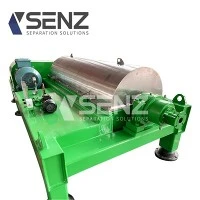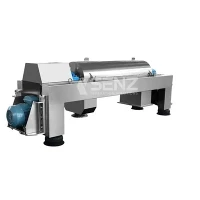

As a supplier of sewage decanter centrifuges, I've witnessed firsthand the intricate relationship between the concentration of heavy metals in sewage and the performance of these machines. In this blog, I'll delve into how heavy metal concentrations can impact sewage decanter centrifuges, drawing on my experience in the industry and relevant scientific knowledge.
Understanding the Basics of Sewage Decanter Centrifuges
Sewage decanter centrifuges are essential pieces of equipment in wastewater treatment plants. They work on the principle of centrifugal force to separate solids from liquids in sewage. The centrifuge rotates at high speeds, causing the denser solids to settle at the outer edge while the lighter liquid phase remains closer to the center. This separation process is crucial for reducing the volume of sludge and improving the quality of the treated water.
The Impact of Heavy Metals on Sewage Decanter Centrifuges
Wear and Tear
Heavy metals such as lead, mercury, cadmium, and chromium are often present in sewage due to industrial discharges, urban runoff, and other sources. These metals can be abrasive and cause significant wear and tear on the components of the decanter centrifuge. The high - speed rotation of the centrifuge exposes its internal parts, like the bowl and the screw conveyor, to the abrasive action of the heavy metal - laden sludge. Over time, this can lead to pitting, corrosion, and reduced efficiency of the centrifuge. For example, lead particles can scratch the surface of the bowl, creating rough areas that disrupt the smooth flow of the sludge and increase friction. This not only shortens the lifespan of the centrifuge but also increases maintenance costs.
Clogging
Another issue associated with high heavy metal concentrations is clogging. Heavy metals can form precipitates or aggregates with other substances in the sewage. These solid masses can accumulate in the channels and passages of the decanter centrifuge, blocking the flow of sludge and liquid. A clogged centrifuge may experience reduced throughput, uneven distribution of the feed, and ultimately, a breakdown in the separation process. For instance, when chromium reacts with certain anions in the sewage, it can form insoluble compounds that settle in the centrifuge's discharge ports, preventing the proper removal of solids.
Chemical Reactions
Heavy metals can also participate in chemical reactions within the centrifuge. Some heavy metals are highly reactive and can react with the materials of the centrifuge, such as the stainless - steel components. For example, mercury can form amalgams with certain metals, which can weaken the structural integrity of the centrifuge parts. Additionally, heavy metals can react with flocculants or other chemicals used in the sewage treatment process. This can alter the properties of the flocculants, reducing their effectiveness in promoting the aggregation of solids and thus affecting the separation efficiency of the centrifuge.
How to Mitigate the Effects of Heavy Metals
Pretreatment
One of the most effective ways to reduce the impact of heavy metals on sewage decanter centrifuges is through pretreatment. This can involve processes such as chemical precipitation, ion exchange, or filtration. Chemical precipitation can be used to remove heavy metals by adding chemicals that react with the metals to form insoluble precipitates, which can then be removed before the sewage enters the centrifuge. Ion exchange resins can selectively remove heavy metal ions from the sewage. Filtration can also be used to remove larger particles of heavy metals or their aggregates.

Material Selection
When manufacturing sewage decanter centrifuges, careful selection of materials is crucial. Using corrosion - resistant materials such as high - grade stainless steel or special coatings can help protect the centrifuge from the corrosive effects of heavy metals. For example, some centrifuge manufacturers use a layer of ceramic coating on the internal parts to provide an extra barrier against abrasion and corrosion.
Regular Maintenance and Monitoring
Regular maintenance and monitoring are essential to ensure the proper functioning of the decanter centrifuge in the presence of heavy metals. This includes inspecting the centrifuge for signs of wear and tear, cleaning the internal components, and replacing any damaged parts. Monitoring the heavy metal concentration in the sewage can also help in predicting potential problems and taking preventive measures.
Our Product Offerings
As a supplier of sewage decanter centrifuges, we offer a range of products designed to handle different types of sewage, including those with high heavy metal concentrations. Our Petrole Oil Sludge Dewatering Machine is specifically designed for the dewatering of oil - sludge, which often contains heavy metals. It is equipped with advanced features to resist wear and tear and ensure efficient separation.
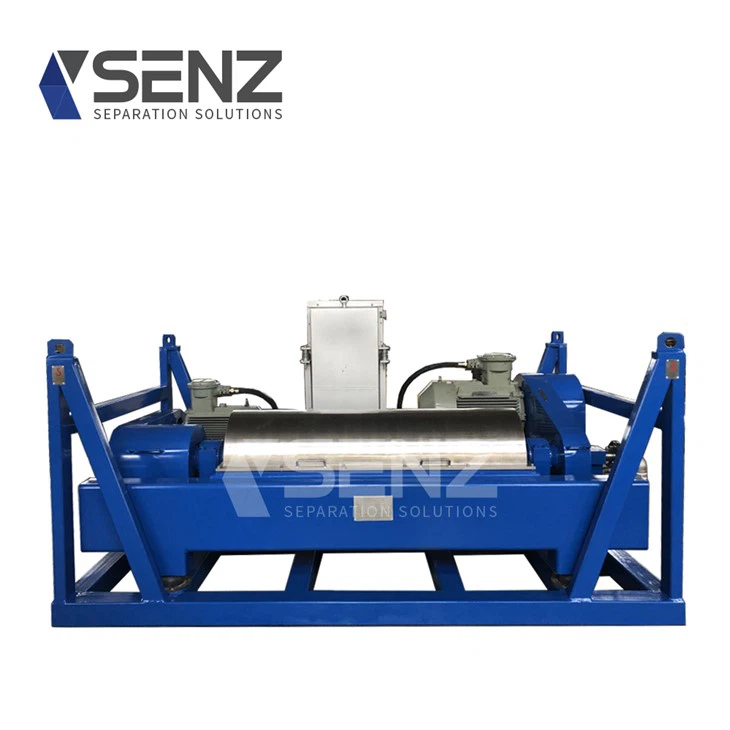
Our Separation Decanter Centrifuge is a versatile machine that can handle a wide range of sewage types. It uses high - quality materials and advanced design to minimize the impact of heavy metals on its performance.
For those in the oil field, our Oil Field Centrifuge is an ideal choice. It is built to withstand the harsh conditions and high heavy metal concentrations often found in oil - field wastewater.
Conclusion
The concentration of heavy metals in sewage can have a significant impact on the performance and lifespan of sewage decanter centrifuges. However, with proper pretreatment, material selection, and regular maintenance, these effects can be mitigated. At our company, we are committed to providing high - quality sewage decanter centrifuges that can effectively handle heavy - metal - laden sewage. If you are in the market for a sewage decanter centrifuge or have any questions about how to deal with heavy metals in your sewage treatment process, we encourage you to contact us for a detailed discussion and to explore our product offerings. We look forward to working with you to find the best solution for your sewage treatment needs.
References
- Tchobanoglous, G., Burton, F. L., & Stensel, H. D. (2003). Wastewater engineering: treatment and reuse. McGraw - Hill.
- Metcalf & Eddy (2014). Wastewater engineering: treatment, disposal, and reuse. McGraw - Hill Education.
- Environmental Protection Agency (EPA). (2023). National Sewage Sludge Survey.